


Japan has become one of the most closely watched crypto markets in the world. Its regulators are strict, its financial institutions are cautious, yet its population is highly tech-aware and curious about digital assets. Against this backdrop, Japanese Bitcoin companies – from exchanges and custodians to corporate treasuries – face a new challenge: how to make their Bitcoin work harder without compromising on security and regulation. This is where the growing BTC yield infrastructure around Bitcoin Firms Earn Yield and Solv Protocol becomes especially interesting.
Solv is building institutional-grade Bitcoin yield products, turning idle BTC into a productive asset through carefully designed strategies, structured vaults and DeFi integrations. Animoca, meanwhile, is one of the most active Web3 investors globally and has already committed to sophisticated Bitcoin yield enhancement strategies for its own corporate treasury through partnerships such as its US$100 million allocation to BTC yield operations with DDC Enterprise. When you connect these developments with Japan’s evolving crypto rules, a clear story begins to emerge.
The same infrastructure that is helping large global players earn BTC-denominated returns in a disciplined way can be adapted to support compliant, yield-focused solutions for Japanese Bitcoin companies. Rather than leaving BTC idle on balance sheets, they can tap into Bitcoin yield, structured products and BTCFi platforms while staying within regulatory guardrails. In this article, we will explore how Animoca and Solv are positioned to help Japanese Bitcoin businesses generate yield, why this matters for corporate treasuries, what kind of BTCFi tools are now available, and how Japan’s regulatory landscape can support – or slow – this transition.
The Rising Need for Yield Among Japanese Bitcoin Companies
Japanese crypto exchanges, fintechs and listed companies that hold Bitcoin are under pressure to manage their balance sheets more efficiently. Bitcoin has moved beyond being a speculative asset; for many, it is becoming a long-term treasury holding or strategic reserve. Yet simply sitting on BTC in cold storage comes with a clear opportunity cost.
In an era of professionalized digital asset management, Bitcoin yield strategies are increasingly seen as a way to turn a volatile but valuable asset into a source of income. Corporate boards, treasury teams and risk committees in Japan are all asking similar questions. They want to know whether it is possible to: Hold Bitcoin on the balance sheet as a long-term asset. Earn safe, transparent yield in BTC rather than converting to fiat. Stay fully aligned with Japan’s detailed crypto regulations and reporting standards.
Traditional crypto lending markets, with opaque counterparties and weak risk controls, are not acceptable in such an environment. Japanese institutions and Bitcoin businesses need solutions that feel closer to regulated finance: institutional custody, auditable processes and clear risk models. This is exactly the segment where Solv Protocol’s BTC yield infrastructure and Animoca’s institutional relationships start to become highly relevant.
Who Are Animoca and Solv – And Why Do They Matter for BTC Yield?
Animoca Brands is widely known as a Web3 powerhouse, spanning gaming, NFTs and infrastructure. Less loudly, it has also become an important corporate Bitcoin treasury player, exploring ways to maximize the yield on its BTC holdings through structured strategies operated by professional partners. Its strategic agreement to allocate up to US$100 million in Bitcoin to yield enhancement strategies run by DDC Enterprise is one of the clearest examples of this shift.
Solv Protocol, on the other hand, is a BTCFi and DeFi yield platform that focuses specifically on making Bitcoin productive. It tokenizes BTC into yield-bearing instruments such as SolvBTC and xSolvBTC, and offers cross-chain and institutional products that can generate BTC-based returns through diversified strategies across DeFi, CeFi and traditional finance.
Solv has also launched products like FragBTC, a Solana-native yield-generating Bitcoin solution that uses structured strategies on Solana DeFi to pay BTC yield to holders, while emphasizing security and transparency. Taken together, these efforts show how Solv is building the backbone of a Bitcoin yield ecosystem that can be consumed by individuals, institutions and corporate treasuries.
For Japanese Bitcoin companies, the combination of Animoca’s network, strategic capital and regulatory experience with Solv’s institutional Bitcoin yield vaults and risk engines creates a powerful toolkit. It offers the potential to deploy BTC into curated strategies rather than leaving it idle, all while leveraging partners that already think in terms of compliance, custody and institutional standards.
BTCFi Infrastructure: Turning Idle Bitcoin into a Yield-Generating Asset
A key phrase that keeps appearing around Solv Protocol is “Bitcoin Unbound”. The idea is simple but transformative: Bitcoin should not just sit in wallets; it should move through carefully managed strategies that generate yield without forcing holders to take reckless risks or sell their BTC. Solv does this by creating structured BTC yield vaults and tokenized BTC products. These vehicles can deploy Bitcoin into a mix of on-chain liquidity provision, basis trading, low-risk lending and hedged strategies. For example, Solv’s BTC+ vault has rapidly attracted demand from users looking for institutional-grade Bitcoin yield with clear parameters on risk and capacity.

For Japanese Bitcoin companies, this kind of infrastructure is essential. They need strategies that are:Designed with conservative risk in mind. Transparent enough to satisfy auditors and regulators. Compatible with top-tier custodians and reporting tools. Solv’s integrations with institutional custodians and cross-chain infrastructure, including its role as an Institutional Guardian on Zeus Network for Bitcoin bridging to Solana alongside partners like Animoca Brands, Mechanism Capital and others, demonstrate its focus on security and governance. This is exactly the type of architecture that appeals to compliance-conscious Japanese firms.
Japan’s Regulatory Landscape: Strict, But Full of Opportunity
Japan’s approach to digital assets is often described as “strict but clear.” Crypto service providers must navigate licensing, capital requirements, segregation of customer assets and precise reporting rules. While this slows down experimentation, it also provides a framework in which serious players can operate with confidence. For Japanese Bitcoin companies that want to generate yield on BTC holdings, any solution must sit comfortably within this framework. That means: Working with regulated exchanges, custodians and trust structures where necessary.
Ensuring that any yield product can be properly classified, taxed and reported under Japanese law.
Avoiding opaque offshore structures or high-risk, uncollateralized lending, which regulators would view with suspicion. Animoca’s growing involvement with institutional-scale Bitcoin strategies and Solv’s emphasis on transparent BTC yield products suggest that both are thinking along these lines.
While the specific details of any Japanese deployment would need to be aligned with local partners and regulators, the building blocks – custody integration, audited vaults, risk controls and tokenized Bitcoin products – are already in place. In this way, Japan’s strict environment does not block Bitcoin yield; it simply pushes providers to design compliant BTCFi solutions that can withstand regulatory scrutiny and institutional due diligence.
How Animoca and Solv Can Serve Japanese Corporate Bitcoin Treasuries
Corporate treasuries in Japan that hold Bitcoin face a very specific problem. They want to treat BTC as a long-term strategic asset, but they also want to avoid the optics of leaving a large balance sheet item unproductive. Traditional solutions, such as selling BTC for fiat and buying bonds, defeat the purpose of holding Bitcoin in the first place.
By working with partners like Animoca and Solv, Japanese treasuries can imagine a different path. Instead of selling their BTC, they can allocate a portion to institutional Bitcoin yield strategies that are professionally run, diversified and risk-managed. Solv’s vaults and tokenized BTC instruments allow treasuries to keep economic exposure to Bitcoin while earning BTC-denominated yield, which is more attractive than converting into local currency and sacrificing upside.
Animoca’s experience as a corporate Bitcoin holder exploring yield strategies at scale gives it a blueprint for how treasuries can justify this move internally. Its own US$100 million Bitcoin yield partnership demonstrates that large, reputable companies are already treating BTC as a yield-generating treasury asset rather than a purely speculative bet.
For Japanese firms, this combination of BTC treasury strategy, BTCFi infrastructure and Web3 expertise is extremely valuable. It means they do not need to design yield strategies from scratch. Instead, they can connect to existing infrastructure that has already been tested by global players and adapt it to Japan’s regulatory environment.
Risk Management: The Non-Negotiable Factor for Japanese Institutions
No conversation about Bitcoin yield in Japan is complete without a detailed look at risk management. Japanese regulators and institutions have long memories. The lessons of Mt. Gox and various global lending failures have made risk control the centerpiece of any serious digital asset discussion. Solv tries to address this with a strong focus on a “risk engine” approach. Its BTC yield strategies are not simply about chasing the highest APY; they are about building portfolios that can survive market shocks, liquidity squeezes and counterparty failures. This includes diversified strategy design, collateralized structures when dealing with CeFi, and robust integrations with secure custodians.
Being chosen as an Institutional Guardian for Zeus Network’s Bitcoin bridge – alongside partners such as Animoca Brands – shows that Solv is trusted to play a critical security role in cross-chain BTC flows. Guardians are responsible for monitoring bridge activity, verifying that locked Bitcoin matches minted assets and ensuring that any anomalies are detected quickly. This guardian role aligns well with the type of governance Japanese institutions expect from infrastructure providers.
For Japanese Bitcoin companies, this level of risk management is not a “nice to have”; it is absolutely essential. Yield products that cannot clearly articulate their risk controls will simply not pass internal committees or regulatory conversations. The more that Solv and Animoca demonstrate their commitment to institutional BTC risk frameworks, the easier it becomes for Japanese partners to engage.
BTCFi, DeFi and TradFi: Bridging Three Worlds for Japanese Firms
One of the most powerful aspects of Solv’s architecture is its ability to blend DeFi, CeFi and TradFi into a single yield engine. Its BTC vaults and tokenized BTC structures can allocate to on-chain strategies, carefully chosen centralized counterparties and even traditional market instruments when appropriate. This blended approach is particularly attractive for Japanese Bitcoin companies. It allows them to benefit from the innovation and high efficiency of DeFi infrastructure while still relying on familiar elements of traditional finance, such as audited custodians, reporting standards and risk committees.
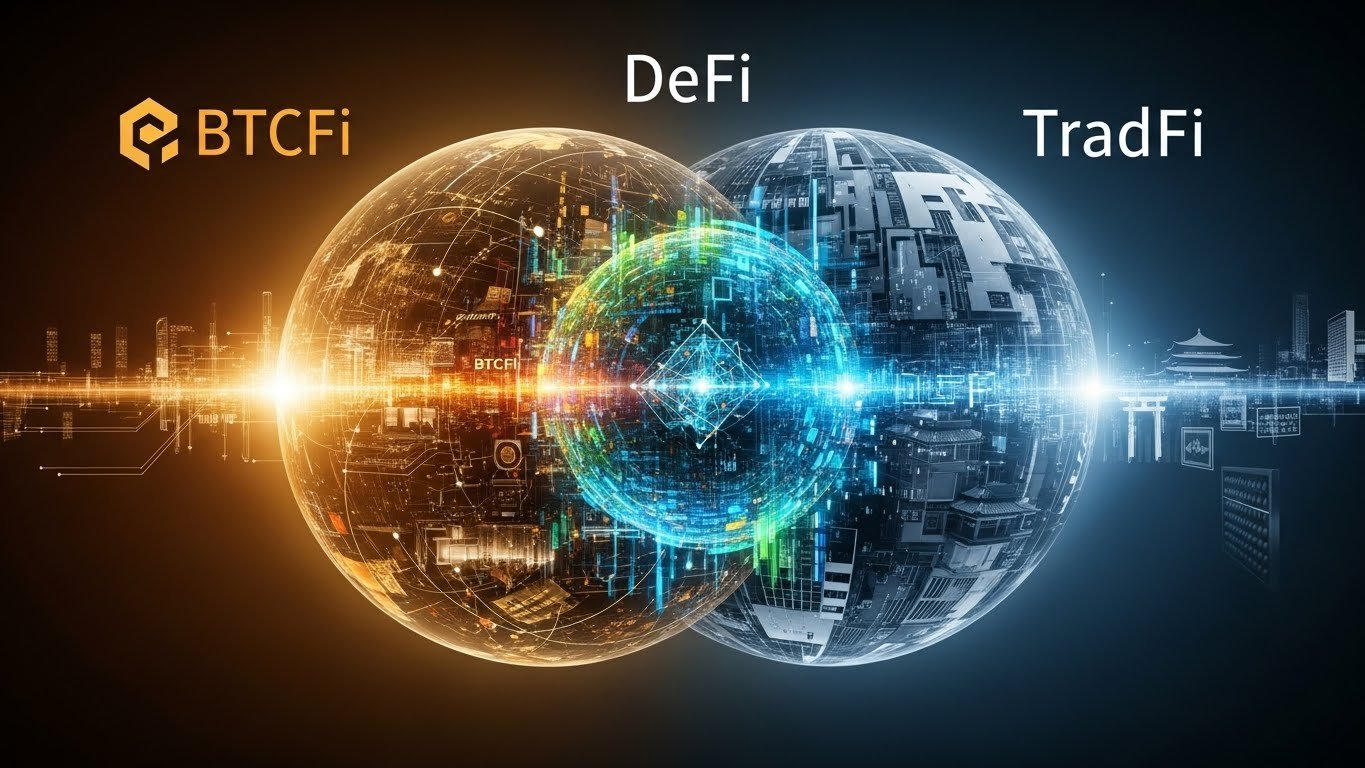
Animoca’s position in the Web3 ecosystem further strengthens this bridge. It has deep relationships across DeFi protocols, infrastructure projects and institutional partners. When combined with Solv’s BTC yield vaults, this means Japanese firms can access a curated pipeline of strategies rather than an overwhelming jungle of unaudited DeFi products. In practice, a Japanese exchange, fintech or corporate treasury could keep the majority of its BTC in cold storage while allocating a clearly defined portion to a BTC yield strategy managed by Solv and supported by Animoca’s ecosystem relationships. Over time, this could evolve into a standard model for Japanese corporate Bitcoin treasuries.
The Strategic Importance of Yield for Japan’s Place in Global Crypto
Japan has the potential to be a global leader in regulated digital assets. Its licensing regime, investor protections and cautious stance can actually become strengths if combined with carefully designed Bitcoin yield products and BTCFi infrastructure. If Japanese Bitcoin companies can earn steady, transparent BTC yield without sacrificing regulatory compliance, Japan could become a magnet for high-quality crypto businesses.
Exchanges, custodians, asset managers and treasuries would all benefit from operating in an environment where innovation is welcomed but disciplined. Partnerships and ecosystems around players like Animoca and Solv help make this possible. They bring global experience, institutional Bitcoin strategies and DeFi-native tooling into a format that Japanese regulators and institutions can understand. Instead of being forced to choose between safety and innovation, Japanese Bitcoin companies can aim for both.
Conclusion
The story behind the title “Animoca, Solv to help Japanese Bitcoin companies generate yield” is not just about a single announcement or press release. It is about a larger shift in how Bitcoin is treated by serious players worldwide. BTC is moving from a passive speculative holding to a yield-generating reserve asset, and the infrastructure required to support that transition is finally coming together.
Solv Protocol is building the BTCFi backbone that allows Bitcoin holders to earn BTC-denominated returns through structured vaults, tokenized BTC products and cross-chain integrations. Animoca Brands is proving, through its own corporate Bitcoin treasury strategy, that large companies can allocate significant BTC into professional yield enhancement initiatives without abandoning their long-term conviction.
For Japanese Bitcoin companies, this combination creates a concrete path forward. They can imagine a future where Bitcoin sits on the balance sheet not as a static symbol of risk, but as a productive asset generating yield inside a framework of institutional-grade risk management and regulatory compliance.
If Japan successfully embraces this model, it could become one of the most important hubs for regulated Bitcoin finance in the world. In that future, it will be ecosystems like those built by Animoca and Solv that quietly power the yield engines behind Japanese Bitcoin treasuries, exchanges and crypto-native businesses.
FAQs
Q: How can Japanese Bitcoin companies generate yield without selling their BTC?
Japanese Bitcoin companies can generate yield by allocating a portion of their BTC to institutional Bitcoin yield strategies operated through platforms such as Solv Protocol. These strategies may involve diversified DeFi and CeFi activities, hedged trading and structured products that pay returns in Bitcoin while keeping exposure to the underlying asset.
Q: Why are Animoca and Solv important for BTC yield in Japan?
Animoca brings experience as a Web3 leader and corporate Bitcoin holder that already uses professional yield enhancement strategies, while Solv provides the BTCFi infrastructure, including tokenized BTC, yield vaults and risk engines. Together, they offer a combination of capital, technology and institutional thinking that can be adapted to Japan’s regulatory environment.
Q: Is it safe for regulated Japanese firms to use DeFi-based Bitcoin yield products?
Safety depends on design. Solv focuses on institutional-grade risk management, diversified strategies and secure custody integrations. Japanese firms would still need to perform their own due diligence, but partnering with providers that prioritize governance, security and compliance makes it much more realistic for regulated institutions to access DeFi-based yield.
Q: What role do corporate Bitcoin treasuries play in this trend?
Corporate Bitcoin treasuries transform BTC from a speculative asset into a long-term reserve. When companies like Animoca allocate large amounts of BTC into structured yield strategies, they set an example for other firms, including those in Japan, showing that Bitcoin can serve both as a strategic asset and as a source of BTC-denominated income.
Q: Could Japan become a hub for regulated BTC yield and BTCFi?
Yes. Japan’s clear but strict regulatory framework, combined with high-quality BTC yield infrastructure from players like Animoca and Solv, gives it a strong foundation. If Japanese regulators continue to support innovation while maintaining high standards, the country could become a leading destination for regulated Bitcoin yield products, corporate BTC treasuries and institutional BTCFi solutions.
Also Read: Bitcoin FOMO At $94K As Fed Clouds Loom
