


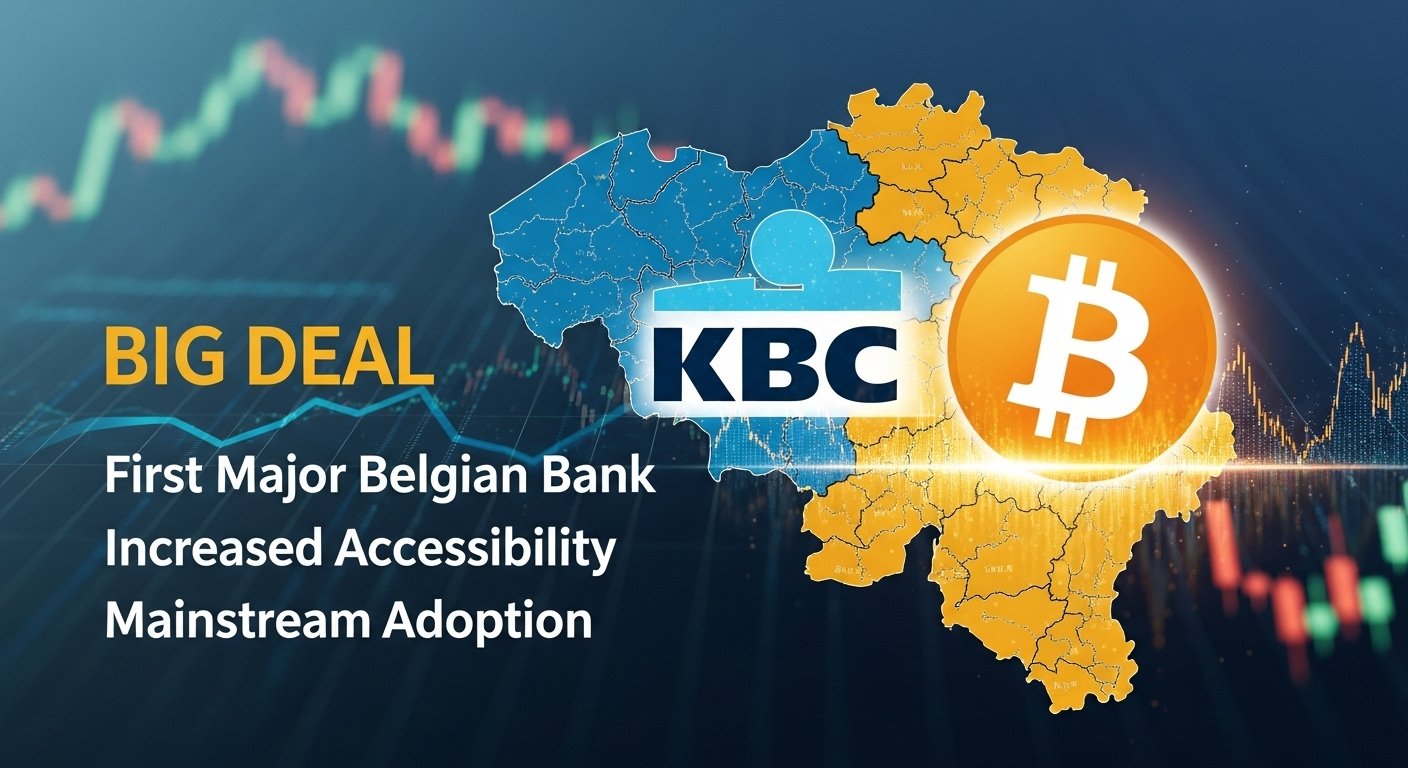
KBC Launches Bitcoin to introduce Bitcoin trading marks a turning point for Belgium’s financial landscape. For years, crypto enthusiasts in Belgium have relied on international exchanges, specialist apps, or platforms outside the traditional banking system to buy and sell Bitcoin. Those options often came with steep learning curves, unclear protections, and a sense that crypto lived in a separate universe from everyday finance. Now, with KBC stepping in, Bitcoin trading is moving closer to the mainstream experience Belgian investors already know: a familiar investment platform, recognizable standards of compliance, and a structured approach to risk communication.
This shift matters because Bitcoin has matured from a niche experiment into a widely discussed asset class. At the same time, regulators across Europe have been building clearer rules for digital assets and crypto trading. That combination—rising demand and increasing oversight—creates the conditions where a major bank can finally justify offering Bitcoin trading to retail clients.
What makes this headline especially significant is not just that KBC is adding crypto, but that it’s doing so as a mainstream institution with a reputation to protect. When a bank offers Bitcoin trading, it implicitly signals that Bitcoin is no longer treated purely as an outsider product. It becomes something that can be packaged, disclosed, and managed inside established financial infrastructure. For Belgian consumers, that can change how Bitcoin is perceived: less like a risky internet trend and more like a high-volatility investment product that should be approached carefully.
In this article, we’ll explore why KBC’s move is a major milestone, how Bitcoin trading through a bank differs from using a crypto exchange, what role regulation plays, the potential benefits and trade-offs for investors, and how to approach Bitcoin exposure responsibly. The goal is to help you understand what’s actually changing—and what isn’t—so you can make smarter decisions in a fast-moving market.
Why KBC Launches Bitcoin Trading Is a Big Deal for Belgium
Belgium has plenty of crypto interest, but historically it has been fragmented across apps and global exchanges. That meant many first-time buyers had to navigate unfamiliar onboarding processes, crypto jargon, and custody decisions right away. The gap wasn’t just technical; it was psychological. People might be curious about Bitcoin, yet uncomfortable with moving money into an unfamiliar platform. By enabling Bitcoin trading through a bank-led channel, KBC lowers the perceived barrier to entry.
Another reason this is notable is competitive positioning. When one major bank makes Bitcoin trading accessible through a mainstream investment platform, it puts pressure on other institutions to respond. Even banks that are cautious about crypto may feel compelled to explore their own approach—whether that means offering Bitcoin trading, partnering with regulated providers, or delivering alternative crypto exposure products. Over time, this can reshape Belgium’s retail investing ecosystem, where Bitcoin becomes another option in the menu rather than an entirely separate journey.
Importantly, the bank context can influence investor behavior. People tend to treat bank platforms as more “official,” which can increase confidence. That can be good if it leads to better disclosures and more careful risk framing. But it can also be dangerous if consumers assume a bank offering makes Bitcoin “safe.” Bitcoin trading remains risky regardless of where you do it, and it’s essential to separate platform credibility from price risk.
The “mainstreaming” effect of bank-led crypto access
When a bank offers Bitcoin trading, it changes how the public talks about Bitcoin. The conversation moves away from “Should I trust this exchange?” toward “How does Bitcoin fit in my portfolio?” That shift can be healthy, because it encourages a more investment-oriented framing. It can also speed up adoption, because the friction of learning new platforms is reduced.
At the same time, mainstream access can amplify trends. If demand spikes during a rally, easier Bitcoin trading can bring in large waves of new participants. That increases the importance of education, because many retail investors enter the market when prices are rising and fear missing out is strongest.
How KBC’s Bitcoin Trading Will Likely Work
KBC is rolling out Bitcoin trading through its investment ecosystem, with a strong emphasis on an execution-based model. In an execution-only environment, the platform enables transactions, but the investor remains responsible for decisions. That matters because Bitcoin trading is often driven by emotion and headlines, and execution-only access can lead to impulsive behavior if risk boundaries are not clear.
A bank-based crypto offering is also likely to rely on custodial infrastructure. In other words, customers may buy and sell Bitcoin without managing private keys themselves. For many beginners, that is a relief. Managing wallets, seed phrases, and transfers can be intimidating and error-prone. Custodial Bitcoin trading simplifies the experience and reduces the chance of irreversible mistakes, such as sending funds to the wrong address or losing access to a wallet.
However, custody is not just a technical detail; it’s the heart of what “ownership” means in crypto. If the bank controls the custody layer, the investor owns exposure to Bitcoin within the platform’s rules. That can come with limitations compared to self-custody, including restrictions on withdrawals or external transfers depending on the product design.
What execution-only Bitcoin trading means for investors
Execution-only Bitcoin trading places responsibility on the user to decide entry points, position size, and exit strategy. Unlike some wealth products where suitability checks might influence access, execution-only access often relies heavily on disclosures and warnings. This means investors should adopt their own discipline, because the platform will not protect them from buying at peaks, over-allocating, or chasing short-term moves.
For responsible investors, execution-only access can actually be a benefit. It allows direct exposure without forcing a specific advisory approach. But it also means the investor must be honest about risk tolerance and must avoid treating Bitcoin like a guaranteed growth engine.
Regulation and the Role of European Crypto Rules
The broader European environment is moving toward clearer oversight of crypto trading. This matters because banks generally avoid offering products in regulatory gray areas, especially to retail consumers. A more defined rule set encourages mainstream institutions to participate, because it reduces uncertainty around licensing, conduct standards, and operational responsibilities.
For retail investors, regulation can improve consistency in how crypto services are offered. It doesn’t remove market risk, but it can improve transparency, disclosures, and the standards providers must meet. In that sense, KBC’s Bitcoin trading launch reflects a larger shift: crypto is increasingly expected to follow rules similar to other financial services.
Why regulation can accelerate bank adoption of Bitcoin trading
Regulation tends to concentrate markets around providers that can handle compliance costs. Banks are well-positioned here. If the rules require robust controls, reporting, and consumer protections, smaller platforms may struggle to keep up, while large institutions can integrate those requirements into their existing frameworks.
This dynamic can push Bitcoin trading into a more institutional shape: fewer platforms, tighter standards, and more emphasis on consumer communications. The trade-off is that features beloved by crypto-native users—like full wallet freedom—may be reduced in mainstream offerings.
Benefits of Bitcoin Trading Through a Bank Platform
The biggest advantages of bank-led Bitcoin trading tend to be about simplicity, familiarity, and integration. For many Belgian investors, the hardest part of getting started with crypto was not deciding whether Bitcoin is interesting; it was figuring out the process and trusting the infrastructure.
When Bitcoin trading lives inside a bank’s investment platform, the experience can feel more like buying a standard financial instrument. Account verification is typically smoother, funding is integrated, and the user interface is designed for broad audiences rather than crypto specialists.
Easier onboarding and a more familiar experience
Many retail investors want exposure to Bitcoin but don’t want to learn everything about wallets and blockchains on day one. A bank-led Bitcoin trading experience can remove that initial complexity. This can encourage people to approach Bitcoin as an investment decision rather than a technical project.
Consolidation with traditional investing
Investors often benefit from seeing all holdings in one place. When Bitcoin trading is available on the same platform where stocks, funds, or bonds are managed, it becomes easier to track allocations and avoid accidental overexposure. Portfolio awareness matters because Bitcoin’s volatility can distort an investor’s balance faster than expected.
Stronger risk disclosures and standardized processes
Banks tend to be cautious in how they communicate risk. A bank offering Bitcoin trading is likely to include stronger warnings, suitability-related messaging, and standardized documentation. This doesn’t guarantee smarter decisions, but it can reduce the chance that a consumer starts trading without understanding volatility and downside risk.
The Trade-Offs and Risks Investors Still Face
Even if Bitcoin trading is offered by a trusted bank, Bitcoin remains one of the most volatile mainstream assets. The platform may reduce operational mistakes, but it cannot change market reality. Investors should approach Bitcoin trading with clear eyes and realistic expectations.
Price volatility and drawdowns
Bitcoin can rise quickly, but it can also fall sharply. Large drawdowns have historically occurred, and they can happen faster than many first-time investors expect. Bitcoin trading becomes risky when people invest money they may need soon, or when they assume that past growth guarantees future results.
Volatility also impacts decision-making. When prices rise, it’s easy to feel confident. When prices drop, fear can take over. Many retail investors lose money not because Bitcoin is inherently uninvestable, but because their behavior becomes reactive.
Custody and control limitations
If a bank’s Bitcoin trading model is custodial and potentially closed-loop, you may not have the same freedom as on a crypto exchange or in self-custody. For some investors, that is perfectly acceptable. They want exposure, not wallet management. For others—especially those who value self-custody and the ability to transfer Bitcoin freely—it may feel restrictive.
This trade-off is central: convenience and safety from user error often come at the cost of autonomy.
Costs, spreads, and long-term efficiency
The total cost of Bitcoin trading is not just a visible commission. It can include spreads, execution price differences, custody-related fees, and platform costs. Over time, frequent trading can become expensive. For many retail investors, a more long-term approach often aligns better with both discipline and cost efficiency.
What KBC’s Bitcoin Trading Means for Other Belgian Banks
KBC’s move sets a precedent. If customer adoption is strong and the rollout is smooth, other Belgian banks may explore similar offerings. They may start conservatively, offering Bitcoin trading and perhaps one or two other major assets, then expanding based on demand and regulatory comfort.
This competition can benefit consumers by improving product quality, reducing costs, and raising the standard of disclosures. It can also create clearer norms around how crypto trading is offered in Belgium: what protections exist, how custody works, and what limitations apply.
A shift toward regulated channels
One likely outcome is gradual migration of some retail activity toward regulated, mainstream channels. Global exchanges will remain relevant—especially for advanced users—but banks may become the preferred entry point for cautious investors who want Bitcoin exposure without navigating the broader crypto ecosystem.
How to Approach Bitcoin Trading Responsibly
The most common mistake in Bitcoin trading is treating it like a shortcut. Responsible Bitcoin exposure is less about finding the perfect moment and more about building a strategy that you can stick to through volatility.

A practical way to think about Bitcoin is as a high-risk, high-volatility asset that may or may not belong in your portfolio depending on your goals. For some investors, a small allocation can make sense as a diversification component. For others, Bitcoin’s volatility is simply too high.
Risk management starts with position sizing
If you choose to engage in Bitcoin trading, the first decision should be how much of your total portfolio you are willing to allocate. A smaller allocation can reduce emotional stress and prevent Bitcoin’s volatility from dominating your financial life.
Avoid chasing hype cycles
Many people start Bitcoin trading during periods of intense attention, when prices have already risen substantially. That’s not always wrong, but it often leads to buying under emotional pressure. A disciplined approach focuses on long-term reasoning rather than short-term excitement.
Treat Bitcoin as a long-term thesis, not a daily adrenaline rush
If you are constantly checking prices, you may end up trading too frequently. For most retail investors, frequent Bitcoin trading increases the chance of emotional mistakes and higher costs. A calmer approach—grounded in a clear plan—often leads to better outcomes.
Conclusion
KBC becoming Belgium’s first bank offering Bitcoin trading is a milestone for mainstream finance in the country. It signals that Bitcoin is increasingly being treated as a legitimate—though still risky—asset class that can be offered within structured, regulated investment platforms. For Belgian retail investors, this may mean easier access, a more familiar experience, and clearer risk framing through a trusted institution.
However, the fundamentals do not change: Bitcoin trading remains volatile and can lead to significant losses. A bank interface can reduce operational complexity, but it cannot reduce market risk. The smart approach is to treat Bitcoin with respect, invest only what you can afford to risk, and avoid emotionally driven decisions. If KBC’s rollout succeeds, it may open the door for more banks to offer regulated Bitcoin trading in Belgium—reshaping how everyday investors participate in the crypto market.
FAQs
Q: Why is KBC’s Bitcoin trading launch important for Belgium?
KBC’s Bitcoin trading offering matters because it brings Bitcoin into a mainstream banking environment, making access more familiar for retail investors and potentially setting a precedent for other Belgian banks.
Q: Is Bitcoin trading through a bank safer than using an exchange?
Bank-based Bitcoin trading may reduce certain operational risks and provide more structured disclosures, but Bitcoin’s price volatility and investment risk remain the same regardless of platform.
Q: Will I own “real” Bitcoin if I use KBC for Bitcoin trading?
In most bank-led models, Bitcoin trading is custodial, meaning you typically hold Bitcoin exposure within the platform’s custody system. The exact experience depends on whether withdrawals and external transfers are supported.
Q: What are the biggest risks of Bitcoin trading for beginners?
The largest risks in Bitcoin trading are volatility, emotional decision-making, over-allocating funds, and misunderstanding how quickly losses can occur during market downturns.
Q: How can I approach Bitcoin trading responsibly?
Responsible Bitcoin trading starts with small, risk-appropriate position sizing, avoiding hype-driven decisions, understanding volatility, and sticking to a clear strategy rather than reacting to short-term price moves.
