

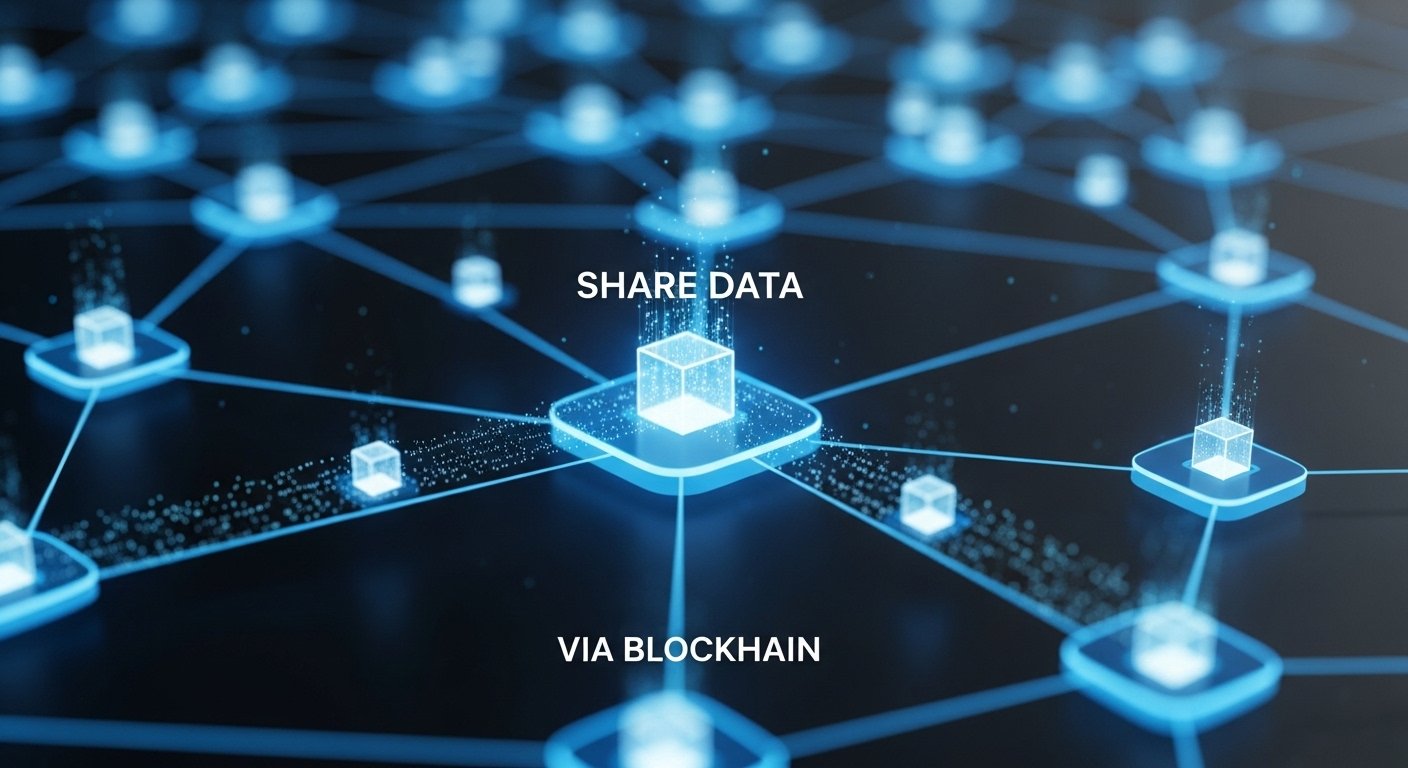
JPMorgan, Nacha to share data via blockchain deserves attention. This is not a story about a flashy new coin or a speculative token. It is a practical story about improving how trusted organizations exchange payment-related information so that money moves with fewer mistakes and less risk. Payments fail more often than people realize. Sometimes it’s a simple typo in an account number. Sometimes it’s a mismatch between a name and an account record. Sometimes it’s a fraud attempt where criminals try to reroute funds by exploiting weak verification steps. Every failed transaction creates real-world consequences: delayed payroll, late bill payments, customer support escalations, reversals, fees, and reputational damage. Over time, these “small” breakdowns add up to big costs.
The headline JPMorgan, Nacha to share data via blockchain points to a specific improvement: connecting two established information networks so account and payment data can be verified more efficiently. Nacha’s Phixius network and JPMorgan’s Kinexys Liink network have different histories and strengths, but they share a common mission: enable secure, permissioned sharing of payment information among trusted participants. By integrating these systems, institutions can request and receive verification signals more effectively—especially for account validation.
Even if you’ve never heard of Phixius or Kinexys Liink, you’ve felt the pain of weak validation. A deposit that “bounced back,” a refund that took too long, a payout that was delayed because the receiving account couldn’t be confirmed—these problems often trace back to incomplete data sharing and inconsistent verification. The promise behind JPMorgan, Nacha to share data via blockchain is that the industry can build a stronger, broader verification layer without slowing down legitimate payments. This article explains what the partnership actually means, why blockchain is involved, how multi-responder account validation works, and what changes it could bring to banks, businesses, and payment experiences over time.
What “JPMorgan, Nacha to share data via blockchain” really means
When people see the word “blockchain,” they sometimes assume sensitive information is being written onto a public ledger. That is not the idea here. In this context, blockchain refers to a permissioned framework for coordination and information exchange—more like a secure shared infrastructure than an open public bulletin board.
So what does JPMorgan, Nacha to share data via blockchain mean in practical terms? It means that trusted entities can exchange specific payment-related data—such as signals used for validation—through connected networks designed to enforce permissions, track requests, and standardize communication. The focus is not on broadcasting personal data, but on enabling participants to confirm whether payment details are correct and reliable before money is sent.
The key is that the integration is designed to support safer transactions by strengthening the information layer around payments. Money movement is only one part of a successful payment. The other part is knowing that the payment should happen, that the destination is correct, and that the request is legitimate. The more dependable that “knowledge” becomes, the more smoothly payments can run at scale.
The role of Nacha and why Phixius matters
Nacha is deeply tied to the modern U.S. payments ecosystem, particularly through governance and rulemaking for ACH. While ACH is often described as an older rail, it remains a foundation for payroll, bill pay, direct deposit, government disbursements, and a huge range of business-to-business payments. Any improvement that touches ACH-related validation can ripple across the economy.
Phixius is Nacha’s secure payment information network, built for exchanging the kinds of data that help payments succeed and reduce risk. Think of it as an infrastructure layer for asking questions and receiving trustworthy answers: Is this account valid? Do these account attributes match? Is there information available that can reduce uncertainty before a payment is initiated?
In the story JPMorgan, Nacha to share data via blockchain, Phixius is important because it represents a structured way to share payment information without requiring every participant to build one-off integrations with every other participant. Instead of countless point-to-point connections, an information network can help standardize how requests and responses occur.
This matters even more as fraud grows more sophisticated. Criminal groups thrive on inconsistency: one institution checks a detail that another doesn’t, one business validates payees strongly while another relies on manual entry, and one system flags suspicious changes while another misses them. A network approach can reduce those gaps.
What is Kinexys Liink and why JPMorgan’s blockchain network is relevant
JPMorgan has invested for years in enterprise-grade blockchain applications, emphasizing permissioned environments that support institutional needs. Kinexys Liink is part of that effort: a bank-led, peer-to-peer, blockchain-based data sharing network designed to help institutions exchange information efficiently and securely.
In the context of JPMorgan, Nacha to share data via blockchain, Kinexys Liink matters because it brings another set of trusted participants and data-sharing capabilities into reach. Connecting networks expands coverage and increases the chance that validation requests can be answered quickly and accurately.
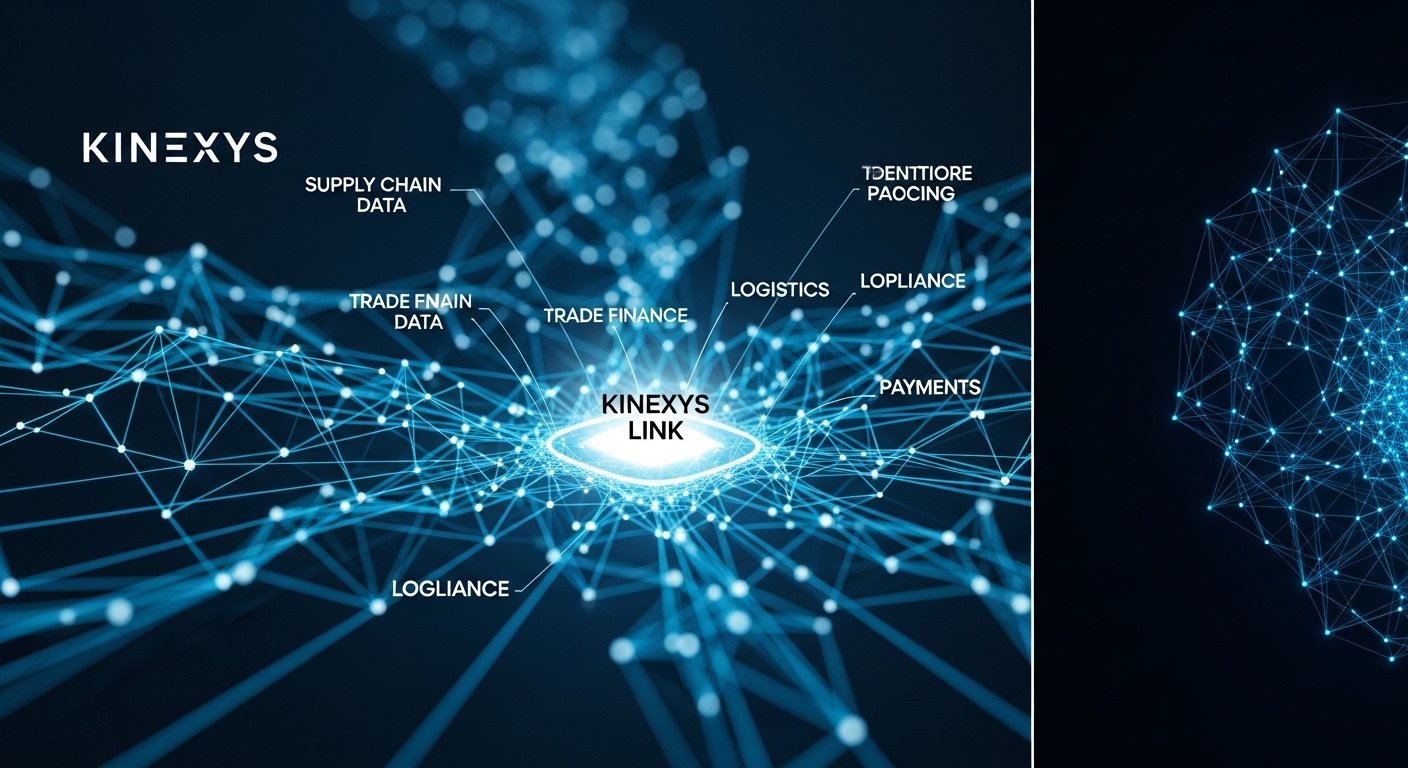
Enterprise blockchain networks tend to focus on a few core benefits: consistent messaging standards, strong permissions, auditability, and efficient coordination among participants who already have real-world trust relationships. This is very different from the “anyone can join” model of public chains. Here, the blockchain element supports a controlled environment where participants can share only what they are authorized to share.
The integration: why connecting networks is more powerful than building another tool
The payments industry is full of tools that work “in isolation.” Many institutions and businesses have internal verification systems, but those systems can only be as good as the data they can access. That’s why integrations matter. If Phixius is one network for payment information and Kinexys Liink is another, connecting them creates new pathways for validation signals to move where they are needed.
That is the practical meaning of JPMorgan, Nacha to share data via blockchain: the integration allows participants in one network to benefit from the reach and responses available in the other. This is especially significant for multi-responder account validation, where more than one trusted responder can provide confirmation signals. Rather than a single “yes or no” based on one source, multi-responder validation aims to provide better confidence through broader, corroborated responses. In large-scale payments, more confidence means fewer exceptions and fewer costly reversals.
Why account validation is the center of this story
Account validation sounds boring until you realize how many payment failures it causes. A payment can be perfectly authorized and still fail because of incorrect destination details. Even worse, some fraud attacks rely on victims sending money to the wrong destination that looks legitimate. Strengthening validation is one of the most direct ways to reduce both errors and fraud.
That is why JPMorgan, Nacha to share data via blockchain is positioned around validation. The integration’s value is not theoretical. It is practical: reduce incorrect payments, reduce returns, reduce manual investigations, and reduce the time it takes to identify and correct issues.
In businesses, payment operations teams spend enormous energy handling exceptions. They chase missing details, resolve mismatches, and answer “where is my money?” questions. Better validation reduces the number of cases that ever reach that stage. It also improves customer trust, because fewer payments “disappear into processing” due to errors that could have been caught earlier.
Multi-responder account validation: what it is and why it’s a breakthrough
Traditional account validation can suffer from a coverage problem. If validation relies on a limited set of sources, it may return “no data” even when a valid account exists, or it may fail to catch inconsistencies that another responder would notice. Multi-responder validation is designed to improve this by enabling multiple trusted responders to provide verification signals.
In the context of JPMorgan, Nacha to share data via blockchain, multi-responder validation becomes possible at greater scale because more institutions and responders can participate through the connected networks. This can increase reliability, especially for organizations that send payments to many banks or to many recipients across diverse institutions.
Multi-responder validation also supports better risk decisions. Instead of treating validation as a one-time binary check, organizations can weigh the strength of confirmation signals. Stronger signals can enable smoother processing, while weak or contradictory signals can trigger additional review.
This is not about making payments slower. It is about making payments smarter. If your system can validate confidently, it can process faster with fewer exceptions. If it cannot validate confidently, it can apply friction only where it’s justified.
How blockchain fits without putting sensitive data “on-chain”
A common misconception is that blockchain means storing everything on a shared ledger. Enterprise blockchain approaches often work differently. They use blockchain concepts—distributed consensus, tamper-evident records, permissioned access—to coordinate data exchange while limiting what is actually stored and who can see it.
In JPMorgan, Nacha to share data via blockchain, blockchain’s role is best understood as a trust and coordination layer. It can support standardized request-and-response flows, provide auditable logs of interactions, and help enforce permissions so participants only receive authorized information.
This matters because payment data is sensitive. Even validation signals must be handled carefully to avoid exposing personal details or creating new attack surfaces. Permissioned networks can reduce risk by keeping participation controlled, applying strong authentication, and supporting governance.
It is also important to recognize that blockchain is not the only way to build secure information sharing. But for large institutions that need standardized coordination across many participants, a permissioned blockchain model can offer a structured, auditable framework that aligns with compliance expectations.
Security, privacy, and governance: the hidden requirements behind the integration
Whenever organizations talk about sharing payment information, security and privacy become immediate concerns. A well-designed system must ensure that data sharing is purpose-limited, permissioned, and protected against abuse. That is why the phrase JPMorgan, Nacha to share data via blockchain matters: it implies a governed, institutional approach, not a casual data exchange. Governance frameworks typically define who can participate, what queries are permitted, what responses may include, and how misuse is detected and prevented.
Privacy also matters in the design of validation. The goal is to confirm correctness without unnecessarily exposing sensitive attributes. Good validation systems often rely on minimal disclosure principles: provide enough information to make a reliable decision, but not more than needed. As fraud threats evolve, governance must also evolve. Networks that support validation must adapt to new attack patterns, new compliance requirements, and new industry standards. Integrations between established systems can accelerate progress because they bring mature governance models and experienced participants.
Impact on ACH: fewer returns, fewer exceptions, better reliability
ACH is one of the most important payment rails in the U.S., and it relies heavily on correct account information. When ACH payments fail due to incorrect data, the costs show up everywhere: consumers, payroll teams, accounts payable departments, and customer support centers.
The integration behind JPMorgan, Nacha to share data via blockchain can reduce failures by enabling better pre-payment checks. If businesses can validate accounts more reliably before sending funds, fewer transactions will bounce, fewer errors will require manual correction, and recipients will experience fewer delays.
For large businesses that send thousands or millions of payments, even a small reduction in return rates can translate into meaningful savings. It can also improve cash flow predictability because fewer payments get stuck in exception handling. Over time, better validation could also support improved onboarding experiences. Instead of collecting account information and hoping it works, businesses can confirm details early and reduce the need for repeated data entry or follow-up verification calls.
Benefits for businesses: faster operations and reduced fraud exposure
Businesses care about outcomes, not buzzwords. The outcome that matters most in JPMorgan, Nacha to share data via blockchain is operational efficiency paired with better risk control. On the efficiency side, improved validation can reduce manual reviews, payment reversals, and customer disputes. It can also reduce internal labor costs related to payment investigations. When payment data is validated more reliably, payment operations become more predictable.
On the risk side, validation can help prevent certain fraud patterns. For example, when criminals try to swap account details during vendor onboarding or change payout instructions, validation can provide signals that something is wrong. It doesn’t stop every fraud type, but it reduces the easy wins that come from weak checks. This is particularly valuable for high-volume payout businesses such as marketplaces, gig platforms, insurance companies, and financial services firms. For them, a small percentage of failures can still represent huge absolute numbers.
Benefits for banks: lower exception handling and better customer trust
Banks also bear significant costs from payment errors and fraud. Exception handling consumes staff time and increases operational complexity. In addition, banks face pressure to improve customer experiences and reduce friction without compromising security. The integration implied by JPMorgan, Nacha to share data via blockchain can help banks by reducing the number of problematic payments that require manual investigation.
It can also support stronger verification services for corporate clients, improving client retention and satisfaction. Banks increasingly compete on reliability. Businesses want fewer failed transactions and faster resolution. Consumer expectations are also rising as real-time and near real-time experiences become more common. Better validation is a core capability for meeting those expectations.
What consumers might notice, even if they never hear the words “blockchain”
Consumers rarely care about the infrastructure. They care about whether money arrives on time and whether problems get resolved quickly. If the information layer improves, consumers could experience fewer delays, fewer returned deposits, and fewer frustrating situations where payments get stuck.
Over time, the effects of JPMorgan, Nacha to share data via blockchain could be felt as smoother payroll deposits, faster and more reliable refunds, and fewer issues when setting up new bank accounts for bill payments or app payouts. Consumers might also benefit indirectly through reduced fraud. When businesses and banks can validate accounts more reliably, criminals have fewer opportunities to exploit weak processes. Again, it’s not a magic shield, but it strengthens a critical line of defense.
Realistic limitations: what this integration will not solve overnight
It’s important to keep expectations grounded. Even a strong integration cannot eliminate all payment errors or fraud. Adoption takes time, and coverage grows as more participants join and build processes around the new capabilities. In addition, validation depends on data quality. If organizations input incorrect information or fail to keep records up to date, validation signals may still be incomplete. The best systems can reduce errors, but they cannot fully compensate for poor internal data hygiene.
Fraud is also adaptive. Criminals will search for new weaknesses, such as social engineering tactics that manipulate human processes rather than technical systems. Validation can reduce some fraud patterns, but it cannot eliminate deception that happens outside the network. Still, the value of JPMorgan, Nacha to share data via blockchain is meaningful even with limitations. Payments infrastructure improves through incremental upgrades that compound. Better validation today can reduce error rates, improve confidence, and create a foundation for future enhancements.
The bigger trend: payments becoming “information-rich”
The deeper significance of JPMorgan, Nacha to share data via blockchain is that payments are becoming more information-rich. For decades, payment rails focused on moving money. Now the ecosystem is investing in the data that surrounds money movement: verification, confirmation, status messaging, and risk signals. This trend aligns with broader changes in finance. Real-time payments raise the stakes because there is less time to catch mistakes after a transaction is sent. As speed increases, pre-payment validation becomes even more important.
Interoperability also matters. Businesses and consumers use many payment types, platforms, and institutions. Information networks and integrations aim to reduce fragmentation so that verification can work consistently across a broader ecosystem. In that environment, connecting Phixius with a blockchain-based data sharing network can be seen as a step toward a more connected, trustworthy verification layer.
Conclusion
The headline JPMorgan, Nacha to share data via blockchain is best understood as an infrastructure improvement focused on secure, permissioned sharing of payment-related information—especially for account validation. By connecting Nacha’s Phixius network with JPMorgan’s Kinexys Liink network, the industry is working toward more reliable verification through multi-responder account validation.
This matters because validation reduces payment errors, lowers operational costs, and strengthens defenses against certain fraud patterns. It also supports a smoother experience for businesses that send and receive payments at scale, and it can improve consumer outcomes indirectly through fewer delays and fewer returned transactions.
Most importantly, it shows where payments innovation is heading: not just faster settlement, but better information sharing that makes fast payments safe. In that sense, JPMorgan, Nacha to share data via blockchain isn’t hype—it’s a practical move toward more trustworthy payments.
FAQs
Q: What does “JPMorgan, Nacha to share data via blockchain” mean?
It means JPMorgan and Nacha are enabling secure, permissioned exchange of payment-related information through connected networks, using blockchain-based infrastructure to support trusted data sharing and account validation.
Q: Are JPMorgan and Nacha putting ACH payments on a public blockchain?
No. This is about sharing verification-related information through permissioned networks. It is not about publishing ACH transactions on a public ledger.
Q: Why is account validation so important in payments?
Because many payment failures and disputes happen due to incorrect destination details or mismatched account information. Stronger account verification reduces errors, returns, and operational headaches, and it can help prevent certain fraud scenarios.
Q: What is multi-responder account validation?
It is a validation approach where more than one trusted responder can provide confirmation signals. This improves coverage and confidence compared to relying on a single source, especially for high-volume payers.
Q: Who benefits most from JPMorgan, Nacha to share data via blockchain?
Banks, fintechs, and businesses that originate or receive large volumes of payments benefit through fewer exceptions, stronger fraud defenses, and smoother operations. Consumers benefit indirectly through fewer delays and fewer misdirected or returned payments.
Also More: Can Blockchain Stop Asia Counterfeit Goods Crisis?
