

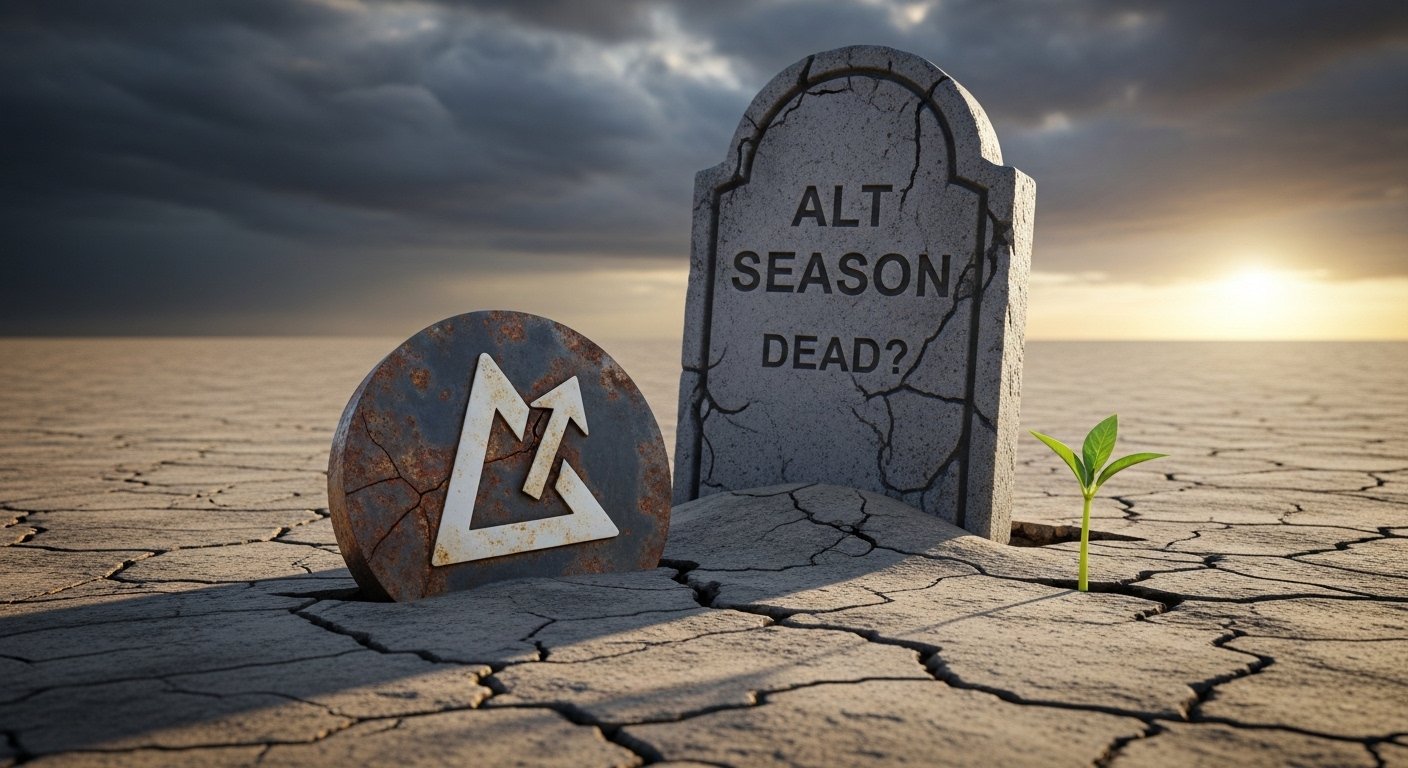
Is Alt Season Dead? 10 crypto cycle produces the same emotional phase. Bitcoin dominates headlines, altcoins bleed slowly, sentiment collapses, and the question starts trending across social media: Is alt season dead? It feels different this time. Many traders argue that institutional adoption, ETFs, and macro shifts have permanently changed market structure. Some believe Bitcoin will absorb most capital going forward, leaving altcoins behind. Others insist that the explosive altcoin rally phases of past cycles are over.
But history shows something important about the crypto market cycle: the crowd usually declares a narrative dead right before it revives. Alt season doesn’t begin when optimism is high. It begins when skepticism peaks, liquidity conditions improve quietly, and early signals start aligning beneath the surface. If you’re looking for proof that alt season may not be dead, there are measurable indicators worth watching. Below are ten powerful signals suggesting the next alt season could be forming—even if the market doesn’t feel ready yet.
Macro Conditions Are Turning Risk-On Again
Crypto doesn’t move in isolation anymore. Global macro trends now heavily influence the direction of digital assets. When economic data shifts toward expansion, markets tend to rotate into higher-risk assets. This is exactly the type of environment that fuels altcoin rallies.
Manufacturing Expansion Supports Growth Assets
When manufacturing data moves back above expansion thresholds, it signals improving economic momentum. Historically, growth-driven assets—like tech stocks and high-beta altcoins—benefit from these conditions. Altcoins thrive when investors are willing to take risk. A strengthening macro backdrop can create the psychological and financial foundation needed for alt season to re-emerge.
Liquidity Expectations Are Improving
Liquidity is the lifeblood of crypto. When liquidity expands, speculative assets tend to outperform. In prior cycles, alt season accelerated during periods of increasing money supply and easier financial conditions. When capital becomes cheaper and more accessible, investors move further out on the risk curve.
Risk Appetite Expands With Liquidity
As liquidity conditions improve, traders typically shift from defensive positioning to aggressive opportunity-seeking. That’s when mid-cap altcoins, DeFi projects, and emerging narratives start gaining attention. Even modest improvements in liquidity can ignite strong moves in smaller-cap crypto assets. That’s why liquidity trends remain one of the most important signals for forecasting alt season.
A Weakening Dollar Favors Crypto

The U.S. dollar plays a larger role in crypto than many assume. A strong dollar often pressures global risk assets. A weaker dollar, on the other hand, tends to create room for capital to flow into speculative markets. When the dollar index softens, global liquidity improves and investors often reallocate toward growth-oriented assets like cryptocurrencies. Altcoins, being more volatile than Bitcoin, frequently benefit the most from this shift. A weakening dollar has historically aligned with periods where alt season accelerates.
Hard Assets Have Already Moved
Market rotations tend to happen in phases. Often, defensive assets like gold move first. Once they stabilize, capital begins searching for higher upside elsewhere. When hard assets surge and then consolidate at higher levels, it can signal that broader risk sentiment is improving.
Rotation From Defense to Speculation
If investors feel less need to hide in defensive assets, they often redeploy capital into growth sectors. In crypto markets, this frequently translates into renewed strength across the altcoin market. This rotation dynamic has appeared in previous cycles before major altcoin rallies unfolded.
Extreme Fear Usually Marks Bottoms
Crypto sentiment is one of the most reliable contrarian indicators. When fear dominates social media and sentiment indices drop into extreme fear zones, it often signals capitulation. Historically, extreme pessimism has coincided with the early stages of recovery phases.
Fear Creates Opportunity
Alt season rarely begins when everyone expects it. It begins when investors are emotionally exhausted and under-positioned. Low expectations combined with improving market structure can spark powerful upside moves. When the crowd gives up on alt season, the conditions for its return often start forming.
Bitcoin Oversold Signals Stabilization
Before alt season can take off, Bitcoin typically needs to stabilize. Bitcoin acts as the market anchor. When it experiences deep oversold conditions, it often marks exhaustion in broader crypto selling pressure.
Stability Opens the Door for Rotation
Once Bitcoin finds support and volatility compresses, traders begin scanning for higher-return opportunities. That’s when capital rotates toward altcoins. Alt season often follows periods where Bitcoin consolidates after sharp declines. Stability invites risk-taking, and risk-taking fuels altcoin outperformance.
Small Caps Are Outperforming Large Caps
Risk appetite can be measured beyond crypto. In traditional markets, when small-cap stocks begin outperforming large-cap stocks, it signals growing investor confidence. This behavior mirrors what happens during alt season.
Higher Beta Assets Attract Capital
Small caps represent higher volatility and greater potential upside. When investors move into smaller companies, it reflects willingness to embrace risk. In crypto, that same psychology plays out through rising interest in altcoins beyond Bitcoin and Ethereum. When risk appetite expands broadly, it often precedes a strong alt season phase.
Bitcoin Dominance Is Rolling Over
If there’s one classic indicator for alt season, it’s Bitcoin dominance. Bitcoin dominance measures Bitcoin’s share of the total crypto market cap. When dominance rises, Bitcoin is outperforming altcoins. When it falls, altcoins are gaining strength.
Dominance Declines Signal Rotation
Historically, major alt seasons have occurred after extended periods of rising Bitcoin dominance. When dominance peaks and begins trending downward, it suggests capital is flowing into altcoins. This shift doesn’t happen instantly, but once it gains momentum, it can trigger broad market participation. A sustained decline in dominance is often the clearest confirmation that alt season is underway.
ETH/BTC Ratio Is Showing Strength
Ethereum plays a central role in the crypto ecosystem. The ETH/BTC ratio measures Ethereum’s strength relative to Bitcoin. When ETH begins outperforming BTC, it often signals that investors are moving beyond pure Bitcoin exposure.
Ethereum as a Gateway to Alt Season

Historically, Ethereum leads early altcoin rotations. Once ETH gains relative strength, capital frequently spreads into other Layer 1 tokens, DeFi projects, and ecosystem plays. Monitoring ETH/BTC trends provides insight into whether broader altcoin momentum is developing. If Ethereum continues strengthening against Bitcoin, it may be a precursor to full-scale alt season.
Narrative Momentum Is Building Again
Crypto is powered by narratives. Whether it’s AI tokens, real-world asset tokenization, gaming ecosystems, or scaling solutions, new themes drive capital flows. When fresh narratives gain traction, speculative interest returns.
Attention Is Fuel forIs Alt Season Dead? 10
Alt season requires more than technical signals. It needs excitement. As new narratives capture attention, social engagement rises, trading volume increases, and smaller projects gain visibility. This creates the self-reinforcing cycle that defines strong altcoin rallies. When narratives align with improving macro and technical signals, the probability of alt season increases significantly.
How These Signals Work Together
Individually, none of these signals guarantees that alt season is here. But markets rarely move based on one factor. When improving macro conditions, weakening dollar strength, rising liquidity expectations, extreme fear sentiment, stabilizing Bitcoin price action, declining dominance, and strengthening ETH/BTC ratios converge, the foundation for alt season strengthens. Crypto cycles reward those who recognize structural shifts early. The transition phase often feels uncertain and slow. But once momentum builds, it accelerates quickly. Alt season doesn’t announce itself politely. It emerges gradually—then suddenly.
Conclusion
So, is alt season dead? The data suggests otherwise. While it may not be fully confirmed, multiple leading indicators point toward conditions that have historically preceded strong altcoin market expansions. Liquidity is stabilizing. Risk appetite is quietly improving. Bitcoin dominance is showing early signs of rotation. Ethereum is regaining relative strength. Sentiment remains depressed—often a precursor to upside. Alt season doesn’t disappear permanently. It evolves with each cycle. Those who assume it’s dead may simply be early to despair. Those who watch the signals may be early to opportunity.
FAQs
Q: What exactly defines alt season?
Alt season is a period when the majority of altcoins outperform Bitcoin over a sustained timeframe. It typically involves broad participation across multiple sectors of the crypto market.
Q: How long does alt season usually last?
Alt season duration varies by cycle. It can last several weeks to several months depending on liquidity conditions, macro trends, and overall market momentum.
Q: Does Bitcoin need to rise first for alt season to start?
In many cycles, Bitcoin rallies first and then consolidates. During consolidation, capital rotates into altcoins, triggering alt season.
Q: Is Ethereum the key to predicting alt season?
Ethereum often acts as a leading indicator. When the ETH/BTC ratio strengthens, it can signal growing appetite for altcoins beyond Bitcoin.
Q: Can alt season happen during a bear market?
Short altcoin rallies can occur in bear markets, but sustained alt seasons usually require improving liquidity, positive sentiment shifts, and broader risk-on conditions.
See More: 9 Best Coins Altcoin Traders Watch APEMARS Stage 7
