

Crypto risk, they usually jump straight to hacks, rug pulls, or market crashes. But some of the most damaging events in decentralized finance happen without a single private key being stolen. Sometimes, the biggest losses begin with something that sounds almost boring: a data glitch. That’s exactly the lesson behind the incident in which an oracle error leaves DeFi lender Moonwell with $1.8 million in bad debt—a reminder that the plumbing beneath DeFi protocols matters just as much as the smart contracts users can see.
At the heart of many lending platforms is a simple promise: deposit assets, borrow against collateral, and let transparent rules handle interest rates, liquidations, and solvency. Protocols like Moonwell rely on precise pricing to determine whether a borrower’s collateral is adequate and whether positions should be liquidated. That pricing typically comes from an oracle—an external mechanism that feeds market data on-chain. If the oracle is wrong, even briefly, the entire lending machine can make the wrong decisions at scale. In a fast-moving environment where liquidation thresholds can be crossed in minutes, a faulty price feed can mean under-collateralized borrowing, missed liquidations, or liquidations at incorrect prices. Any of those outcomes can translate into bad debt.
So what does it mean when an oracle error leaves DeFi lender Moonwell with $1.8 million in bad debt? In plain terms, it suggests that the protocol ended up with loans that could not be fully repaid because the collateral backing them was insufficient or mispriced when it mattered most. Bad debt isn’t just a headline number—it can directly affect a protocol’s reserves, its risk posture, and user confidence. It also raises a bigger industry question: if oracles are the “truth” DeFi relies on, how resilient is DeFi when that truth fails?
This article breaks down how a pricing oracle failure can create real losses, why the Moonwell bad debt event is important for users and builders, and what the broader DeFi ecosystem can do to reduce oracle-driven blowups. Along the way, you’ll see why oracle risk, liquidation mechanics, and collateral valuation are not abstract technicalities—they are the difference between a protocol that survives market stress and one that accumulates bad debt.
What an Oracle Is in DeFi Lending
Before digging deeper into how an oracle error leaves DeFi lender Moonwell with $1.8 million in bad debt, it helps to understand why oracles exist at all. Blockchains are intentionally isolated. Smart contracts can’t natively fetch live market prices from centralized exchanges, traditional finance feeds, or external APIs. That’s where oracles come in: they provide a bridge between off-chain information and on-chain execution.
In DeFi lending, pricing is foundational. A protocol needs to know the value of collateral and the value of borrowed assets. Those values determine how much a user can borrow, what their health factor is, and when their position becomes liquidatable. If a token is priced too high, a borrower can take out more loans than they should. If a token is priced too low, healthy borrowers can be liquidated unfairly. Either way, oracle inputs shape outcomes.
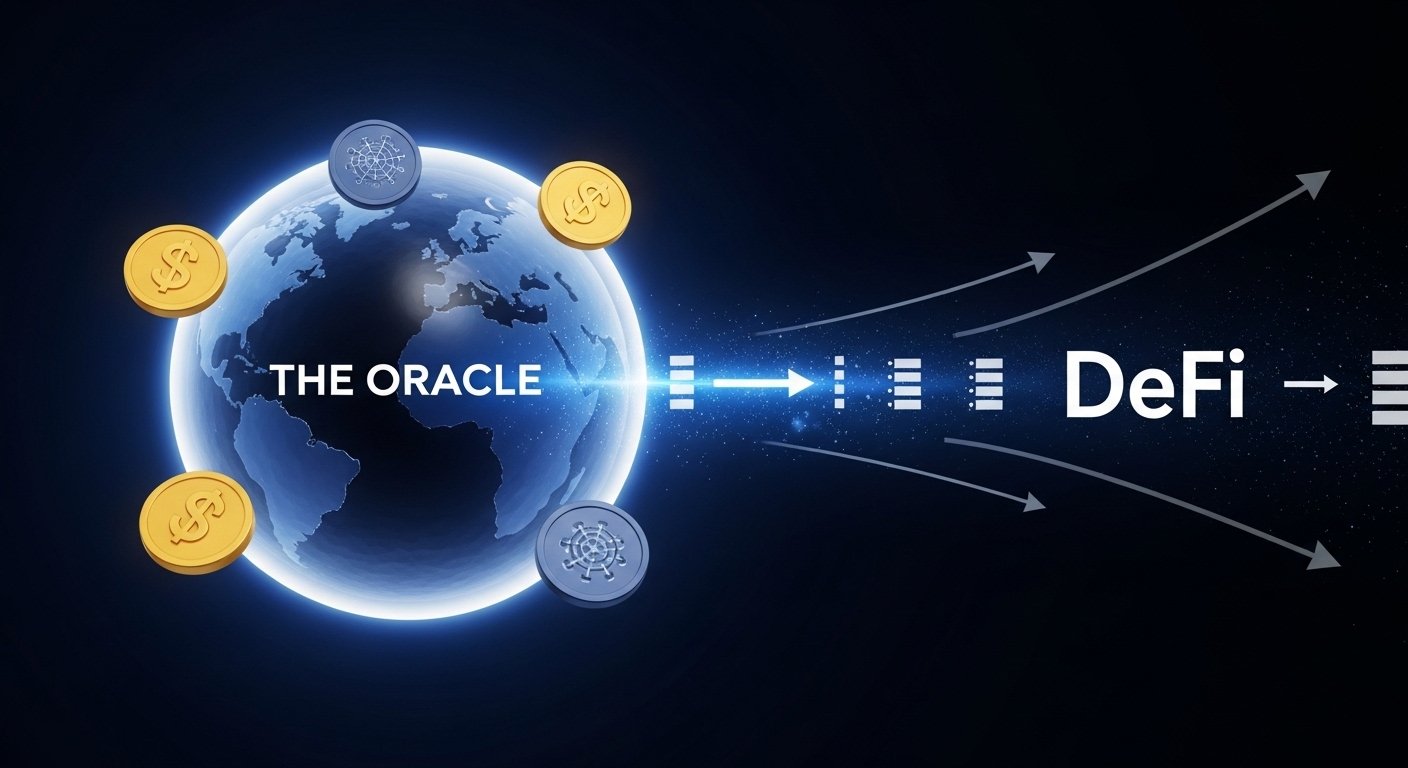
Because oracles are so influential, they’re also one of the largest sources of systemic risk. The ecosystem has seen multiple oracle-related incidents over the years, including manipulation attacks on low-liquidity assets and edge cases caused by market dislocations. The Moonwell case—where an oracle error leaves DeFi lender Moonwell with $1.8 million in bad debt—belongs to this broader category of failures that don’t necessarily require malicious intent. A mistake, misconfiguration, or unexpected market condition can be enough.
Why Oracles Can Fail Without a Hack
People often assume oracle failures are always attacks. In reality, an oracle can fail through benign causes. A price feed can lag during volatility. A data source can publish an outlier value. A smart contract integrating the oracle can mishandle decimals or update intervals. Even a temporary discrepancy between spot prices and reference prices can create an exploitable window.
When an oracle error leaves DeFi lender Moonwell with $1.8 million in bad debt, it highlights how thin the margin for error is. DeFi lending is designed to operate automatically, which means it can also fail automatically when the data it consumes is wrong. Protocols don’t “pause to double-check” like humans do unless safeguards are explicitly built in.
What Bad Debt Means for Moonwell and Its Users
Bad debt in DeFi lending is not the same as a temporary imbalance. It is debt that remains after collateral is exhausted or cannot be liquidated at a sufficient price to cover the borrowed amount. In traditional finance, lenders price this into credit risk. In DeFi, most loans are over-collateralized specifically to avoid it. That’s why it’s notable when an oracle error leaves DeFi lender Moonwell with $1.8 million in bad debt—it represents a breakdown in the over-collateralization safety model.
Bad debt can sit on a protocol’s balance sheet in several ways. Some protocols socialize losses across lenders, reducing the value of deposits. Others maintain insurance funds or reserves that absorb the hit. Some rely on governance proposals to recapitalize or adjust parameters to prevent repeats. Regardless of the mechanism, bad debt impacts perceived safety, and perceived safety affects liquidity and usage.
If users deposit assets into a lending pool, they usually expect the protocol’s risk engine and liquidation design to manage solvency. When the system ends up with a gap, it can reduce confidence. Even users who were not directly affected may rethink risk exposure, especially if they believe oracle issues could recur.
The Psychological Impact of Oracle-Driven Losses
The technical details matter, but so does psychology. When an oracle error leaves DeFi lender Moonwell with $1.8 million in bad debt, users may wonder: if the protocol can’t rely on accurate prices, how can I trust liquidation thresholds? This is especially relevant for lenders, who often view lending pools as “lower risk” compared to yield farming. Oracle problems puncture that assumption.
For the broader DeFi industry, oracle failures can also amplify narratives that smart contracts are only as safe as their external dependencies. That’s not an argument against DeFi—it’s an argument for better design, stronger risk controls, and more realistic user education about oracle risk.
How an Oracle Error Can Create $1.8 Million in Bad Debt
Now let’s connect the dots. How does an oracle mistake translate into a multi-million-dollar deficit? Typically, the chain of events looks like this: incorrect price data leads to incorrect collateral valuations, which then leads to borrowing or liquidation activity that leaves the protocol under-collateralized.
When an oracle error leaves DeFi lender Moonwell with $1.8 million in bad debt, one plausible pathway is that the oracle price made collateral appear more valuable than it actually was. Borrowers could have borrowed more than safe limits allowed, and when the real market price caught up, their positions would have been insolvent. If liquidations didn’t trigger in time or couldn’t be executed at profitable rates, the protocol could end up holding debt with insufficient collateral to cover it.
Another pathway is a “missed liquidation” scenario. If the oracle undervalued borrowed assets or overvalued collateral, health factors could appear healthy when they were actually risky. Liquidators might not act because the system doesn’t signal an opportunity, and by the time the correct price returns, the position is too far underwater.
The Role of Liquidation Incentives and Market Liquidity
Liquidations in DeFi aren’t automatic in the sense that the protocol goes to an exchange and sells collateral itself. Usually, external liquidators compete to repay a borrower’s debt and claim collateral at a discount. This requires active bots, reliable pricing, and sufficient market liquidity.
If an oracle error leaves DeFi lender Moonwell with $1.8 million in bad debt, it may also reflect a liquidity mismatch. Even with correct liquidation logic, if collateral cannot be sold efficiently, the value realized may be lower than expected. During volatile markets, slippage can be severe. That’s why lending protocols increasingly consider not just price, but liquidity risk—how quickly an asset can be liquidated without crashing its price.
In short, bad debt often emerges from a combination of an oracle issue and market conditions. Oracles set the theoretical valuation, but real markets determine what collateral can actually be sold for.
Why This Incident Matters Beyond Moonwell
The headline is specific—oracle error leaves DeFi lender Moonwell with $1.8 million in bad debt—but the lesson is universal. DeFi lending is one of the ecosystem’s most important primitives. It underpins stablecoin liquidity, leverage strategies, yield loops, and even DAO treasury management. If oracle problems can harm a lending protocol, they can also ripple into the strategies built on top of it.
This matters to everyday users because a lending protocol isn’t just a place to borrow; it often becomes the foundation for portfolios. People deposit assets expecting predictable yield and stable mechanics. If a protocol’s solvency can be affected by a single data feed anomaly, risk management becomes everyone’s concern, not just the developers’.
It also matters to builders because oracle integration is often treated like a checklist item. Teams assume using a reputable provider is enough. But robust design requires more than selecting an oracle. It requires thinking through edge cases: stale updates, outliers, data source divergence, and the cascading effects those can have on collateral values.
The Industry-Wide Push for Safer Oracle Designs
DeFi has already begun to evolve its oracle standards. Many protocols now rely on decentralized oracle networks, time-weighted averages, circuit breakers, and multi-source aggregation. The goal is to reduce the chance that one anomalous print can break the system.
When an oracle error leaves DeFi lender Moonwell with $1.8 million in bad debt, it reinforces the need for layered defenses. A single point of failure—whether a feed, a parameter, or a market assumption—can become a multi-million-dollar problem. Mature protocol design acknowledges that failures will happen and focuses on minimizing blast radius.
Risk Controls That Reduce Oracle-Driven Bad Debt
If you’re wondering what can be done to prevent similar outcomes, the answer is not one magic fix. Risk control in DeFi lending is a system of overlapping measures. When an oracle error leaves DeFi lender Moonwell with $1.8 million in bad debt, it demonstrates what happens when that overlap isn’t sufficient for a particular scenario.
One important approach is bounding. Protocols can implement circuit breakers that halt borrowing or liquidations if prices move beyond expected ranges in a short period. Another approach is redundancy. Using multiple oracle sources and comparing them can reduce reliance on a single feed. If one source deviates too far from others, the protocol can ignore it or revert to a safer mode.
Time-weighted average prices, often referred to as TWAPs, can also help. They smooth short-term anomalies but come with tradeoffs, including slower responsiveness. Some protocols blend spot feeds with TWAP logic to balance speed and stability.
Governance and Parameter Tuning as Ongoing Defense
Even with strong oracle infrastructure, lending protocols must tune risk parameters. Loan-to-value ratios, liquidation thresholds, and liquidation bonuses should reflect not only price volatility but also liquidity depth. If a collateral asset is thinly traded, aggressive LTV settings can create a situation where liquidations cannot keep up.
The moment an oracle error leaves DeFi lender Moonwell with $1.8 million in bad debt, governance often becomes the next line of defense. Communities review what happened, adjust risk settings, and sometimes introduce new controls. This is one of DeFi’s strengths: transparent post-mortems and rapid iteration. But it’s also a reminder that risk is dynamic. What is safe today may be risky tomorrow if markets change.
What Users Can Learn From the Moonwell Bad Debt Event
Users don’t need to be oracle experts to make smarter DeFi decisions. But they do benefit from understanding that “audited smart contracts” don’t eliminate external risk. When an oracle error leaves DeFi lender Moonwell with $1.8 million in bad debt, it shows that the security of a protocol depends on data inputs as much as code correctness.
For lenders, it’s a reminder to assess protocol reserves, insurance mechanisms, and historical incident response. For borrowers, it emphasizes the importance of maintaining healthy collateral buffers rather than borrowing right up to the limit. In an oracle anomaly, positions near liquidation thresholds are most vulnerable.

It also encourages diversification. DeFi users sometimes concentrate lending exposure in one protocol because it offers the best rate. But rates are not the only metric that matters. Risk management and resilience should be part of the equation.
Due Diligence Signals to Watch
When evaluating a lending platform, users can look for signs of mature risk controls: transparent oracle configuration, documentation on circuit breakers, and a clear plan for handling insolvency or bad debt. Users can also pay attention to governance cadence and whether risk parameters are actively maintained.
The bigger takeaway is simple: the moment an oracle error leaves DeFi lender Moonwell with $1.8 million in bad debt, it becomes a case study for everyone in DeFi. It’s not just about Moonwell; it’s about the systemic importance of accurate, resilient pricing.
The Bigger Picture: DeFi’s Growth Comes With Infrastructure Responsibility
DeFi has matured rapidly. The industry has moved from experimental yield farms to complex money markets, cross-chain lending, real-world asset tokenization, and institutional interest. As that complexity grows, infrastructure dependencies like oracles become even more critical.
When an oracle error leaves DeFi lender Moonwell with $1.8 million in bad debt, it signals that DeFi’s next phase is less about inventing new primitives and more about hardening the existing ones. Lending protocols are not just products; they’re financial infrastructure. That means they need reliability standards closer to traditional finance, while still keeping DeFi’s transparency and composability.
The encouraging part is that DeFi learns in public. Each incident typically drives improvements across multiple protocols. Builders adopt better oracle patterns. Risk teams refine models. Users become more educated. Over time, these feedback loops make the ecosystem stronger.
Conclusion
The story of how an oracle error leaves DeFi lender Moonwell with $1.8 million in bad debt is a powerful reminder that decentralized finance is only as strong as the data it trusts. Oracles are the silent backbone of lending protocols, and even a brief failure can cascade into missed liquidations, under-collateralized loans, and real financial losses. For Moonwell, the bad debt figure is a direct challenge to solvency mechanics. For the wider DeFi ecosystem, it is a call to strengthen oracle risk defenses, improve liquidation design, and adopt layered safeguards like circuit breakers, redundancy, and liquidity-aware risk parameters.
Ultimately, DeFi’s promise isn’t that failures won’t happen—it’s that failures can be analyzed transparently, mitigated quickly, and used to build more resilient systems. Incidents like this are painful, but they push protocols toward better engineering and more responsible financial design. If DeFi wants to compete with traditional markets long-term, robust oracle infrastructure and disciplined risk management will need to be treated as core features, not optional upgrades.
FAQs
Q: What does it mean when Moonwell has bad debt?
Bad debt means the protocol has loans that cannot be fully repaid because the collateral backing those loans was insufficient to cover the borrowed amount after liquidations or market moves.
Q: How can an oracle error cause bad debt in DeFi lending?
An oracle error can misprice collateral or borrowed assets. That can allow excessive borrowing, prevent timely liquidations, or cause liquidations at incorrect valuations, leaving the protocol under-collateralized.
Q: Are oracle errors the same as oracle manipulation attacks?
Not always. Oracle manipulation is typically malicious and often exploits low liquidity. Oracle errors can also happen through misconfiguration, data outliers, delayed updates, or integration bugs without any attacker.
Q: Can users protect themselves from oracle-related liquidations?
Yes. Borrowers can keep a larger collateral buffer and avoid borrowing near maximum limits. Lenders can diversify across protocols and favor platforms with strong reserves, transparent risk controls, and robust oracle setups.
Q: What improvements help prevent future oracle-driven bad debt?
Common improvements include multi-source oracles, time-weighted averages, anomaly detection, circuit breakers, conservative collateral parameters, and liquidation designs that account for real market liquidity.
Also More: Bitcoin Falls Below $70,000 After Market Roller-Coaster
