

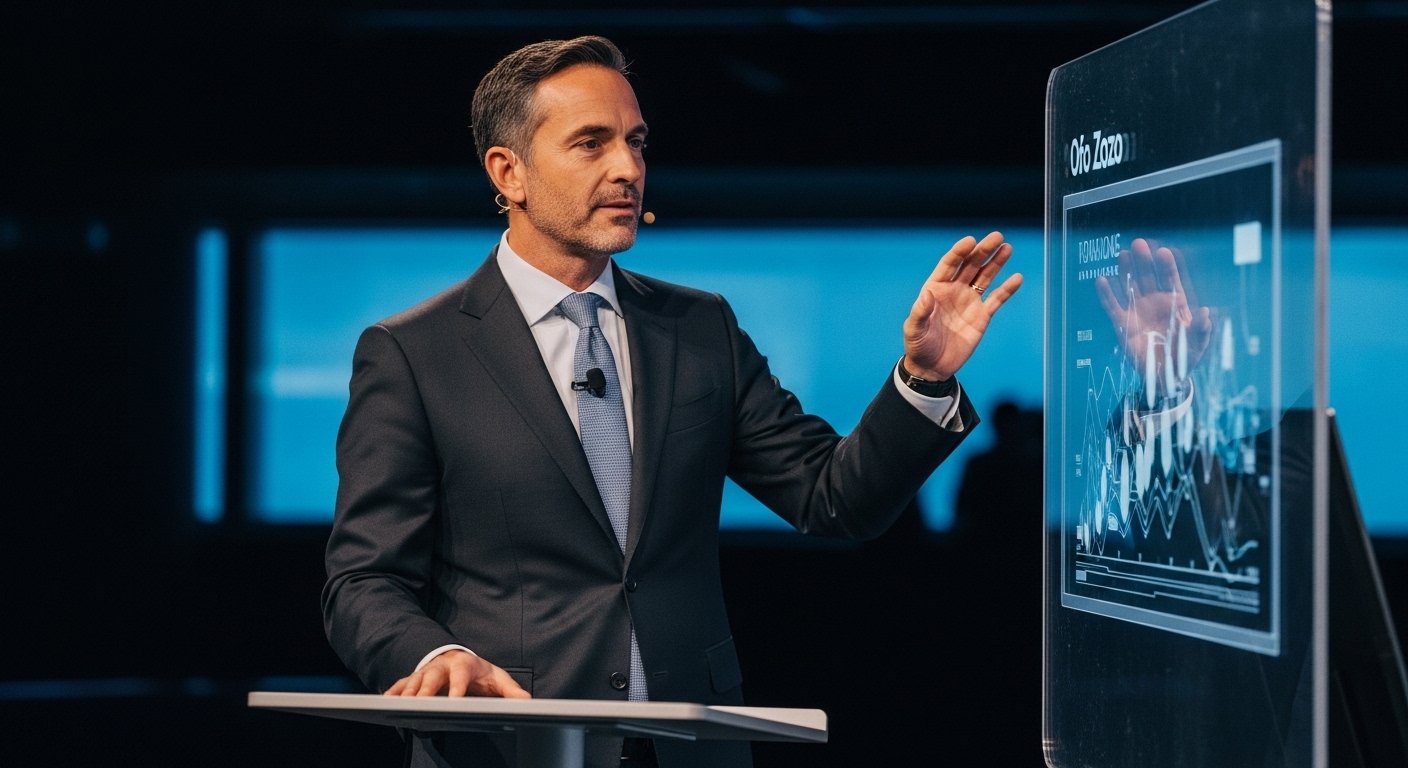
Alex Zozos on Tokenized in digital finance generate as much momentum—and as much confusion—as tokenized securities. The idea sounds simple: take a traditional financial instrument such as an equity share, bond, fund interest, or other investment contract, and represent it on a blockchain as a token. But the operational and legal implications are anything but simple. As institutions explore blockchain rails for issuance, trading, settlement, custody, and compliance, the market is being forced to answer a foundational question: when do these instruments become “crypto,” and when are they still plainly securities?
Alex Zozos’ perspective is valuable because it meets the market where it is: transitioning from speculative experimentation to regulated infrastructure. When Zozos emphasizes that tokenized securities are classified as securities, he is reinforcing a core reality of the regulatory landscape. Tokenization can change the wrapper and the rails, but it does not automatically change the underlying nature of the asset. A tokenized share of equity still functions as a share; a tokenized bond still behaves like debt; and a tokenized interest in a fund still exposes holders to expectations of returns and issuer obligations. This is precisely why on-chain trading is increasingly colliding with long-established securities laws, broker-dealer rules, exchange registration frameworks, and market integrity standards.
At the same time, the U.S. Securities and Exchange Commission’s position on digital assets has been actively debated across the industry. Many market participants are seeking clarity on how the SEC will approach on-chain trading venues, tokenized settlement systems, and decentralized market structures. The SEC’s evolving role in on-chain trading is not just a legal storyline; it is a direct determinant of whether tokenized securities can scale safely in the United States, how compliance will be implemented, and which market models will survive.
Finally, the promise of blockchain is not merely ideological. There is a practical case that blockchain can enhance trading efficiency: reducing friction, improving transparency, streamlining settlement, and lowering operational costs—while potentially enabling new forms of automated compliance. But none of that matters if tokenized securities cannot align with the core safeguards that securities regulation is designed to ensure: investor protection, fair and orderly markets, and resilient market plumbing.
In this article, we’ll unpack the key themes implied by the title: why tokenized securities remain securities, how the SEC’s role is changing as trading migrates on-chain, and how blockchain enhances trading efficiency without sacrificing the integrity of modern capital markets. We’ll also explore the real-world obstacles that must be solved—particularly around market structure, custody, identity, and interoperability—so that on-chain trading becomes a durable upgrade rather than an unregulated workaround.
Alex Zozos on Tokenized Securities Are Still Securities: The Core Classification
The strongest starting point is also the simplest: tokenized securities are typically treated as securities because they represent economic rights that fit within existing securities definitions. Tokenization changes the recordkeeping technology and transfer mechanism, not the fundamental investor relationship. If a token grants ownership, revenue rights, dividend participation, interest payments, governance rights tied to an issuer, or exposure to managerial efforts that drive value, regulators tend to view it through the same lens as off-chain instruments.
A common misconception is that tokenization “digitizes” an asset into something entirely new. In reality, most tokenized securities are closer to digital representations of traditional securities. Whether the token lives on Ethereum, a permissioned enterprise chain, or a purpose-built financial network, the token is effectively a ledger entry. It is a modern form of “who owns what,” but ownership and transfer still implicate securities regulation. This is why classification is not merely a semantic debate: it determines who can issue, who can broker, where trading can occur, how disclosures work, and what investor protections apply.
What Tokenization Actually Changes (And What It Doesn’t)
Tokenization is best understood as a modernization of market infrastructure. It can change how assets are issued, transferred, and reconciled across intermediaries. It can reduce the need for multiple independent databases and repeated reconciliation, and it can enable more automated workflows. But tokenization doesn’t inherently change disclosure obligations, antifraud rules, suitability frameworks, or market conduct standards.
This is where Zozos’ framing becomes practical: accept that these are securities, then design on-chain trading systems that satisfy securities-grade requirements. That mindset is different from “move fast and break things.” It is more like “move carefully and scale.” For institutions, this approach is essential. They don’t want a clever technical demo; they want an upgrade path that works with capital markets’ risk controls and legal constraints.
Why “Securities” Classification Can Be a Feature, Not a Bug
Many builders treat securities classification as a barrier. Yet it can become a feature—because it provides a clear rulebook. Markets thrive when participants understand the standards. If tokenized securities are securities, then compliant innovation is less about guessing which rules apply and more about implementing those rules efficiently on-chain. This can unlock institutional demand, encourage liquidity providers, and attract the type of long-term capital that prefers regulated frameworks.
Securities classification also pushes the ecosystem toward professional-grade safeguards: robust disclosures, defined responsibilities, clear governance, surveillance, and enforceable investor rights. In other words, it creates the conditions for tokenized securities to move beyond niche experiments and into mainstream capital markets infrastructure.
The SEC’s Evolving Role in On-Chain Trading
The SEC’s evolving role in on-chain trading is driven by a simple dynamic: as trading activity and settlement processes move onto blockchain rails, the SEC must determine how to supervise market integrity without relying solely on the traditional architecture of exchanges, brokers, transfer agents, and clearinghouses.
Historically, securities markets have been regulated through identifiable intermediaries. Rules apply to broker-dealers, national securities exchanges, alternative trading systems, clearing agencies, and transfer agents. On-chain systems challenge this model because the technology can distribute functions across smart contracts, liquidity pools, decentralized governance, and self-custody wallets. Even when the end product is a familiar economic instrument, the operational shape can differ dramatically.

The SEC’s role, therefore, is evolving from a focus on traditional venues to a broader question: when a blockchain-based system performs exchange-like functions—such as matching buyers and sellers, setting prices, routing orders, or enabling secondary trading—how should it be treated under securities law? This is a market structure question as much as a crypto question.
From “Asset” Debates to “Market Structure” Enforcement
Over the past several years, much attention has centered on whether specific tokens are securities. But as tokenized securities and on-chain trading mature, the regulatory lens increasingly moves toward market infrastructure: who is operating the venue, what functions it performs, what investor protections exist, and whether the venue should register or operate under an exemption.
This shift matters because tokenized securities are often clear-cut: if you’re tokenizing an equity-like or debt-like instrument, classification is straightforward. The harder issues arise in how those instruments trade. If tokenized securities trade through systems that resemble exchanges or ATSs, regulators will focus on those venue obligations: surveillance, fair access, conflict management, recordkeeping, reporting, and resilience.
The Challenge of Decentralization and Accountability
A major tension in on-chain trading is accountability. Traditional markets have accountable parties: firms with licenses, compliance programs, and regulators who can supervise them. In many on-chain systems, governance is diffused. Code can be open-source, upgrades can be controlled by token holders, and operational responsibilities can be fragmented.
The SEC’s evolving role in on-chain trading may hinge on how it interprets “control” and “operation.” If a group of developers, a foundation, or a company is effectively directing the protocol’s trading functions, regulators may view them as responsible parties. Conversely, if the system becomes genuinely decentralized with no identifiable operator, regulators still face the task of enforcing investor protections—but with fewer conventional levers.
In practice, many institutional-grade tokenized securities models lean toward permissioned or hybrid designs precisely to solve accountability: identity checks, restricted transfer logic, compliant custody, and designated market operators. These designs may not appeal to every crypto-native philosophy, but they align more naturally with securities regulation and with the compliance expectations of banks, asset managers, and broker-dealers.
What “On-Chain Trading” Could Mean Under a Securities Framework
A realistic pathway for on-chain trading of tokenized securities may resemble today’s regulated systems, but with blockchain providing the rails. That could mean registered broker-dealers facilitating transactions, ATSs providing secondary markets, and compliant custodians managing private keys or token control. It could also mean transfer restrictions embedded in smart contracts to ensure only eligible investors can hold certain assets, or that transfers comply with lockups and jurisdictional restrictions.
In that model, the SEC’s role is not to block innovation but to ensure that on-chain trading does not bypass the obligations that have historically made securities markets resilient. The “evolving role” is less about inventing new laws and more about applying existing market structure rules to a new technical medium.
How Blockchain Enhances Trading Efficiency
The practical argument for tokenization is not only about novelty. Proponents emphasize that blockchain enhances trading efficiency by reducing settlement time, simplifying post-trade workflows, and increasing transparency. Traditional settlement often requires multiple intermediaries to reconcile records and move assets and cash through separate systems. That complexity creates operational costs, counterparty risks, and delays.
When tokenized securities are transferred on-chain, settlement can be closer to real time. Ownership updates on a shared ledger can reduce duplicative reconciliation. Smart contracts can automate corporate actions, interest payments, and transfer restrictions. Over time, these features can lower the friction that slows down markets.
Settlement Speed and Reduced Counterparty Risk
One of the clearest efficiency gains is faster settlement. Traditional equity trades in many markets settle on a delayed basis, and even when settlement cycles shorten, a lag remains between execution and finality. During that window, parties are exposed to counterparty risk and capital is tied up in margin and collateral processes.
With tokenized securities, on-chain settlement can occur more quickly, potentially reducing the need for certain layers of intermediated risk management. If delivery-versus-payment mechanisms are implemented properly—meaning the asset and payment move together—the system can reduce settlement risk and improve capital efficiency. This is one reason institutions explore blockchain: it is not just cheaper software; it is a different settlement architecture.
Operational Streamlining and Fewer Reconciliations
A persistent cost in traditional finance is reconciliation between separate ledgers: the broker’s records, the custodian’s records, the clearinghouse’s records, and the issuer’s records. Blockchain-based systems can compress these layers by maintaining a single shared source of truth—assuming governance, access controls, and privacy are implemented correctly.
When blockchain enhances trading efficiency, it often does so by making recordkeeping more consistent and programmable. Instead of multiple parties updating databases and later resolving mismatches, the ledger itself becomes the shared state. That reduces operational errors, reduces manual interventions, and can accelerate post-trade processing.
Transparency, Auditability, and Better Monitoring
Another efficiency lever is transparency. On public chains, transactions are visible and verifiable, which can improve auditability and real-time monitoring. For regulated tokenized securities, transparency must be balanced with confidentiality, because institutions and investors often require privacy. That is why permissioned chains, privacy layers, or selective disclosure mechanisms frequently appear in institutional designs.
Still, even with privacy protections, blockchain systems can provide improved traceability and automated reporting. Compliance teams can gain more direct visibility into transfers, restrictions, and unusual patterns. Regulators may also benefit from enhanced monitoring if appropriate access is provided. The result can be stronger oversight with less manual reporting burden—an outcome aligned with both market integrity and efficiency.
On-Chain Trading and Compliance: Where Technology Meets Law
The tension at the heart of tokenized securities is that on-chain trading is not just a technical upgrade. It is a regulated activity. That means the promise of blockchain must be paired with enforceable compliance: identity checks, suitability constraints, sanctions screening, transfer restrictions, and reporting obligations. The most credible models are those that treat compliance as an architectural feature rather than an afterthought.
Embedded Compliance and Smart Contract Controls
One of the most interesting ideas in tokenized securities is embedded compliance. Instead of relying purely on off-chain policies, the asset itself can enforce certain rules. For example, a token might restrict transfers to wallets associated with verified investors, enforce holding periods, or block transfers to sanctioned entities.
This is not a magic wand—regulators still require governance, audits, and accountability—but it can reduce errors and increase consistency. Embedded compliance also improves scalability: if a tokenized security can enforce rules at the protocol level, it becomes easier to support broader distribution without exponentially increasing operational complexity.
Identity, KYC, and the Reality of Permissioned Access
Most regulated tokenized securities initiatives must address identity. Securities markets require a level of participant accountability that anonymous wallets can’t provide. This is why many institutional projects incorporate KYC, whitelist systems, or verified credential frameworks.
This is also where the SEC’s evolving role in on-chain trading intersects with design choices. If compliance is robust and traceable, regulators may be more comfortable with on-chain trading models. If identity and controls are weak, regulators may see the same risks that exist in unregulated token markets: manipulation, fraud, and illicit activity.
Liquidity, Market Integrity, and the Challenge of Scaling Tokenized Securities
Even if tokenized securities are classified as securities and on-chain trading becomes compliant, the market still needs liquidity. Without deep liquidity, spreads widen, price discovery weakens, and the product remains niche. Liquidity depends on market makers, institutional participation, consistent regulatory treatment, and interoperable infrastructure.
Fragmentation Across Chains and Venues
A practical problem is fragmentation. Tokenized securities can exist across multiple blockchains, different custody models, and separate trading venues. Fragmentation can split liquidity and make it harder for institutions to justify integration. For blockchain to enhance trading efficiency at scale, interoperability must improve: standardized token formats, cross-venue connectivity, and consistent compliance metadata.
Price Discovery and Surveillance on Blockchain Rails

Market integrity also depends on surveillance. Regulators care about manipulation, insider trading, wash trading, and abusive practices. On-chain systems can make some forms of analysis easier due to traceability, but they also introduce new tactics. A mature on-chain trading system for tokenized securities will likely require surveillance tools comparable to those used in traditional markets—adapted to blockchain data and smart contract activity. This again reflects the SEC’s evolving role in on-chain trading: the core mission of fair and orderly markets remains, but the monitoring environment changes.
The Future: Tokenized Securities as a Bridge Between TradFi and On-Chain Finance
The most compelling future for tokenized securities is not a parallel universe that replaces traditional finance overnight. It is a bridge: a path where securities-grade assets adopt blockchain rails to improve efficiency, transparency, and programmability while remaining compliant. In that future, tokenized securities could expand access to certain products, improve settlement efficiency, and reduce operational friction for issuers and investors. Alex Zozos’ framing—tokenized securities are classified as securities—anchors this future in reality. It suggests that the winning strategy is not to escape securities laws, but to build within them, making markets more efficient without weakening protections.
The SEC’s evolving role in on-chain trading will likely continue to shape how quickly this transition happens in the United States. If the regulatory environment provides clearer pathways for compliant on-chain trading venues, the market could scale more confidently. If uncertainty persists, innovation may still happen—but it may shift to jurisdictions or models that better align with existing regulatory expectations.
Conclusion
Tokenization is not a loophole; it is an infrastructure upgrade. Tokenized securities remain securities because they represent familiar economic rights, investor expectations, and issuer obligations. That classification is central to building credible markets, because it brings a known framework for investor protection and market integrity. At the same time, the SEC’s evolving role in on-chain trading reflects a broader market transition: as trading and settlement shift onto blockchain rails, regulators must adapt market structure oversight to new technological forms.
When executed responsibly, blockchain enhances trading efficiency by streamlining settlement, reducing reconciliation costs, improving auditability, and enabling programmable compliance. The next chapter of capital markets innovation will likely be defined by how well these systems balance efficiency with safeguards. The projects that succeed will treat regulation as design input, not a barrier, and will prove that on-chain trading can deliver faster, cleaner market plumbing without compromising the rules that keep markets trustworthy.
FAQs
Q: Are tokenized securities legally different from traditional securities?
In most cases, no. Tokenized securities are typically treated as securities because tokenization changes the format and transfer rails, not the underlying rights and obligations of the instrument.
Q: What does “on-chain trading” mean for regulated assets?
On-chain trading generally means executing and settling trades using blockchain infrastructure. For regulated assets, this usually requires compliant venue structures, identity checks, and rules aligned with securities regulations.
Q: How can blockchain enhance trading efficiency without increasing risk?
Blockchain can enhance trading efficiency through faster settlement, reduced reconciliation, and automated compliance controls. Risk is managed by pairing these efficiencies with regulated market structure, surveillance, and accountable operators.
Q: Why is the SEC’s evolving role in on-chain trading so important?
The SEC’s evolving role in on-chain trading shapes what business models are viable in the U.S., how venues must register or comply, and how investor protections are enforced as trading migrates onto blockchain rails.
Q: Will tokenized securities replace traditional markets?
More likely, tokenized securities will complement and modernize traditional markets. Over time, blockchain rails may become a standard part of issuance, trading, and settlement—especially where efficiency gains are clear and compliance is strong.
