

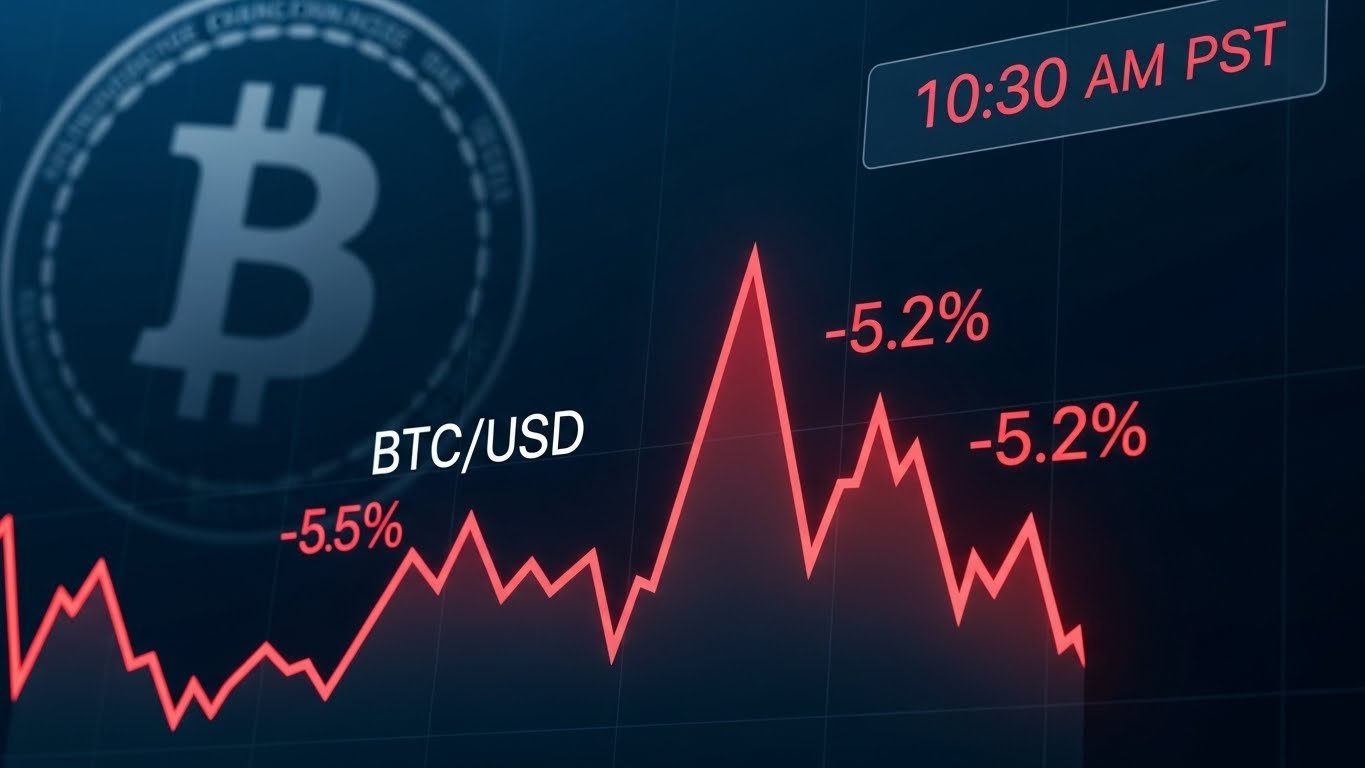
Bitcoin price today dips is under pressure, slipping below the closely watched $91,000 level as traders navigate a mix of global uncertainty and high-stakes macroeconomic data. The world’s largest cryptocurrency has spent much of the past several weeks attempting to reclaim higher ground, but momentum has weakened as investors hesitate to place aggressive bets ahead of major US labor market updates and shifting geopolitical headlines. The result is a cautious, risk-aware market that is reacting quickly to any sign of instability.
At the center of today’s move is a simple reality: Bitcoin is no longer traded in isolation. While crypto has its own narratives—such as exchange flows, ETF demand, and whale activity—Bitcoin price today is still strongly influenced by broader forces like interest rate expectations, inflation fears, dollar strength, and global risk sentiment. When traders anticipate a potentially market-moving report like US nonfarm payrolls, they often reduce exposure, protect profits, and wait for clarity. That dynamic can push BTC/USD lower, especially when price is already struggling to break key resistance levels.
According to market updates, Bitcoin dropped around 1.5% and briefly traded near the low $90,000s, after failing to sustainably retake the $95,000 region. At the same time, geopolitical developments have continued to inject uncertainty into global markets, keeping investors on edge and driving short-term volatility across risk assets.
As of the latest available data, Bitcoin is trading around $90,195, down roughly 2.8% on the day, with an intraday range that dipped near $90,120 and peaked around $92,857. Those numbers matter because they signal that the market is actively testing support—and the reaction around $90,000 could shape near-term direction.
In this deep-dive, we’ll break down what’s driving Bitcoin price today, why geopolitics and payrolls data matter so much, what traders are watching technically, and what potential scenarios could unfold next for the crypto market.
Why Bitcoin price today is falling below $91k
Bitcoin price today dips is being pulled lower by two major pressures: rising uncertainty tied to geopolitical risks and a “wait-and-see” approach ahead of critical US employment data. When both forces hit at the same time, crypto often becomes a source of liquidity—meaning traders sell it not necessarily because they’re bearish long term, but because they want flexibility and protection in the short term.
Bitcoin also tends to suffer when it fails to break a major resistance area. In this case, the $95,000 zone has acted as a psychological ceiling. When BTC repeatedly stalls under that level, short-term bulls lose confidence, leverage gets reduced, and sellers start to test downside levels.

This isn’t necessarily a breakdown in long-term fundamentals—it’s a reset in positioning. But for anyone following Bitcoin price today, the key point is that the market is clearly reacting to the idea that the next big move will likely be driven by macro catalysts, not just crypto-specific headlines.
Geopolitical tension and crypto risk sentiment
Geopolitics has become one of the most powerful drivers of short-term market behavior. Wars, trade conflicts, shipping disruptions, and diplomatic escalations can shift investor psychology in minutes. In traditional markets, that shift usually shows up through rising demand for safe-haven assets like the US dollar, Treasuries, or gold. Crypto’s role is more complicated.
Is Bitcoin a safe haven or a risk asset?
The “digital gold” argument suggests Bitcoin should benefit when global uncertainty rises. But in reality, Bitcoin price today often behaves more like a high-volatility risk asset, especially during the initial phases of geopolitical fear. Traders typically move to cash or dollar-denominated assets first, then re-enter risk later if conditions stabilize.
That explains why geopolitical turmoil can cause BTC to dip even when long-term narratives remain bullish. In short: Bitcoin can act like a hedge over a long horizon, but it can still fall sharply in the short term when investors reduce exposure.
Why geopolitics increases volatility in crypto markets
Crypto markets tend to amplify uncertainty because they trade 24/7 and react instantly to global headlines. When geopolitical events evolve during off-hours for traditional markets, Bitcoin becomes one of the first assets that traders use to express fear or take risk off. This can create sudden drops below major levels, like what we are seeing with Bitcoin price today slipping under $91k.
Payrolls data in focus—why nonfarm payrolls matter for Bitcoin
Few economic releases move markets like US jobs data, and nonfarm payrolls (NFP) is among the most important. The report affects expectations for Federal Reserve policy, and Fed expectations directly influence liquidity conditions—one of the most critical long-term drivers for Bitcoin.
The jobs report is really a “Fed policy” signal
When jobs growth is strong, the Fed has more reason to keep rates higher for longer, or delay rate cuts. Higher rates typically strengthen the dollar and reduce risk appetite, which can pressure crypto. When jobs growth weakens, markets may price in rate cuts sooner, which can boost liquidity and support risk assets like Bitcoin.
That’s why traders often reduce positions before NFP: the report can swing interest rate expectations quickly, and Bitcoin can react sharply.
Recent labor data signals slower hiring momentum
Recent US labor market indicators have shown signs of cooling. For example, ADP private payrolls for December 2025 increased by 41,000, below expectations, while attention shifted to the official Bureau of Labor Statistics report. Job openings also declined more than expected in November 2025, adding to the “cooling demand” narrative.
Markets are now focused on the next official Employment Situation report, scheduled for Friday, January 9, 2026, at 8:30 a.m. ET, covering December 2025 data.
This setup matters because a weak report could quickly revive bullish rate-cut expectations, potentially lifting Bitcoin price today (or shortly after the data). Conversely, a stronger-than-expected report could reinforce the idea that rates stay higher, prolonging pressure on BTC.
Key technical levels traders are watching
Even when macro catalysts dominate, technical analysis still plays a major role in how Bitcoin price today moves. Large traders, institutions, and algorithmic strategies often respond to key levels in a predictable way—particularly around round numbers such as $90,000 and $100,000.
$90,000 is the main short-term support
With BTC trading around $90,195, the $90,000 region is now a make-or-break zone. If Bitcoin holds above this level, it may signal that selling pressure is mostly “event risk” hedging rather than structural weakness. But if BTC breaks below $90,000 and stays there, it could trigger further liquidations, especially in leveraged derivatives markets.
$95,000 remains the resistance ceiling
Bitcoin’s struggle to retake the $95,000 area is an important part of the story. Reclaiming and holding above it could restore bullish momentum and encourage more risk-on positioning. However, repeated failures under that resistance often lead to “sell the rallies” behavior, where traders take profits quickly instead of holding for larger upside.
Why range-bound trading makes breakouts more explosive
When Bitcoin trades in a narrow range for weeks, volatility tends to compress. Eventually, that compression breaks—often violently. If BTC remains trapped between $90,000 and $95,000, the next macro catalyst (like payrolls) could trigger a major move in either direction.
This is why traders are treating today’s dip as significant. It’s not just a price drop—it’s a test of whether BTC can maintain its current range.
How the US dollar and bond yields influence Bitcoin price today
A major driver of Bitcoin price today is the behavior of the US dollar and US Treasury yields. In general, when the dollar rises and yields climb, risk assets—including crypto—tend to struggle. That’s because higher yields increase the attractiveness of safer assets, and a stronger dollar can tighten global liquidity conditions.
Bitcoin thrives when liquidity expands and risk appetite improves. That’s why traders watch data like payrolls: it can shift yield expectations and Fed policy outlook quickly.
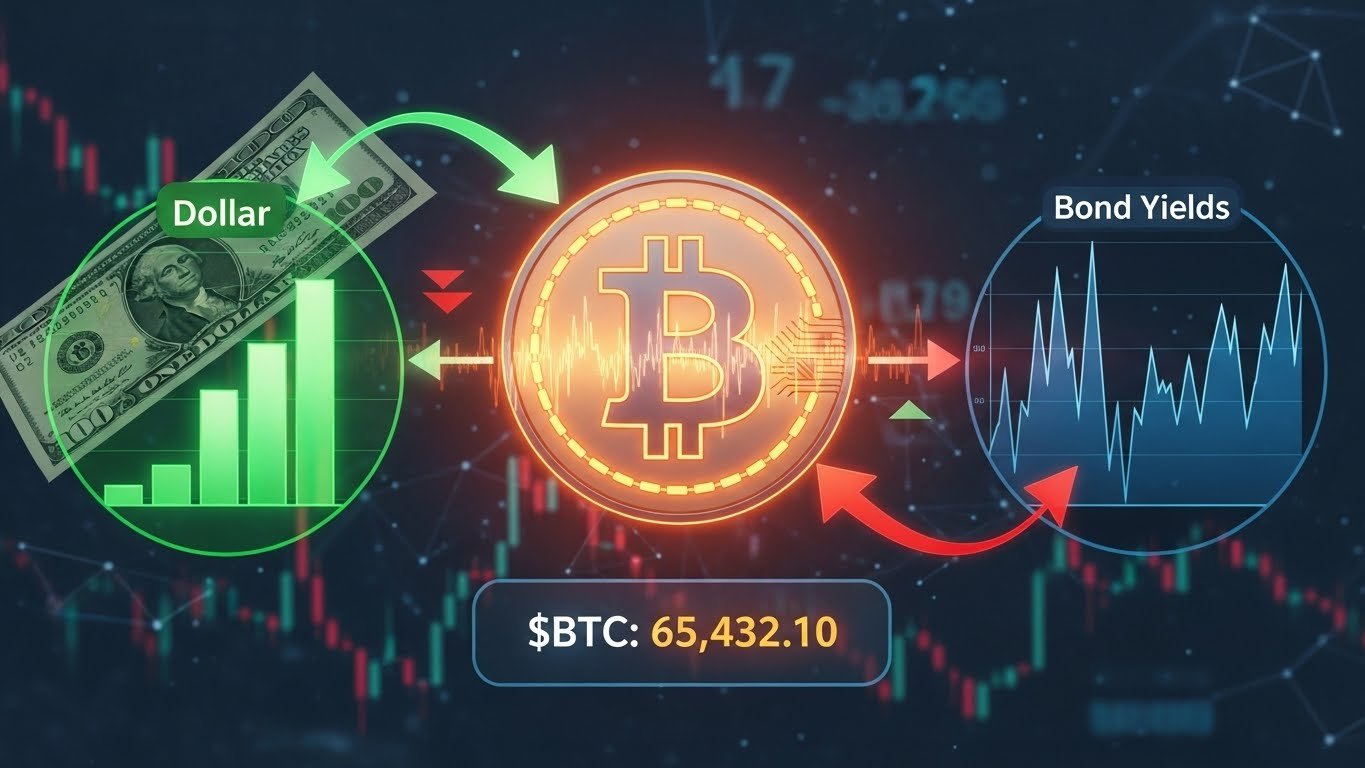
Some market watchers use tools like CME FedWatch to gauge probabilities for future Fed moves, though expectations can change rapidly around major data releases.
What crypto market sentiment is saying right now
Today’s decline doesn’t necessarily signal long-term bearishness—it signals uncertainty. The broader crypto market tends to follow Bitcoin’s lead, so when BTC slips below $91k, altcoins often weaken too, and overall sentiment shifts toward caution.
Traders are reducing risk, not abandoning Bitcoin
The key difference between a panic sell-off and a cautious dip is the context. Right now, traders are reacting to known events—geopolitics and payrolls data—rather than a shock collapse in crypto fundamentals. This kind of decline can reverse quickly if the macro narrative turns supportive.
Why liquidity matters more than hype
While retail investors often focus on headlines, institutions focus on liquidity and policy. When rate-cut expectations increase, Bitcoin often benefits. When higher-for-longer expectations dominate, BTC can struggle—even if adoption stories remain strong.
That’s why this week’s payrolls report could matter more to Bitcoin price today than most crypto-specific developments.
Possible scenarios for Bitcoin after the payrolls report
The US jobs report is the kind of catalyst that can reshape the short-term trend. Here are the most realistic outcomes in the market narrative.
If payrolls are weak, Bitcoin could rebound fast
A softer-than-expected NFP report could reinforce the “cooling labor market” story and increase rate-cut expectations. That would likely weaken the dollar, ease yields, and support risk assets. In that case, Bitcoin price today could bounce from support and attempt to retake the $91k–$95k range quickly.
If payrolls are strong, Bitcoin could test lower support
If jobs growth surprises to the upside, traders may price in a slower pace of rate cuts. That environment often pressures BTC, at least short term. A strong NFP could push Bitcoin below $90,000 and potentially trigger additional volatility from leveraged positions being unwound.
If payrolls are “in line,” Bitcoin may stay range-bound
Sometimes the biggest risk is…nothing happening. If payrolls are close to expectations, markets may remain stuck in the same trading range. Bitcoin could continue fluctuating between support and resistance, with traders waiting for the next catalyst such as inflation data, Fed commentary, or geopolitical developments.
What long-term investors should watch beyond today’s price dip
Even though the headline is about Bitcoin price today falling below $91k, long-term investors tend to focus on higher-level indicators: adoption trends, macro policy direction, and market structure.
In the bigger picture, Bitcoin’s resilience is often tested during uncertain periods like this. A price dip during geopolitical stress and data-driven caution isn’t unusual. What matters is whether BTC continues to find buyers at support levels and whether macro conditions evolve toward more accommodative policy.
If the labor market cools gradually and the Fed leans toward easier policy over the year, Bitcoin could benefit from improving liquidity conditions. If inflation reaccelerates or the economy stays stronger than expected, BTC may continue facing resistance.
Conclusion
Bitcoin price today falling below $91k is a reminder that crypto remains deeply connected to global markets. Geopolitical uncertainty and the approaching US payrolls report are pushing traders into a defensive posture, reducing leverage and waiting for clarity. With BTC hovering near $90,000, support levels are being tested, and the next macro data release could determine whether this dip becomes a deeper pullback or a quick rebound.
For investors and traders alike, the key is to focus on the drivers that matter most right now: geopolitics, US labor data, interest rate expectations, and key technical support and resistance zones. If conditions turn supportive, Bitcoin could recover quickly. If uncertainty increases, volatility could remain elevated in the days ahead.
FAQs
Q: Why is Bitcoin price today below $91,000?
Bitcoin price today is below $91k due to rising geopolitical uncertainty and cautious trading ahead of major US nonfarm payrolls data, which can affect Fed rate expectations and market liquidity.
Q: What does the nonfarm payrolls report have to do with Bitcoin?
Nonfarm payrolls influences expectations for Federal Reserve interest rate decisions. Rate expectations affect the US dollar, bond yields, and overall risk appetite—major drivers of Bitcoin’s price direction.
Q: Is $90,000 an important Bitcoin support level?
Yes. The $90,000 zone is a major psychological and technical support level. If Bitcoin holds above it, the market may stabilize. If it breaks below it, further downside volatility is possible.
Q: Can geopolitics push Bitcoin higher instead of lower?
Yes, but it depends on market behavior. Bitcoin can sometimes benefit as a “digital gold” narrative, but often acts like a risk asset in the short term, dropping when investors reduce exposure.
Q: What should traders watch next after this dip?
Traders should monitor the US payrolls release, interest rate expectations, the $90,000 support level, and whether BTC can reclaim resistance near $95,000. These signals will shape near-term trend direction.
Also Read: Bitcoin Holds $88K as Options Surge Cycle Theory Test
