


Bitcoin has matured from an internet-native experiment into a globally tracked asset with serious market infrastructure, expanding liquidity, and growing institutional participation. At the same time, the rise of regulated investment products has created a new decision point for everyday investors: should you buy Bitcoin directly, or get exposure through a spot product like the iShares Bitcoin Trust? This question matters more in 2026 and beyond because the market has shifted from “Can Bitcoin survive?” to “What is the most practical way to own it?” With more investors approaching Bitcoin as a long-term allocation rather than a speculative trade, the mechanics of ownership—fees, custody, taxes, trading access, and risk management—can influence results as much as the price chart.
The core trade-off is simple but powerful. Direct Bitcoin ownership gives you maximum control and direct exposure to the network’s unique properties—self-custody, permissionless transfer, and the potential to hold outside traditional financial rails. The iShares Bitcoin Trust, often discussed as a spot Bitcoin ETF-style vehicle (depending on your market and listing), aims to deliver Bitcoin price exposure inside a familiar brokerage account, wrapping Bitcoin in a regulated structure that may reduce friction for many investors. Both routes can be legitimate. The better investment for 2026 and beyond depends on what you value most: sovereignty and flexibility, or convenience and integration.
In this guide, we’ll compare Bitcoin vs. iShares Bitcoin Trust from every angle that actually affects long-term outcomes: how each works, costs and tracking, custody and counterparty risk, tax considerations, liquidity, regulatory factors, and portfolio fit. The goal isn’t to “pick a winner” for everyone—it’s to help you choose the approach that matches your strategy, risk tolerance, and practical reality.
Understanding Bitcoin as an Investment for 2026 and Beyond
Bitcoin is often described as “digital gold,” but the investment thesis is more nuanced than a single comparison. Bitcoin is a scarce, bearer-style digital asset with a fixed supply schedule and global trading markets. For long-term investors, the argument typically focuses on scarcity, durability, and increasing adoption. Whether you believe Bitcoin becomes a widely held store of value, a macro hedge, or simply a high-volatility asset with asymmetric upside, its behavior as an investment is shaped by a few recurring forces: liquidity cycles, risk appetite, technology and security confidence, and broader policy and regulatory attitudes.
By 2026, many investors may view Bitcoin less as a novelty and more as a strategic allocation—small for some portfolios, larger for those with high conviction. Yet Bitcoin remains volatile. That volatility can be a feature or a bug. For the patient investor, volatility may create opportunities to accumulate over time. For investors who panic-sell, volatility can be destructive. That is why the “best” choice in Bitcoin vs. iShares Bitcoin Trust is partly behavioral. If owning Bitcoin directly tempts you to overtrade or lose sleep over wallet management, the more structured route might produce better real-world results even if it’s not philosophically pure.
Bitcoin’s Long-Term Drivers: Scarcity, Adoption, and Market Structure
Bitcoin’s scarcity is enforced by code, and the market treats that scarcity as meaningful. The asset’s narrative strength often rises when investors worry about currency debasement or when institutional interest increases. Another key factor is market structure: as more institutional adoption arrives, spreads can tighten, access improves, and certain types of risk may decline—while other risks, like correlation with broader markets during stress events, can rise. Investors considering Bitcoin for 2026 and beyond should understand that Bitcoin is not “set and forget” in the way a diversified equity index can be. It requires a clear plan, especially because the price can move dramatically in either direction.
What Is the iShares Bitcoin Trust and How Does It Work?
The iShares Bitcoin Trust is designed to provide exposure to Bitcoin’s price through a traditional investment wrapper. Instead of buying Bitcoin on a crypto exchange and holding it in a crypto wallet, you buy shares of a trust through a brokerage account. The trust holds Bitcoin (typically with a professional custody provider), and the share price is intended to reflect the value of the Bitcoin held, minus costs.
For many investors, this structure solves practical problems. You can hold it alongside stocks and bonds, potentially inside certain account types (depending on jurisdiction and brokerage rules). You can use limit orders during market hours like other securities. You don’t need to manage private keys, figure out cold storage, or worry about wallet mistakes. In the real world, those frictions are exactly why the iShares Bitcoin Trust has attracted attention from investors who want exposure without the operational burden.
Why Investors Consider IBIT-Style Exposure in 2026+
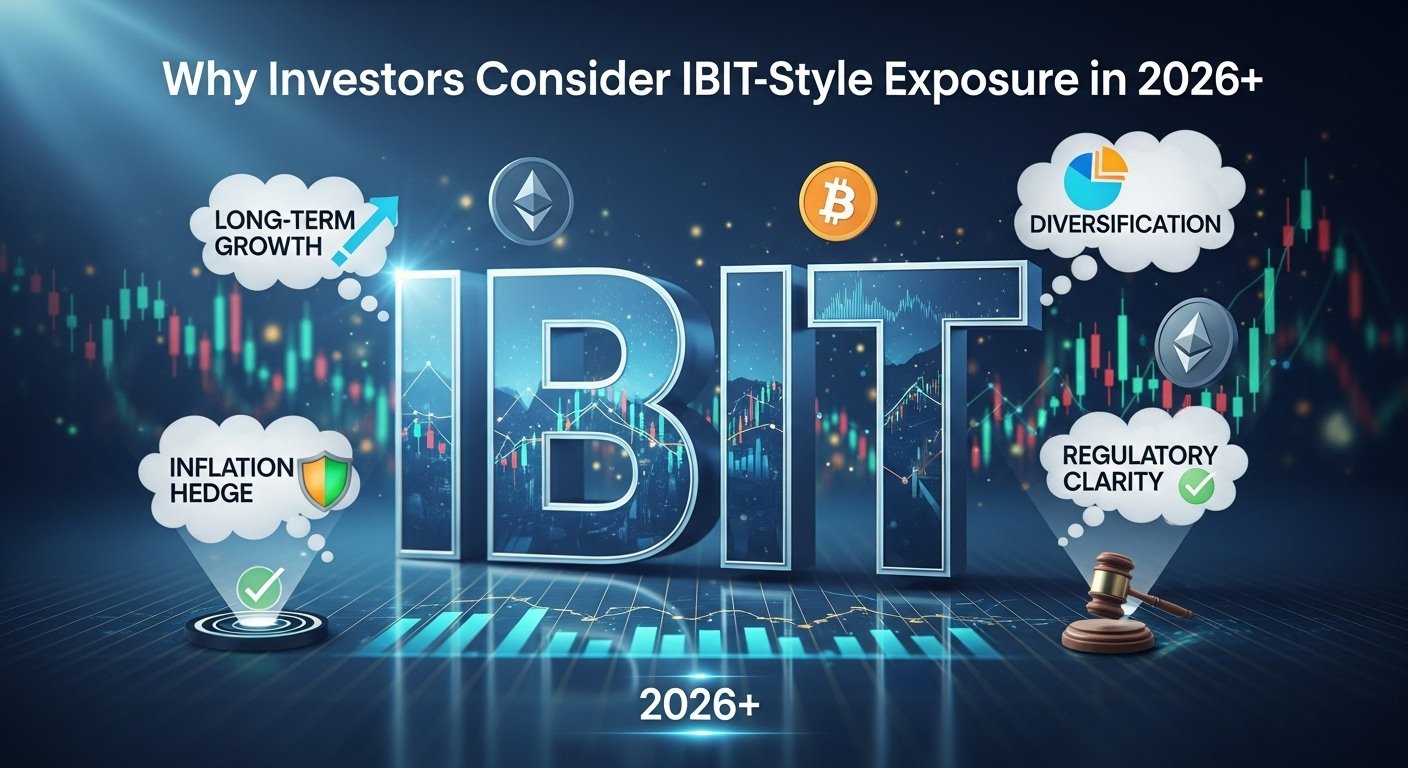
In 2026 and beyond, more investors may prefer Bitcoin exposure through regulated channels because it aligns with existing habits. A trust in a brokerage account can feel familiar, may simplify recordkeeping, and may reduce the risk of mishandling self-custody. The trade-off is that you are swapping direct ownership for shares in a product that aims to track Bitcoin. You gain convenience, but you accept counterparty risk and ongoing product fees. That trade can be worth it for many people, especially those whose investing life is built around retirement accounts, financial advisors, or compliance boundaries.
Bitcoin vs. iShares Bitcoin Trust: The Core Differences
At a high level, Bitcoin vs. iShares Bitcoin Trust comes down to direct asset ownership versus exposure through a financial product. Direct Bitcoin means you hold the asset and can move it whenever you want. The iShares Bitcoin Trust means you hold shares that represent an interest in a pool of Bitcoin held by the trust.
These differences affect everything else: your control, your risks, your costs, and sometimes your taxes. If you want to use Bitcoin on-chain—send it to another wallet, participate in certain financial arrangements, or hold it outside traditional institutions—direct ownership is the only option. If you want simple, brokerage-friendly exposure and prefer not to handle private keys, the trust structure may be more practical.
Ownership and Control: Self-Custody vs Brokerage Simplicity
With direct Bitcoin, control is the point. If you self-custody properly, you aren’t relying on a broker or fund manager to honor redemptions or maintain operations. You’re responsible for security, but you also gain sovereignty. For some investors, that’s the whole thesis: Bitcoin as an asset you can hold without intermediaries.
With the iShares Bitcoin Trust, you are buying into a system of intermediaries—broker, trust sponsor, custodian, and market makers. The benefit is usability. The cost is that your “Bitcoin” is a share, not a coin you can withdraw.
Trading Hours, Liquidity, and Execution
Bitcoin trades 24/7 globally. Direct Bitcoin ownership lets you react at any time, which can be helpful in fast markets but can also encourage emotional decisions. The iShares Bitcoin Trust typically trades during market hours (and may have extended hours depending on the venue). That can reduce impulsive late-night trading, but it also means price gaps can appear between the underlying Bitcoin market and the share price when markets reopen.
Liquidity is often strong for major Bitcoin-linked products, but execution can differ. Bitcoin exchanges may offer tighter spreads at certain times, while brokerage products may be more convenient for investors already operating in that environment. In Bitcoin vs. iShares Bitcoin Trust, execution quality depends on where you trade, how you place orders, and how volatile the market is in the moment.
Costs and Tracking: Fees, Spreads, and Real-World Performance
A long-term investor should care about costs because small annual drags compound. Direct Bitcoin doesn’t have an “expense ratio,” but it does have costs: exchange fees, spreads, potentially custody solutions if you choose professional storage, and the time cost of learning security basics. The iShares Bitcoin Trust will generally have an ongoing fee structure, often described via an expense ratio or sponsor fee, plus typical brokerage trading costs and bid-ask spreads.
Tracking is another issue. A Bitcoin trust aims to track Bitcoin’s price, but performance can differ due to fees, operational factors, and how the product is structured. Over long periods, persistent fees can create a noticeable performance gap versus holding Bitcoin directly, assuming your direct custody is done securely and at reasonable cost.
Fee Drag vs Operational Risk
If you can self-custody confidently, fee drag becomes a real argument for direct Bitcoin. On the other hand, if you are likely to make security mistakes, lose keys, or fall for scams, the operational risk of direct ownership can outweigh the fee savings. The “better investment” is the one you can hold safely and consistently.
Premiums, Discounts, and Market Efficiency
Some Bitcoin products historically traded at premiums or discounts to underlying holdings, depending on creation/redemption mechanics and market demand. Many modern spot-linked structures are designed to reduce persistent premiums/discounts, but it’s still smart to understand that share price behavior can differ from underlying Bitcoin in certain conditions. In Bitcoin vs. iShares Bitcoin Trust, product structure and market-making matter, especially in turbulent markets.
Custody and Security: The Risk You Don’t See Until It Matters
Security is where the two approaches feel most different. Direct Bitcoin ownership means you’re responsible for private keys. Done well, self-custody with cold storage can be extremely robust. Done poorly, it can be catastrophic. Human error is the most common failure mode—lost seed phrases, phishing, compromised devices, or sloppy backups.
The iShares Bitcoin Trust uses professional custody solutions, insurance frameworks, and institutional-grade processes. That can reduce certain risks, but it introduces reliance on the custodian and the trust’s operations. Your risk becomes more traditional: counterparty, operational, and legal structure risk rather than personal key management.
Self-Custody Isn’t Hard, But It Must Be Taken Seriously

Many investors imagine self-custody as either impossibly complex or trivially easy. The truth is in the middle. It’s learnable, but it demands care. A sound approach involves understanding seed phrases, secure backups, avoiding online exposure, and planning for inheritance. If those topics feel overwhelming, that’s a strong argument for using a regulated product until you’re ready.
Institutional Custody Isn’t “Risk-Free”
Professional custody can be strong, but it’s still an institution. In extreme scenarios, you may face legal, operational, or market disruptions. Most investors will find these risks acceptable compared to self-custody complexity. The key is to recognize the shift: Bitcoin vs. iShares Bitcoin Trust is not “safe vs unsafe.” It’s “which risks do you prefer and understand?”
Tax Considerations and Account Types in 2026+
Taxes vary widely by country and can change, so you should treat this as general education rather than personal tax advice. Still, it’s important to understand how the structure can affect your experience. Direct Bitcoin transactions can create taxable events when you sell, trade, or sometimes even spend Bitcoin. Recordkeeping can be more involved, especially if you use multiple exchanges or wallets.
A trust held in a brokerage account may simplify reporting because it behaves more like a security. Depending on your jurisdiction and account type, it may also integrate more cleanly into tax-advantaged structures. That’s one reason many long-term investors lean toward the trust route even if they like Bitcoin itself.
Tax Simplicity as a Behavioral Advantage
For many people, the best investing plan is the one they can execute without administrative stress. If the iShares Bitcoin Trust reduces confusion and keeps you consistent through market cycles, that practical edge can matter more than theoretical perfection. In Bitcoin vs. iShares Bitcoin Trust, “simple enough to hold for years” is a real investment advantage.
Regulation and Policy Risk: Two Different Exposure Paths
Bitcoin faces regulatory uncertainty in many places, but the nature of that risk differs by ownership route. With direct Bitcoin, you are exposed to exchange rules, on/off-ramp restrictions, and policy changes affecting self-custody or transaction reporting. With the iShares Bitcoin Trust, you are exposed to regulatory oversight of the product, the trust’s compliance environment, and the rules governing brokerage markets.
In 2026 and beyond, regulation could evolve in either direction: clearer frameworks that encourage adoption, or tighter constraints that raise friction. A regulated trust product may be better positioned in certain environments because it fits existing financial structures. Direct Bitcoin may offer resilience if you value holding outside the traditional system, but access points like exchanges still matter for buying and selling.
The “Comfort” Premium of Regulated Exposure
Many investors pay a kind of “comfort premium” for regulated exposure. That premium shows up in fees, but it can buy peace of mind, easier integration with financial planning, and fewer operational headaches. This is a major reason the Bitcoin vs. iShares Bitcoin Trust debate isn’t purely about returns.
Portfolio Strategy: Which One Fits Your Investing Style?
The better investment depends on how you intend to use Bitcoin in your portfolio. If Bitcoin is a small, long-term allocation meant to capture upside and diversify, the iShares Bitcoin Trust can be an efficient way to implement the idea. If Bitcoin is a high-conviction asset that you want to hold independently, potentially for decades, direct Bitcoin may align better with your philosophy.
Long-Term Holding and Conviction
A high-conviction investor often prefers direct ownership because it aligns with Bitcoin’s unique “bearer asset” nature. If you believe the point of Bitcoin is censorship resistance and self-sovereignty, owning shares in a trust may feel like missing the essence. But if your conviction is primarily about price appreciation and portfolio construction, the trust might be sufficient.
Rebalancing, Risk Management, and Staying Invested
Rebalancing matters in volatile assets. A trust inside a brokerage account can make rebalancing easier, especially if you’re pairing it with index funds. If the friction of crypto exchanges or wallet transfers makes you less likely to rebalance, you could unintentionally take on more risk than planned. In Bitcoin vs. iShares Bitcoin Trust, convenience can directly influence risk control.
Scenarios for 2026 and Beyond: When Each Choice Can Shine
In a scenario where Bitcoin adoption expands and markets deepen, both direct Bitcoin and the iShares Bitcoin Trust could perform well because the underlying driver is Bitcoin’s price. The difference will be the path you take to participate and how comfortably you can hold through drawdowns.
If you prioritize maximum independence, direct Bitcoin shines because it allows true ownership and transferability. If you prioritize frictionless exposure integrated into traditional finance, the iShares Bitcoin Trust shines because it reduces the cognitive load.
When Direct Bitcoin Often Makes More Sense
Direct Bitcoin can be the better investment if you want to self-custody, if you want 24/7 access, if you want the option to move Bitcoin on-chain, or if you want to minimize ongoing fees. It can also be better for investors who enjoy learning security basics and prefer not to rely on financial intermediaries.
When the iShares Bitcoin Trust Often Makes More Sense
The iShares Bitcoin Trust can be the better investment if you want exposure inside a regulated brokerage environment, if you value simplified reporting, if you’re allocating through a structured portfolio plan, or if you know self-custody would be stressful. It can also be a strong fit if you’re working with an advisor or using account types where direct Bitcoin is inconvenient.
How to Decide: A Practical Framework Without the Hype
A useful way to decide between Bitcoin vs. iShares Bitcoin Trust is to ask what could realistically derail your plan. If the biggest risk is you losing keys, getting phished, or making a custody mistake, the trust route may protect you from yourself. If the biggest risk is fee drag and reliance on institutions you don’t fully trust, direct Bitcoin may be better.
You can also consider a blended approach. Some investors hold a portion of exposure through a brokerage product for simplicity and another portion directly for sovereignty. That approach can reduce extremes on both sides, although it adds complexity.
Conclusion: Better Investment to Make in 2026 and Beyond
Bitcoin vs. iShares Bitcoin Trust is ultimately a question of ownership style, not just price prediction. If you want the purest form of exposure—true control, 24/7 markets, and the ability to hold Bitcoin as a bearer asset—direct Bitcoin ownership is hard to beat, provided you are willing to master secure self-custody. If you want straightforward exposure that fits neatly into traditional investing, simplifies administration, and reduces the operational burden, the iShares Bitcoin Trust can be the better investment choice for 2026 and beyond.
The most “profitable” option in theory is not always the best option in practice. The best choice is the one you can hold confidently through volatility, manage safely, and integrate into a long-term plan without panic or confusion. If you align your method of ownership with your behavior and goals, you give yourself the best chance to benefit from Bitcoin’s potential over the coming years.
FAQs
Q: Is buying Bitcoin directly better than buying the iShares Bitcoin Trust?
Buying Bitcoin directly can be better if you want full control, lower ongoing costs, and the ability to move Bitcoin on-chain. The iShares Bitcoin Trust can be better if you want simpler access through a brokerage account and prefer not to manage private keys.
Q: Does the iShares Bitcoin Trust track Bitcoin perfectly?
It is designed to closely reflect Bitcoin’s price, but tracking can be affected by fees, market conditions, and how shares trade during market hours. Over long periods, ongoing product costs can create a small performance gap versus direct Bitcoin ownership.
Q: What is the biggest risk of owning Bitcoin directly?
The biggest risk is usually self-custody failure, such as losing a seed phrase, falling for phishing, or making a security mistake. Good cold storage practices reduce risk, but they require care and planning.
Q: What is the biggest risk of using the iShares Bitcoin Trust?
The biggest risks tend to be institutional and structural, including reliance on custodians and intermediaries, potential operational issues, and ongoing fees. You don’t control the underlying Bitcoin directly, which matters to some investors.
Q: Can I hold both Bitcoin and the iShares Bitcoin Trust?
Yes, many investors choose a blended approach, using the trust for convenience in brokerage accounts and holding some Bitcoin directly for sovereignty. The right mix depends on your comfort with custody, your time horizon, and your overall portfolio strategy.
