

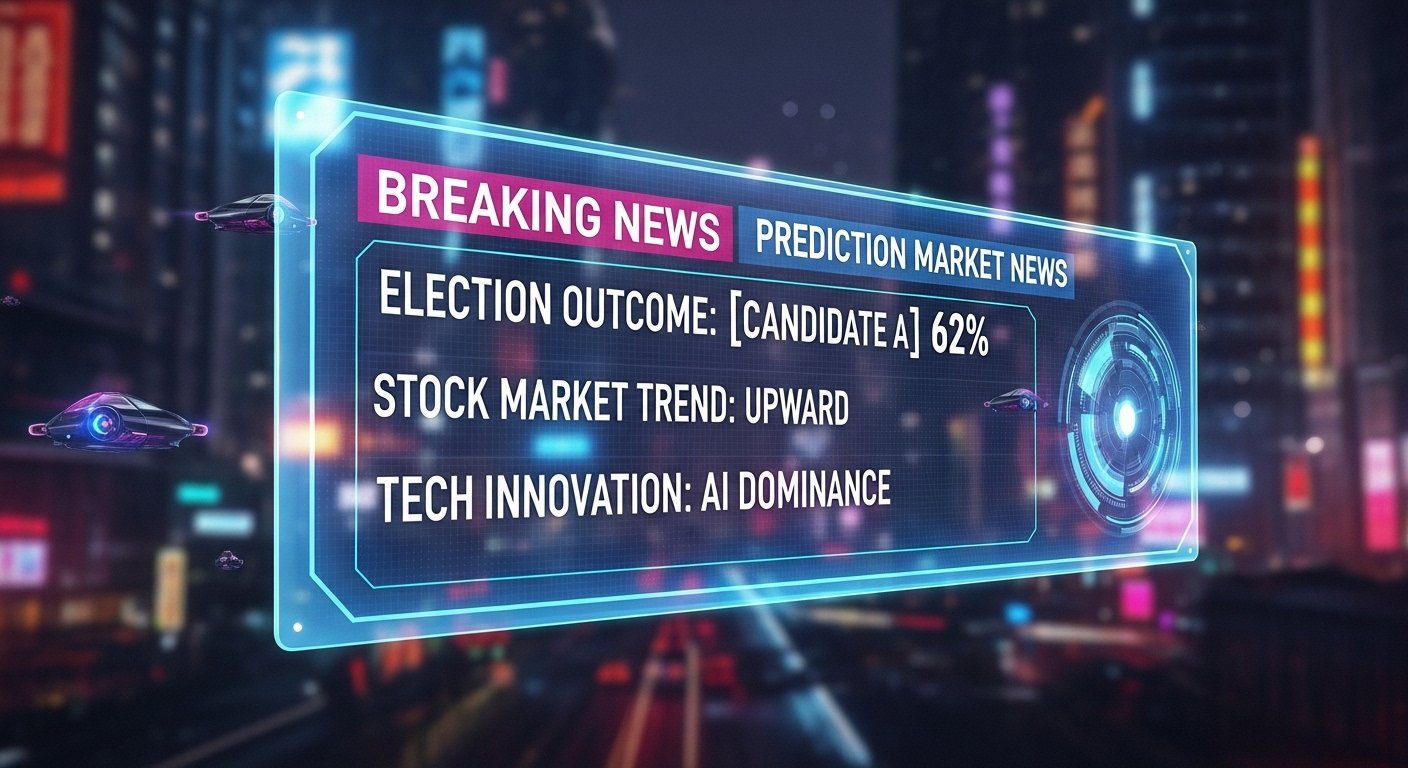
Prediction market news has rapidly moved from the fringes of finance into the spotlight of global trading conversations. Once viewed as experimental platforms where users speculated on elections or sporting events, prediction markets are now attracting serious attention from major trading firms, institutional investors, and financial technology giants. These markets, which allow participants to trade on the probability of real-world outcomes, are increasingly seen as powerful tools for forecasting, hedging, and engagement.
What makes this moment especially compelling is the contradiction at its core. On one hand, prediction markets are expanding at an unprecedented pace, drawing in sophisticated players with deep capital and regulatory experience. On the other hand, these same markets face mounting legal scrutiny, regulatory uncertainty, and political controversy. Despite these legal headwinds, trading giants are not backing away. Instead, they are doubling down, investing in infrastructure, refining product design, and positioning prediction markets as a central pillar of the future trading ecosystem.
This article explores the latest prediction market news, examining why large financial players are entering the space, how legal challenges are shaping development, and what the future may hold for this rapidly evolving market category.
Rise of Prediction Markets
Prediction markets are platforms where users trade contracts based on the outcome of future events. These events can range from economic data releases and central bank decisions to political outcomes and cultural milestones. Each contract is typically priced between zero and one hundred, representing the market’s collective assessment of the probability that a given outcome will occur.
The appeal lies in simplicity and clarity. Unlike traditional derivatives that require complex pricing models and deep financial knowledge, prediction markets present outcomes in an intuitive format. A price of sixty-five suggests a sixty-five percent chance of occurrence. This accessibility has fueled broader participation and increased visibility, making prediction market news relevant far beyond professional trading circles.
Another reason for their rise is the growing demand for real-time forecasting tools. In an environment shaped by rapid information flows, social media, and constant news cycles, prediction markets act as living dashboards of collective belief. Prices adjust instantly to new information, often faster than polls, analyst reports, or traditional forecasts.
Why Trading Giants Are Entering Prediction Markets
The entrance of major trading firms into prediction markets is not accidental. These companies recognize that prediction markets align perfectly with modern trading behavior, which prioritizes speed, engagement, and data-driven decision-making.
From a business perspective, prediction markets offer high-frequency trading opportunities tied to events that naturally capture public attention. Every major economic announcement, political development, or global crisis creates demand for event-based contracts. This results in recurring spikes in activity that are highly attractive to platforms seeking consistent user engagement.

For trading giants, prediction markets also represent a strategic expansion rather than a replacement. These markets complement existing offerings such as equities, options, and futures by providing exposure to uncertainty itself. Instead of trading assets, participants trade expectations. This shift opens new revenue streams while deepening user involvement across platforms.
Data as a Strategic Asset
One of the most overlooked aspects of prediction market news is the value of the data these markets generate. Each contract price reflects a continuously updated consensus probability. Aggregated across hundreds of events, this data becomes a powerful forecasting engine.
Large financial institutions understand the value of this information. Probability data can inform risk management, macroeconomic analysis, and even internal decision-making. By owning or operating prediction market platforms, trading giants gain access to a unique layer of market intelligence that goes beyond traditional price signals.
The Role of Event Contracts in Market Evolution
As prediction markets mature, product design is becoming more standardized. The industry is increasingly focused on event contracts, which are clearly defined instruments with specific settlement criteria and fixed payouts. This structure makes them easier to regulate, easier to understand, and easier to integrate into existing trading systems.
Event contracts function similarly to binary options but are often positioned as regulated derivatives rather than speculative wagers. This distinction is critical for attracting institutional participation. Clear contract definitions, transparent settlement processes, and robust compliance frameworks reduce operational risk and improve market credibility.
This evolution is a key theme in prediction market news because it marks a shift away from experimental platforms toward institutional-grade financial products.
Legal Headwinds Facing Prediction Markets
Despite rapid growth, prediction markets face significant legal challenges. These challenges stem from the complex intersection of financial regulation, gambling laws, and public policy concerns.
In many jurisdictions, the primary question is classification. Are prediction markets financial instruments or forms of gambling? The answer determines which regulators have authority and what rules apply. In the United States, this debate has led to high-profile legal disputes involving federal regulators and state authorities.
Political event contracts are especially controversial. Critics argue that allowing markets on elections could undermine democratic processes or incentivize manipulation. Supporters counter that such markets enhance transparency by aggregating information more accurately than traditional polls.
Regulatory Uncertainty as a Market Filter
While legal headwinds create obstacles, they also act as a filter. Smaller, undercapitalized platforms may struggle to comply with evolving regulations, while larger trading firms are better equipped to navigate complex legal environments. This dynamic favors established players and helps explain why trading giants are willing to enter despite uncertainty.
Rather than waiting for perfect clarity, these firms are building compliant frameworks in anticipation of future rules. Their approach suggests confidence that regulation will ultimately legitimize, rather than eliminate, prediction markets.
The Intersection of Prediction Markets and Public Perception
A unique challenge highlighted in prediction market news is the way market prices influence public perception. When prediction market odds are widely shared, they can shape narratives rather than merely reflect them. A sharply moving price can be interpreted as “what the market knows,” even when it is driven by speculation or incomplete information.
This creates reputational risk for platforms, particularly those associated with well-known financial brands. Trading giants must balance openness with responsibility, ensuring that contracts are based on reliable sources and that settlement criteria are beyond dispute.
As a result, governance standards are becoming a key differentiator. Platforms that demonstrate transparency, integrity, and strong oversight are more likely to gain long-term trust from both regulators and users.
Competition Between Traditional Finance and Crypto Platforms
Prediction market news also reveals an intensifying competition between traditional financial institutions and crypto-native platforms. Crypto platforms were early adopters of prediction markets, leveraging blockchain technology to enable global participation and rapid settlement. However, traditional trading firms bring different strengths: regulatory experience, institutional credibility, and access to large pools of capital. As both sides converge on similar products, the competitive landscape is shifting.

Hybrid models are emerging, combining the accessibility of crypto infrastructure with the compliance frameworks of traditional finance. This convergence suggests that prediction markets may become a bridge between these two worlds rather than a battleground.
The Future of Prediction Markets
Looking ahead, prediction market news points to continued expansion alongside increasing regulation. Rather than stifling innovation, regulation is likely to shape it, pushing platforms toward clearer contracts, better disclosures, and stronger compliance systems.
Prediction markets may also broaden in scope. Beyond politics and economics, future markets could focus on corporate performance, technological milestones, climate outcomes, and public health indicators. As long as uncertainty exists, there will be demand for instruments that price it.
For trading giants, the goal is not merely to offer prediction markets but to integrate them into a broader trading ecosystem. In this vision, event contracts coexist with stocks, options, and futures, giving users a unified interface for expressing views on both assets and outcomes.
Conclusion
Prediction market news reflects a pivotal moment in modern finance. Trading giants are entering prediction markets because they see long-term value in trading probabilities, capturing attention-driven liquidity, and owning a new layer of market intelligence. At the same time, legal headwinds remain a defining feature of the landscape, shaping how products are designed and where they can operate.
Rather than retreating in the face of uncertainty, major players are investing in compliance, governance, and infrastructure. This suggests that prediction markets are not a passing trend but an emerging asset class in their own right. As regulation evolves and competition intensifies, prediction markets are poised to become a mainstream component of the global trading ecosystem.
FAQs
Q: What are prediction markets?
Prediction markets are platforms where participants trade contracts based on the outcome of future events. Prices represent the collective probability assigned to each outcome.
Q: Why are prediction markets attracting major trading firms?
Trading giants see prediction markets as high-engagement products that convert uncertainty into tradable instruments while generating valuable forecasting data.
Q: Are prediction markets legal?
Legality varies by jurisdiction and depends on how contracts are structured. Regulatory uncertainty remains one of the biggest challenges facing the industry.
Q: How are prediction markets different from traditional investing?
Traditional investing focuses on asset value, while prediction markets focus on outcomes and probabilities, allowing users to trade expectations directly.
Q: What is the future of prediction markets?
Prediction markets are expected to grow alongside clearer regulations, broader event coverage, and deeper integration into mainstream trading platforms.
Also More: USDT Pushes TRON Crypto to $83B TRX Price Outlook
