

Conversation around blockchain has matured. A few years ago, most people associated it with speculative markets, confusing jargon, and projects that struggled to show real value outside niche communities. In 2026, the narrative is different. The strongest teams are building blockchain solutions that behave like infrastructure: quiet, reliable, measurable, and useful. That shift is exactly why the UNICEF Venture Fund now accepting blockchain solutions is drawing serious attention from founders who want impact and credibility at the same time.
A call for applications backed by UNICEF signals more than funding. It signals a demand for practical innovation that can strengthen services for children and communities in real environments where trust, transparency, and efficiency matter. Many emerging markets face constraints that go beyond technical challenges. There are gaps in identity systems, limited auditability in supply chains, friction in cross-border payments, difficulties verifying credentials, and vulnerabilities in data integrity. These are the kinds of problems where a well-designed blockchain solution—used responsibly and only where it truly fits—can offer a meaningful advantage.
The keyword in this opportunity is “fit.” The UNICEF Venture Fund is not looking for buzzwords or abstract promises. It is looking for teams that can show what they’ve built, why it matters, and how it can be deployed. If you’re building a blockchain product that can reduce fraud, improve accountability, enable verifiable credentials, strengthen data integrity, support decentralized identity, or enable secure coordination across stakeholders, this call may be one of the most aligned opportunities you will see in 2026.
The headline deadline in this announcement is March 20, 2026. However, some official call materials for blockchain cohorts have previously been published with earlier deadlines for the same season. Because calls can be updated, extended, or listed differently across channels, you should treat the publicly stated deadline as your target while still verifying the exact cutoff date on the official application portal you are using. The safest approach is to submit well before March 20, 2026.
This article explains how to approach the UNICEF Venture Fund now accepting blockchain solutions call with clarity and strategy. You’ll learn what the fund is, what kinds of blockchain solutions tend to align best, what eligibility typically looks like, how reviewers often evaluate applications, and how to write a strong submission that is human, credible, and impact-driven—without sounding like a marketing brochure.
UNICEF Venture Fund and why it backs blockchain solutions
The UNICEF Venture Fund is designed to support early-stage companies building frontier technologies that can improve outcomes for children. Unlike many programs that primarily fund research or pilots in isolation, the Venture Fund tends to support startups that are actively building and refining products. The aim is to help teams validate solutions, generate evidence, and strengthen a pathway to scale—especially in markets where raising capital or securing enterprise partnerships can be more difficult.
For founders, one of the most attractive aspects of the UNICEF Venture Fund is the way it is commonly positioned as equity-free funding. That structure can change how a startup thinks about milestones. Instead of optimizing for a valuation narrative, teams can optimize for proof: a stronger product, better measurement, safer deployment, and clearer impact. In practice, that often produces better outcomes for future partnerships and future fundraising because the startup can point to real deployments, real users, and real data.
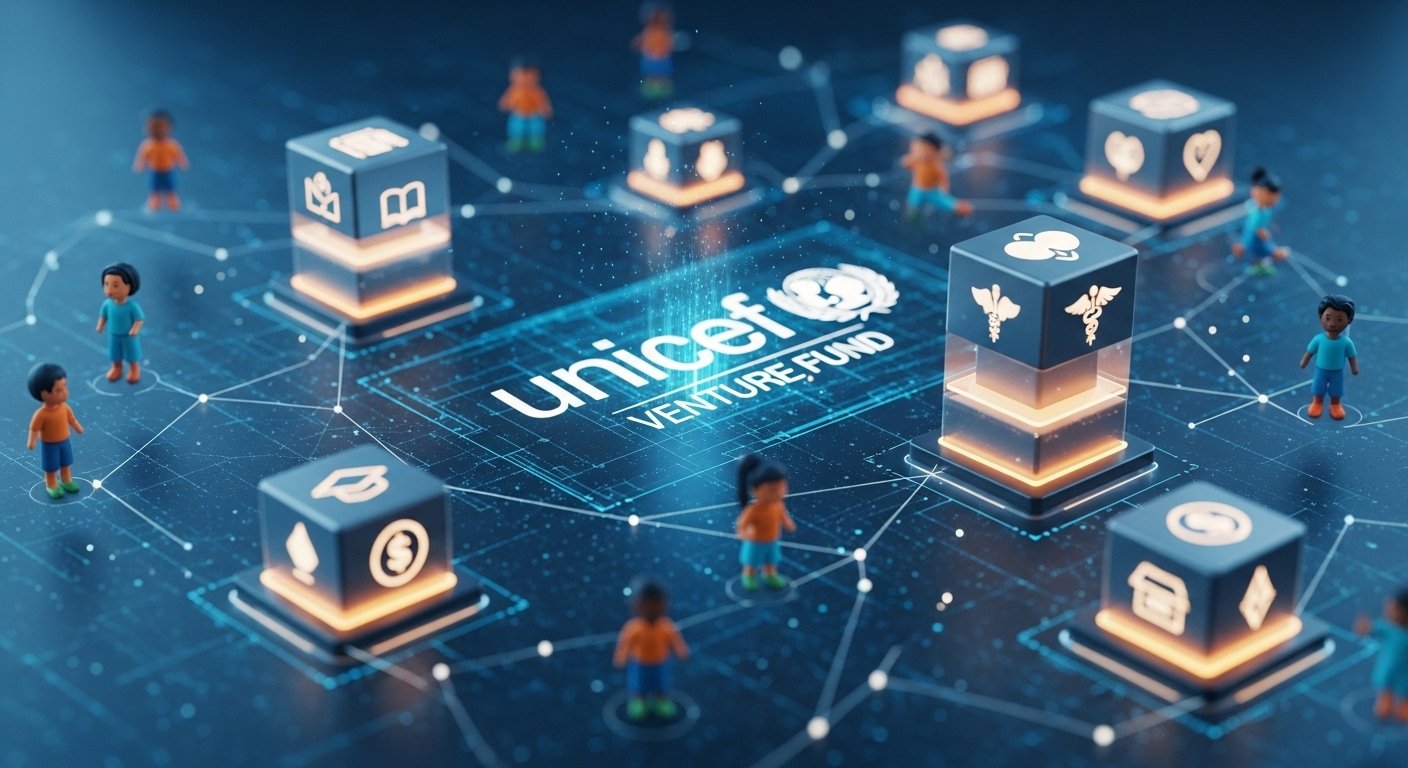
For blockchain solutions, UNICEF’s interest generally follows a simple logic. Many social systems require shared truth across multiple actors who do not always trust one another. That might include government agencies, NGOs, community organizations, health providers, schools, distributors, and families. When a system depends on reliable records and transparent processes, a blockchain approach can create a tamper-evident audit trail, support secure coordination, and reduce disputes over what happened and when it happened.
The most important point is that UNICEF Venture Fund interest in blockchain solutions is not ideological. It is practical. When blockchain is the right tool, it can strengthen trust. When it is not the right tool, it adds complexity. A strong application acknowledges this reality and demonstrates that the team understands both the power and the limits of decentralized technologies.
What “blockchain solutions” means in this call
When the UNICEF Venture Fund now accepting blockchain solutions is discussed, it typically implies solutions that are functional, testable, and built for real conditions. That means more than a slide deck. A credible blockchain solution usually includes a working product, a defined use case, an architecture that accounts for privacy and safety, and a plan for deployment and measurement.
A competitive blockchain solution also avoids vague statements like “we put it on-chain” without specifying what is on-chain, what remains off-chain, why those decisions protect users, and how the system will operate with limited connectivity or limited device capabilities. UNICEF-aligned blockchain solutions tend to focus on outcomes, not novelty.
March 20, 2026 deadline and how to plan around it
The call for applications deadline is stated as March 20, 2026, and that date should shape your planning. If you want to submit a strong application, you should not treat the final week as your writing period. Instead, you should treat it as your polishing period. A solid approach is to structure your work into three phases: product proof, impact story, and application packaging. Product proof means preparing demos, documentation, and evidence that your blockchain solution works. Impact story means articulating who benefits, how they benefit, and how you will measure outcomes.
Application packaging means aligning all of this into the exact questions and format required, including team details, references, and any required legal or operational information. Because application portals can become congested close to deadlines, and because reviewers value clarity more than rushed volume, aim to complete your submission several days early. This is especially important if your company has multiple stakeholders who need to approve language, metrics, or partnership descriptions.
What if you see a different deadline elsewhere?
Some calls are reshared by partner organizations, accelerators, and communities. In those reposts, dates can be inconsistent. If you see a different deadline than March 20, 2026, do not assume you have more time. Calls are sometimes updated, but your safest strategy is to submit early and verify the precise deadline on the portal where you will click “submit.”
Eligibility and best-fit founders for UNICEF Venture Fund blockchain solutions
Not every startup building blockchain technology will be a fit. The UNICEF Venture Fund tends to align best with teams that can show both technical competence and deployment readiness. This is not only about writing good code. It is about making technology usable in real settings, with human constraints, and with ethical responsibility.
A best-fit applicant usually has a product that is already at prototype stage or beyond, with a clear path to pilot. The team should be able to explain why blockchain is necessary, what impact it delivers, and how it will be maintained. Just as importantly, the team should show a commitment to transparency and collaboration, often through open-source principles and ecosystem thinking.
Why open-source matters so much in this program
The UNICEF Venture Fund is widely associated with supporting open solutions. In frontier technology categories, open-source can be a multiplier because it allows others to audit, adapt, and extend a solution. For blockchain solutions, open-source can also strengthen trust by making security assumptions and implementation choices visible.
If you are applying, you should treat open-source as a serious part of your plan. Explain what components will be open, what license approach you will use, and how you will manage community contributions while protecting user safety. A vague promise to “open source later” without a timeline and scope often reads as uncertainty.
Impact lens is child-centered, not tech-centered
The UNICEF Venture Fund exists to support outcomes for children. Even if your blockchain solution is not directly used by children, it should improve systems that affect them. That could include health delivery, education access, identity and protection services, or social assistance.
A strong application connects your blockchain solution to tangible outcomes. It avoids abstract language like “empowering communities” unless it clearly specifies what changes on the ground. For example, if your product reduces counterfeit medicines in a supply chain, explain how that improves child health. If it supports credential verification for displaced learners, explain how that improves education continuity.
High-impact use cases: Where blockchain solutions can truly help
The strongest blockchain solutions tend to focus on coordination problems involving multiple parties, where trust is limited and auditability is essential. In these environments, decentralized infrastructure can make it easier to verify records, reduce fraud, and increase transparency.
One category is verifiable credentials and record verification. Many people struggle to prove who they are, what they’ve achieved, or what services they’ve received. In fragile contexts, paper records are lost, central databases are fragmented, and verification is slow. A blockchain-based credential system can provide tamper-evident proofs while keeping sensitive personal data protected off-chain.
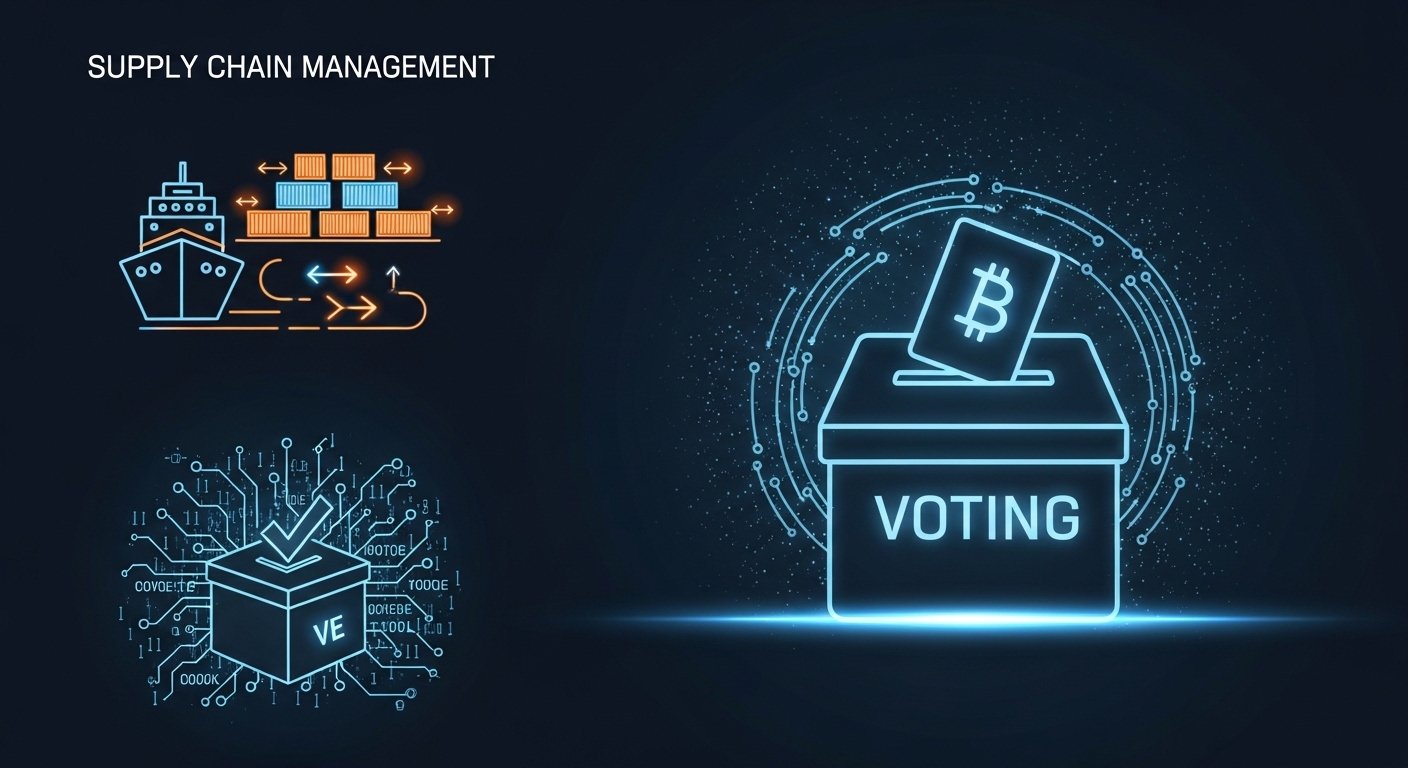
Another category is transparency and traceability. In supply chains, particularly those involving health commodities, education materials, or humanitarian distribution, even small improvements in tracking can reduce leakage and increase accountability. Blockchain can provide a shared record of custody events and approvals across multiple organizations, making audits faster and disputes less frequent.
A third category is financial integrity and program accountability. In many systems, funds move through multiple intermediaries. When records are inconsistent, beneficiaries may face delays or exclusions. A blockchain solution, designed responsibly, can improve auditability and speed without requiring every stakeholder to trust a single central authority.
The “why blockchain” test you must pass
A UNICEF-aligned application must answer a skeptical question: why does this need blockchain? If your solution can be built more simply and safely with a conventional database, reviewers may see blockchain as unnecessary risk. To pass this test, describe the trust gap clearly. Explain who the stakeholders are, why trust is hard, and how blockchain changes the cost and feasibility of verification. Use grounded language like tamper-evident logs, audit trails, interoperability, and shared governance only where they truly apply.
Responsible design matters more than flashy features
Because UNICEF-linked contexts can involve vulnerable populations, design decisions must prioritize safety. If you are handling identity, credentials, health-related signals, or sensitive records, you should be explicit about privacy. A strong blockchain solution typically uses off-chain storage for personal data, keeps only proofs or hashes on-chain, and defines access controls and key management practices that are realistic for the users involved. If your design depends on assumptions that users can securely manage seed phrases with no support, you should rethink it. Real-world deployment requires usability and recovery pathways.
Funding and support: What selected startups can gain beyond money
Funding can accelerate development, but UNICEF Venture Fund support can also offer strategic benefits. Being selected can strengthen your credibility with governments, NGOs, and large implementers. It can also help you access networks where pilots become possible.
Founders often underestimate how valuable structured validation can be. If you are building blockchain solutions, you may face skepticism from stakeholders who associate blockchain with risk. Demonstrating that your approach has been reviewed and backed in a rigorous impact-oriented program can open doors that are otherwise closed. Another benefit is focus. Equity-free funding and structured support can help you prioritize product improvements that matter for deployments: performance, security, documentation, monitoring, and integration.
How to use funding strategically for blockchain solutions
A strong plan for using funds focuses on measurable milestones. That might include hardening your smart contracts, formalizing security practices, improving your onboarding flows, translating interfaces, building offline-friendly features, and preparing integration tools that partners can adopt. It also includes measurement work. UNICEF-aligned projects benefit from clear monitoring frameworks: what you will measure, how you will measure it, and how you will use the results to improve the product. If you can show that your blockchain solution will generate evidence quickly, your application will feel more credible.
How to write a strong application for the UNICEF Venture Fund blockchain call
Your application is not just a formality. It is a narrative that must make complex ideas simple. You need to explain your blockchain solution in a way that a non-specialist can follow while still satisfying technical reviewers. Start with the problem. Describe it plainly. Then explain what you built, who uses it, and what changes when it’s deployed. Next, explain why blockchain is necessary, what your architecture looks like, and how you handle privacy, security, and governance. Finally, explain your team’s capability and your plan for a pilot.
What reviewers look for early in your submission
Reviewers typically want quick clarity on five things. They want to know that your blockchain solution is real, that it is deployable, that it is safe, that it creates measurable outcomes, and that your team can execute. If your application starts with generalized statements about “revolutionizing trust,” you may lose attention. Begin with specifics: where your solution is used, what problem it solves, and how it works. Then expand into the technical detail.
Your metrics should be practical and verifiable
Measurable impact is not the same as a vanity metric. Practical metrics include verification time reductions, error rate reductions, fraud detection improvements, successful credential verifications, inventory discrepancies reduced, and beneficiary service completion rates improved. Where possible, connect your metrics to operational goals. If a supply chain manager cares about reconciliation time, measure that. If a school administrator cares about credential verification delays, measure that. Your blockchain solution becomes more believable when the measurement plan is tied to real stakeholder needs.
Avoid over-optimization and token-heavy narratives
Even if your product includes tokens, your application should emphasize utility and safeguards. In impact settings, token economics can raise risk questions. If your blockchain solution uses tokens, explain why, how it avoids perverse incentives, and how it protects users. If tokens are not essential, do not force them into the story. The best applications read like thoughtful product plans, not speculative pitches.
Common mistakes that weaken blockchain solutions in impact funding calls
A frequent mistake is confusing complexity with capability. Adding more blockchain features does not make a solution more credible. Simplicity, safety, and deployment readiness matter more. Another mistake is failing to address privacy. If your solution stores sensitive information on-chain, reviewers may consider it unsafe. Even if you believe the data is “public anyway,” UNICEF contexts demand careful thinking about re-identification risk and long-term harm.
A third mistake is underestimating implementation. Many startups promise pilots without showing how they will reach partners, train users, and maintain the system. If your blockchain solution requires heavy integration, explain how you will support it. If it requires device upgrades or constant connectivity, explain how you will handle constraints. Finally, some applications fail because they are not clearly written. The goal is not to impress with jargon. The goal is to show that you understand the problem and have built a solution that can operate reliably.
Conclusion
The UNICEF Venture Fund now accepting blockchain solutions is a meaningful opportunity for founders building practical technology that can strengthen trust, transparency, and service delivery. This call rewards teams that can demonstrate real products, responsible design, and measurable impact. It is not about chasing a trend; it is about applying blockchain where it genuinely improves outcomes and can scale sustainably.
If you plan to apply by the March 20, 2026 deadline, treat your application as a strategic asset. Make it clear, honest, and evidence-driven. Show what you built, show why blockchain is necessary, show how you protect users, and show how you will measure outcomes. When you do that, your application becomes more than a submission—it becomes a compelling blueprint for real-world change.
