

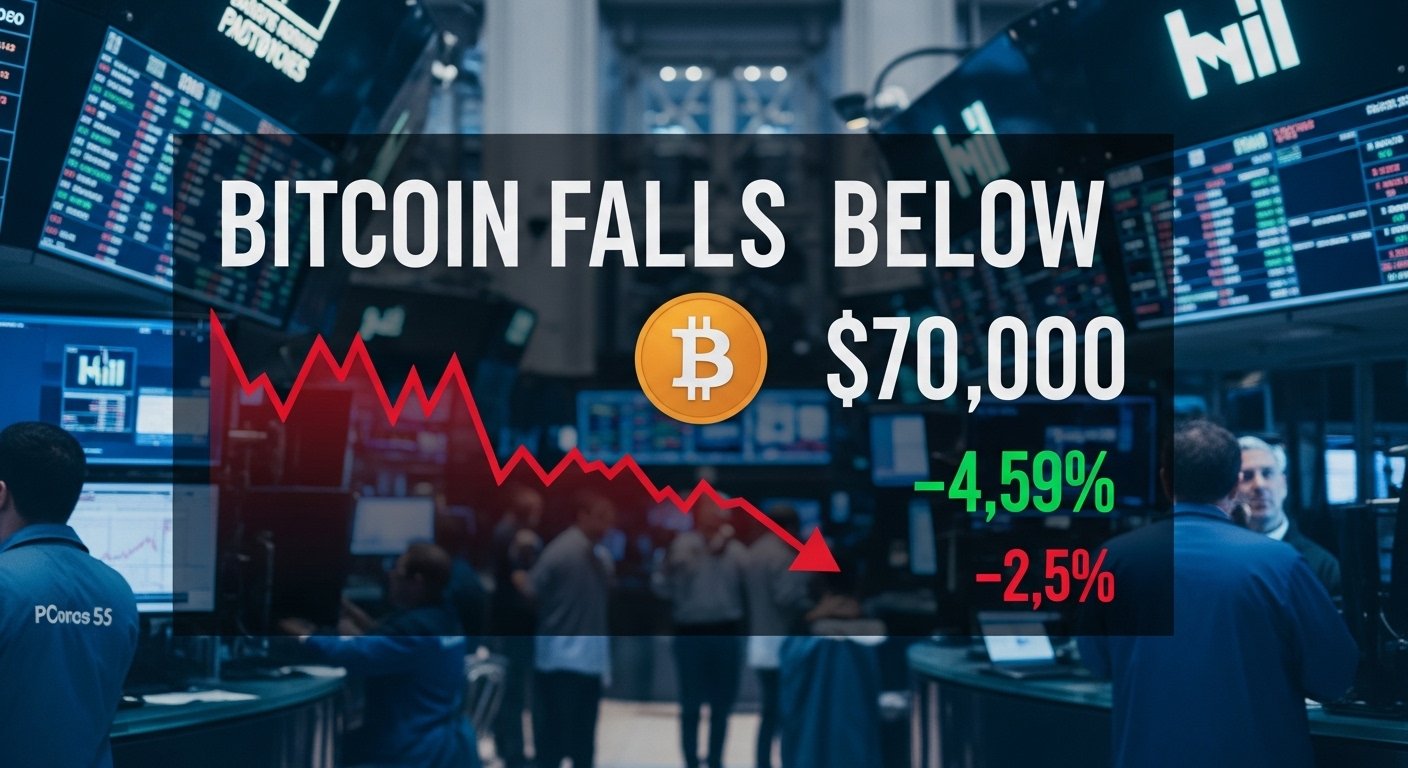
Bitcoin has once again reminded the world why it is considered one of the most volatile financial assets in modern markets. After weeks of dramatic price swings, Bitcoin falls below $70,000, triggering widespread concern, intense debate, and renewed scrutiny from traders, investors, and analysts alike. The sudden dip followed a chaotic sequence of rallies and pullbacks that felt less like a trend and more like a high-speed roller-coaster ride.
The psychological impact of Bitcoin dropping under such a major price level cannot be overstated. For many participants, $70,000 represented a symbolic line between bullish confidence and growing uncertainty. When Bitcoin slipped below this threshold, market sentiment shifted rapidly, amplifying fear, speculation, and short-term volatility. Yet beneath the surface panic lies a deeper story—one shaped by leverage, macroeconomic pressure, institutional behavior, and evolving market structure.
This article explores why Bitcoin falls below $70,000, what caused the violent price action, how traders and investors are reacting, and what the next phase of the crypto market could look like. Whether you are a long-term holder or a short-term trader, understanding this moment is critical.
Roller-Coaster Move in Bitcoin Price
The recent price action did not unfold gradually. Instead, Bitcoin surged, stalled, plunged, and rebounded in rapid succession, creating extreme emotional whiplash across the market. This kind of movement reflects a fragile balance between buyers and sellers, where even minor catalysts can trigger exaggerated reactions.
When Bitcoin falls below $70,000, it often happens during periods of thin liquidity and heavy leverage. As price approaches major psychological levels, traders cluster their positions around those zones. Once price breaks through, stop-loss orders and automated selling accelerate the decline, turning a normal correction into a sharp selloff.
Volatility itself becomes contagious. As Bitcoin drops, fear spreads across derivatives markets, pushing funding rates lower and forcing leveraged traders to exit positions. This cascade effect explains why Bitcoin can lose thousands of dollars in minutes and then rebound just as quickly once forced selling subsides.
Why $70,000 Is a Psychological Battleground
Round numbers matter more than most technical indicators. When Bitcoin falls below $70,000, it signals a shift in collective perception. Bulls begin to question momentum, while bears gain confidence. Media headlines amplify the move, pulling in emotional retail traders who react more to fear than strategy.

This level also represents a major reference point for institutional positioning. Portfolio managers, hedge funds, and algorithmic systems often use large round numbers as triggers for risk adjustment. Once breached, selling pressure can increase even if the broader trend remains intact.
The Role of Whipsaws and Fake Breakdowns
Not every breakdown is a trend reversal. In crypto markets, whipsaws are common, especially during periods of uncertainty. Bitcoin can fall below $70,000, recover sharply, and then retest the level multiple times before choosing a definitive direction.
These whipsaws are designed—intentionally or not—to exhaust both buyers and sellers. Traders who chase momentum often get trapped, while patient participants wait for confirmation. This is why the aftermath of a breakdown is often more important than the breakdown itself.
Key Factors Behind Bitcoin Falling Below $70,000
The move was not caused by a single event. Instead, it resulted from several overlapping forces hitting the market simultaneously.
Risk-Off Sentiment Across Global Markets
Bitcoin does not exist in isolation. As a high-risk asset, it is sensitive to broader financial conditions. When investors grow cautious due to economic uncertainty, tightening financial conditions, or equity market weakness, Bitcoin often feels the impact. When Bitcoin falls below $70,000 during a risk-off environment, it reflects investors reducing exposure to volatile assets. Capital flows toward safer instruments, leaving crypto markets vulnerable to sharp corrections.
Leverage and Forced Liquidations
Leverage is a double-edged sword. While it amplifies gains during rallies, it accelerates losses during downturns. As Bitcoin approached $70,000, leveraged long positions were heavily concentrated. Once price slipped lower, liquidation engines activated, selling Bitcoin automatically to cover margin requirements.
These forced sales push price lower regardless of fundamentals. This is why Bitcoin can drop rapidly even without major news. Once liquidations finish, price often stabilizes, revealing how much of the move was mechanical rather than organic.
Institutional Flows and ETF Influence
Institutional participation has transformed Bitcoin’s market structure. Large funds and exchange-traded products now represent a significant share of trading volume. When Bitcoin falls below $70,000, market participants immediately assess whether institutions are buying the dip or pulling capital. Even small shifts in institutional demand can have outsized effects. Reduced inflows or modest outflows can tip the balance in a market already strained by volatility and leverage.
Corporate Bitcoin Holdings and Market Perception
Companies holding Bitcoin on their balance sheets add another layer of complexity. When Bitcoin falls below $70,000, these holdings draw attention from investors analyzing corporate earnings, risk exposure, and long-term strategy. If Bitcoin weakness coincides with corporate uncertainty, it can reinforce bearish narratives—even if the companies involved have no intention of selling.
Technical Implications of Bitcoin Dropping Below $70,000
From a technical perspective, this price level serves as a critical pivot point.
Support Turning Into Resistance
Once Bitcoin falls below $70,000, that former support often becomes resistance. This means price may struggle to move back above the level without strong buying pressure. Traders closely watch how Bitcoin behaves near this zone to determine whether the breakdown was temporary or structural.
A sustained move back above $70,000 can restore confidence and attract sidelined capital. Failure to reclaim it, however, increases the likelihood of extended consolidation or further downside.
Volatility Compression and Range Formation
After extreme moves, markets often enter a phase of consolidation. Bitcoin may oscillate above and below $70,000 as volatility gradually compresses. This range-building process allows liquidity to rebuild and sentiment to reset.
Such periods can feel frustrating but are essential for establishing a sustainable trend. Breakouts from these ranges often define the next major move.
Market Structure and Liquidity Gaps
Sharp declines frequently leave behind liquidity gaps—areas where little trading occurred. Markets often revisit these zones later. If Bitcoin falls below $70,000 and rebounds quickly, it may return to test lower levels again before forming a durable base.
On-Chain Signals and Investor Sentiment
Beyond price charts, on-chain data and sentiment indicators provide insight into who is selling and why.
Short-Term Holders vs. Long-Term Believers
When Bitcoin falls below $70,000, short-term holders are usually the first to panic. These participants tend to buy near local highs and sell during sudden drops. Long-term holders, by contrast, often remain inactive, absorbing supply during periods of fear. If long-term holders maintain conviction, it suggests the move is corrective rather than catastrophic.
Fear, Capitulation, and Opportunity
Extreme fear often accompanies sharp drops. While uncomfortable, fear-driven markets can offer opportunity for disciplined investors. Historically, periods when Bitcoin falls below major psychological levels have preceded strong recoveries—though timing remains uncertain.
Miner Economics and Network Pressure
Miners play a crucial role in Bitcoin’s ecosystem. When prices drop sharply, mining profitability can decline, forcing some operators to sell Bitcoin to cover costs. This additional supply can temporarily increase selling pressure, especially during already volatile conditions.
What This Means for Different Market Participants
The impact of Bitcoin falling below $70,000 varies depending on strategy and time horizon.
Long-Term Investors
For long-term investors, the key question is whether the fundamental thesis has changed. Price volatility alone does not negate Bitcoin’s broader narrative. However, risk management remains essential. Overexposure can turn temporary drawdowns into permanent losses.
Short-Term Traders
For traders, volatility is both opportunity and danger. When Bitcoin falls below $70,000, price action becomes unpredictable. Successful traders focus on discipline, position sizing, and confirmation rather than emotion or headlines.
New Market Entrants
New participants should approach periods like this cautiously. Extreme volatility can be overwhelming without experience. Education, patience, and conservative exposure are critical during turbulent phases.
Possible Scenarios After Bitcoin Falls Below $70,000

The market now stands at a crossroads. Several outcomes are possible.
Scenario One: Reclaim and Recovery
If Bitcoin reclaims $70,000 with strong volume and follow-through, the drop may be remembered as a liquidation-driven shakeout. Confidence could return quickly, setting the stage for renewed upside momentum.
Scenario Two: Extended Consolidation
Bitcoin may remain range-bound, trading sideways as the market digests recent volatility. This scenario favors patience and rewards those who wait for clear signals rather than chasing short-term moves.
Scenario Three: Deeper Correction
If Bitcoin repeatedly fails to regain $70,000, selling pressure could persist. In this case, the market may seek lower support levels before finding equilibrium. This outcome becomes more likely if global risk sentiment continues to deteriorate.
Conclusion
When Bitcoin falls below $70,000 after a wild roller-coaster ride, it captures attention not because of the number alone, but because of what it represents—uncertainty, leverage, emotion, and the evolving maturity of the crypto market. While the move has shaken confidence in the short term, it also highlights the importance of discipline, perspective, and risk management.
Bitcoin has endured countless cycles of euphoria and fear. This episode is another chapter in that ongoing story. Whether it becomes a launching pad for recovery or a pause before further decline will depend on market behavior in the days and weeks ahead.
Frequently Asked Questions
Q: Why did Bitcoin fall below $70,000 so quickly?
The drop was driven by a combination of risk-off sentiment, heavy leverage, and forced liquidations. Once key support levels broke, selling accelerated rapidly.
Q: Is Bitcoin falling below $70,000 a bearish signal?
Not necessarily. While it indicates short-term weakness, it does not automatically signal the end of a broader bullish trend. Context and follow-through matter.
Q: Should investors panic when Bitcoin falls below $70,000?
Panic rarely leads to good decisions. Investors should assess their time horizon, risk tolerance, and exposure rather than reacting emotionally to price swings.
Q: Can Bitcoin recover quickly after falling below $70,000?
Yes. If the move was driven primarily by liquidations and fear, Bitcoin can rebound sharply once selling pressure subsides.
Q: What should beginners do during extreme Bitcoin volatility?
Beginners should prioritize education, avoid excessive leverage, and consider smaller position sizes until they gain experience navigating volatile markets.
