

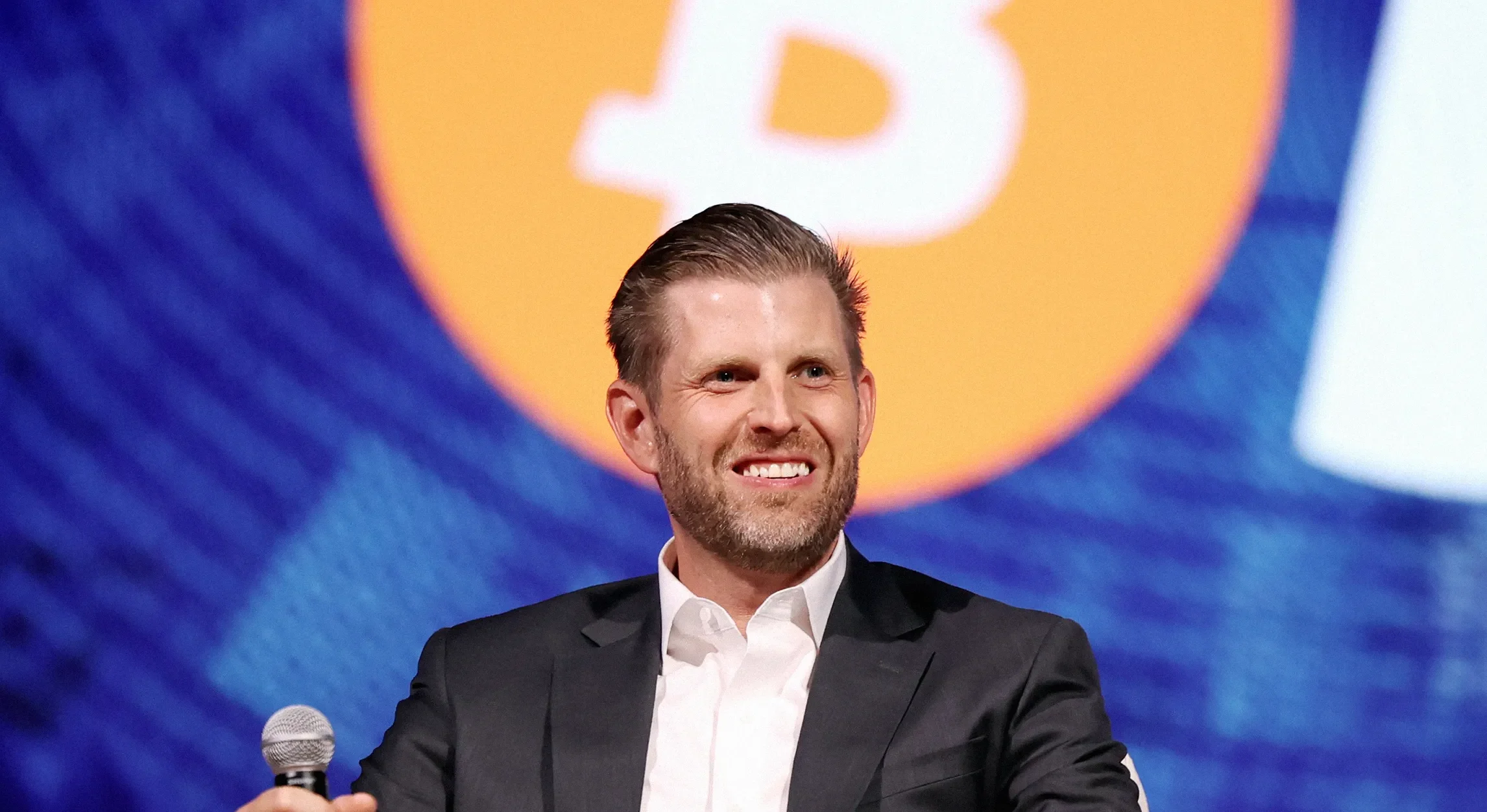
Eric Trump American is once again on the Trump family, but this time it is not about politics. It is about Eric Trump’s American Bitcoin, a high-profile crypto-mining company whose stock has suddenly dropped about 40% after a key token lockup period expired. For many investors, the sharp decline felt shocking. For market veterans, however, it is a classic example of what can happen when large chunks of previously restricted shares are suddenly set free.
This dramatic move has raised questions about how lockup expirations, insider selling, and overall crypto market sentiment interact to drive volatility. Investors want to know whether the plunge signals deeper trouble for American Bitcoin or whether it is simply a painful but temporary adjustment.
In this in-depth guide, we will walk through what American Bitcoin is, how its connection to Eric Trump has shaped public interest, why the stock fell so sharply, and what lessons both new and experienced traders can learn from this episode. Along the way, we will explore the mechanics of token lockups, the psychology of profit-taking, and how Bitcoin mining stocks often behave differently from Bitcoin itself.
What is American Bitcoin and why does it matter?
A hybrid between Bitcoin miner and Bitcoin holder
American Bitcoin is not just a random crypto stock riding the wave of speculation. It is structured as a Bitcoin mining company that operates industrial-scale facilities devoted to securing the Bitcoin network and earning newly minted coins as rewards. These mining centers rely on powerful hardware, substantial energy, and sophisticated management to remain profitable.
What makes American Bitcoin especially interesting is its hybrid approach. It does not merely mine Bitcoin; it also aims to accumulate Bitcoin on its balance sheet as a long-term strategic asset. In other words, the company attempts to act both as a miner and as a kind of corporate Bitcoin treasury. This dual model gives shareholders exposure to both mining revenues and the long-term price performance of Bitcoin itself.
Because of this structure, when you invest in Eric Trump’s American Bitcoin, you are not only betting on the company’s operational efficiency and management. You are also indirectly betting on the future of Bitcoin adoption, crypto regulation, energy markets, and the economics of mining.
The Trump connection and the hype factor
Another reason American Bitcoin captured headlines is the involvement of Eric Trump and other Trump family members. The Trump name draws attention from supporters, critics, and the media alike. For some investors, this association adds a sense of prestige and political influence. For others, it raises questions about volatility, marketing-driven hype, and the risk of polarizing branding.
When Eric Trump’s American Bitcoin made its public debut, the combination of the Trump brand, the Bitcoin narrative, and the excitement around crypto-mining shares helped drive strong early interest. The stock enjoyed days of heavy trading and strong speculation, as traders attempted to front-run potential future growth. Yet the same ingredients that fuel rapid rallies can also contribute to particularly sharp declines once sentiment shifts or key events, such as a lockup expiry, come into play.
Understanding token lockup: the ticking clock behind the crash
What is a token or share lockup?
A token lockup or share lockup is a period during which certain holders, usually insiders, early backers, or private placement investors, are restricted from selling their shares or tokens. This mechanism is common in both traditional IPOs and crypto projects.
The main goals of a lockup are simple but powerful. First, it prevents a sudden wave of selling from crushing the market right after launch. Second, it encourages insiders to remain aligned with long-term performance rather than dumping immediately for quick profit. Third, it sends a signal to outside investors that early participants cannot exit instantly, which can boost confidence during the early stages of trading.
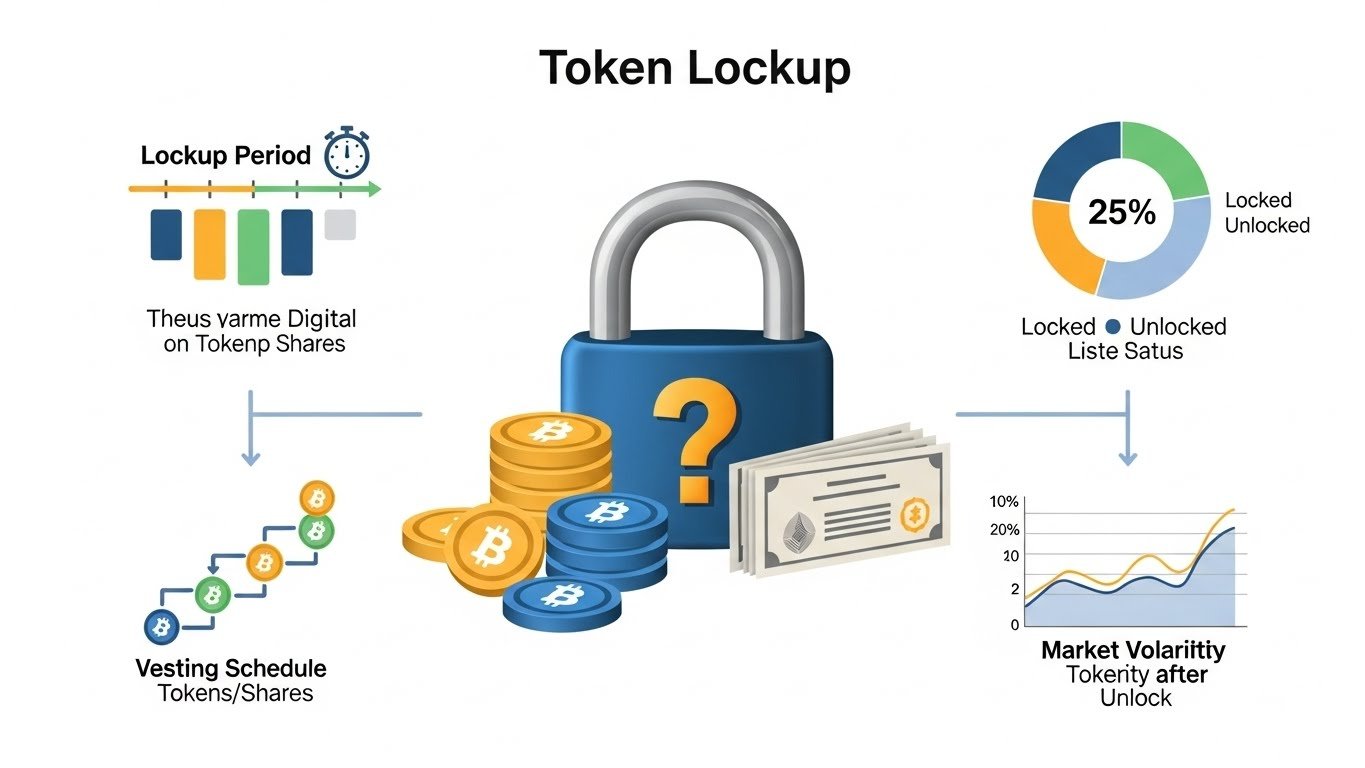
During the lockup, the public float remains limited. Many shares exist on paper but cannot legally be sold. Prices are therefore shaped by a smaller pool of tradable stock, which can create an illusion of stability or even push prices higher if demand is strong.
What happens when the lockup expires?
When the lockup expires, that illusion ends. Suddenly, a large number of previously restricted shares becomes tradable. Early investors who bought in at lower levels finally have the option to cash out. Some may believe in the company and hold. Others, however, may decide to take profit, reduce risk, or shift funds elsewhere.
If a significant percentage of these newly unlocked holders choose to sell at once, the market experiences a supply shock. The volume of shares for sale jumps dramatically, and unless there is equally strong new demand, the price tends to fall. In extreme cases, as with Eric Trump’s American Bitcoin, the stock can drop by 40% or more in a single session.
Crucially, this type of decline is not necessarily caused by news of fraud, bankruptcy, or operational collapse. It may simply be the mechanical result of more sellers than buyers at current prices. However, market psychology often exaggerates the move. As the price starts dropping, short-term traders panic, stop-loss orders trigger, and momentum selling accelerates the fall.
How the lockup expiry hit Eric Trump’s American Bitcoin
The setup: from hot debut to vulnerable stock
When American Bitcoin first went public, enthusiasm ran high. Crypto investors saw it as a new way to gain exposure to the Bitcoin ecosystem, while Trump supporters viewed it as a chance to back a politically recognizable name in the digital asset space. Early trading was choppy but generally positive, with periods of strong rallies and a narrative of growth and ambition.
Behind the scenes, however, a large pool of shares remained locked. These shares were held by early backers and private placement investors who had entered the deal before the company began trading openly. As long as these shares were frozen, they did not directly impact day-to-day supply and demand.
Market participants who did not pay attention to the lockup schedule may have assumed that the trading behavior they were seeing represented a stable equilibrium. But in reality, the market was operating with a partial picture.
The trigger: lockup expiration and sudden selling pressure
Once the token lockup expired, those early investors were free to sell. Many of them had likely seen large paper profits from the earlier days of trading. Faced with ongoing volatility, mixed macroeconomic conditions, and lingering fears about the broader crypto market, some decided that it was time to secure gains.
As they sold, more and more shares hit the market. This new supply collided with a buyer base that was not prepared to absorb such volume at the previous price levels. The result was a sharp, almost cascading decline. Prices dropped quickly, intraday volatility spiked, and Eric Trump’s American Bitcoin stock found itself down around 40% from recent levels in a short period.
The magnitude of the fall shook many retail investors who had bought near the top, especially those who were drawn in by the Trump name or by optimistic commentary about Bitcoin mining stocks as the “next big thing.” The event showed just how powerful a lockup expiry can be in the absence of strong, steady institutional demand.
Is the plunge a verdict on fundamentals or a temporary shock?
Looking at the business behind the stock
To understand whether the 40% drop is a permanent condemnation or a temporary shock, it is important to separate price action from business fundamentals. From a fundamental perspective, American Bitcoin remains a company whose core activities are Bitcoin mining and Bitcoin accumulation. Its assets include mining hardware, data centers, energy contracts, and a pool of held Bitcoin. Its revenues depend on the Bitcoin price, network difficulty, energy costs, and operational efficiency.

Its long-term value is shaped by management decisions, technological upgrades, and the broader regulatory environment surrounding cryptocurrencies and energy use. A lockup expiry does not erase these assets overnight. The company’s mines do not suddenly shut down because early investors sold. What changes is the market perception of those fundamentals and the price at which investors are willing to value them.
Sentiment, speculation, and the Trump factor
The stock’s association with the Trump name cuts both ways. On one hand, it brings attention, branding power, and a ready-made audience that might be excited about a Trump-backed crypto play. On the other hand, it can attract speculative flows, short-term traders, and politically motivated opinions that add to volatility. When everything is going well, the Trump connection can amplify gains.
When a token lockup expires and prices begin to fall, the same attention can amplify fears, media coverage, and selling pressure. This dynamic suggests that the 40% plunge is not solely about American Bitcoin’s internal performance. It is also about how the market processes high-profile narratives, how investors react to unlock events, and how sensitive the stock is to shifts in sentiment.
What investors can learn from Eric Trump’s American Bitcoin drop
Always know the lockup schedule
One of the clearest lessons is that every investor in a newly public company or fresh token project should know when lockups end. If a large percentage of the total supply of shares or tokens is locked and set to release on a specific date, that date can become a turning point. Before holding through that moment, investors should ask themselves whether they are comfortable with the risk of a liquidity shock.
They should also think about how much of their position they want to carry past the unlock, and whether they have a plan if volatility spikes. Failing to track lockup information can leave even experienced traders blindsided, as the plunge in Eric Trump’s American Bitcoin demonstrates.
Do not confuse temporary supply shocks with permanent failure
Another key lesson is to distinguish between a temporary supply event and a fundamental collapse. A lockup expiry that unleashes heavy selling can crush the share price in the short term, but it does not necessarily mean the business is broken. It does, however, reveal something important about investor confidence and the willingness of early backers to stay long.
For long-term investors, such a crash can sometimes be an opportunity to acquire shares at a discount, provided they believe in the company’s long-term strategy. For traders, it can be a reminder that prices are not just driven by news headlines, but also by the internal structure of who owns what and when they can sell.
Manage exposure to high-volatility sectors
Crypto-related stocks, especially those linked to Bitcoin mining and digital asset accumulation, are inherently volatile. Their prices react not only to company news but also to Bitcoin price swings, regulatory headlines, macroeconomic data, and investor mood. Adding the Trump branding on top of that creates an even more emotionally charged environment.
Investors should size their positions accordingly. Putting too large a share of a portfolio into a single speculative stock like Eric Trump’s American Bitcoin can lead to outsized losses during events such as lockup expirations. Balanced risk management and diversification remain crucial, even when a particular story feels exciting or politically meaningful.
The road ahead for Eric Trump’s American Bitcoin
Potential for recovery
The fact that the stock has dipped about 40% after the token lockup does not automatically doom American Bitcoin. If the company continues to operate efficiently, manages energy costs, grows its mining capacity, and maintains a strong stash of Bitcoin, it could recover over time, especially if the broader Bitcoin market strengthens.
A recovery would require several ingredients. Confidence among long-term investors would need to rebuild. Management would have to communicate clearly about strategy, upcoming projects, and future dilution or unlocks. The company would also need to demonstrate that it can navigate regulatory and market challenges without overextending itself.
As memories of the lockup event fade, market participants may start focusing again on revenue growth, hash rate metrics, and Bitcoin price trends. If those indicators turn favorable, the narrative around Eric Trump’s American Bitcoin could shift from panic to resilience.
Ongoing risks and uncertainty
At the same time, the risks remain significant. If Bitcoin prices suffer prolonged weakness, or if energy costs rise sharply, mining margins can shrink. Future unlocks or insider sales could trigger additional bouts of selling. Political controversies tied to the Trump name could occasionally overshadow business news. Investors who choose to stay involved should be prepared for continued turbulence. The stock is likely to remain sensitive to headlines, speculation, and shifts in the crypto market cycle.
Conclusion
The steep 40% drop in Eric Trump’s American Bitcoin after the expiration of its token lockup period is a vivid reminder that in modern markets, structure and timing can be just as important as story and fundamentals. A lockup can support prices in the early days by keeping supply limited, but when it ends, pent-up selling pressure can unleash a wave of volatility.
In this case, the combination of early investors taking profit, cautious sentiment around crypto, and the high-profile Trump connection turned a predictable event into a sharp, headline-grabbing plunge. For investors, the key takeaways are clear. Understand lockup schedules. Treat Bitcoin mining stocks and crypto-linked shares as high-volatility assets.
Separate temporary price shocks from long-term business health. And avoid letting hype, politics, or brand names overshadow the careful analysis of risk and reward. Eric Trump’s American Bitcoin may or may not fully recover from its post-lockup slide, but its story already offers a valuable case study in how modern markets treat speculative assets, celebrity-linked ventures, and the powerful mechanics of token lockup and expiry.
