


Selective Disclosure for Blockchain has never been a place where technology succeeds just because it is new. It succeeds when it is reliable, socially acceptable, and compatible with the country’s strong expectations around trust, safety, and compliance. That is exactly why selective disclosure has become one of the most important ideas shaping the future of blockchain adoption in Japan. Blockchain can deliver powerful benefits—shared truth, tamper resistance, and better coordination across companies—but it also introduces a tension that Japanese businesses and regulators care about deeply: how do you gain transparency without sacrificing confidentiality?
In many early blockchain narratives, transparency was treated as a universal good. The more open the ledger, the story went, the more trustworthy the system. But real-world enterprise adoption quickly showed that “everything public” is not a workable default. Companies need to protect trade secrets. Financial institutions must safeguard customer information. Government-linked systems require strong privacy controls. Even supply chains, which seem like a perfect match for shared ledgers, often contain sensitive pricing, sourcing arrangements, and contractual details that participants cannot reveal broadly. When the wrong data is exposed, blockchain becomes a risk rather than an asset.
That is where selective disclosure matters. Selective disclosure means a party can prove something is true without revealing everything behind it. Instead of broadcasting full data to every participant, a system can reveal only what is necessary, to the right party, at the right time. This approach supports the credibility of blockchain while respecting privacy and commercial realities—an especially critical combination for blockchain adoption in Japan, where trust and discretion carry enormous weight.
Selective disclosure also helps solve a cultural and operational challenge: Japanese organizations often depend on long-term relationships and careful information stewardship. If a blockchain system forces participants to reveal more than they are comfortable sharing, adoption stalls. But if selective disclosure allows participants to maintain confidentiality while still verifying integrity, blockchain becomes usable in day-to-day business. In other words, selective disclosure is not just a technical feature; it is the bridge between blockchain ideals and the practical requirements needed for widespread blockchain adoption in Japan.
Selective disclosure explained in plain terms
Selective disclosure is best understood as “proof without exposure.” In traditional systems, proving a claim often means revealing the underlying data. For example, demonstrating compliance might require sharing documents, transaction records, or identity details. Selective disclosure changes that dynamic: it enables verification with minimal disclosure.
In blockchain contexts, selective disclosure can mean several things depending on the use case. It might mean revealing a subset of transaction details while keeping the rest hidden. It might involve proving eligibility—such as being above a legal age threshold—without sharing the full date of birth. It might involve verifying that a shipment met certain conditions without publishing the full supplier contract. All of these are ways to keep sensitive data private while still maintaining verifiable trust.
This is where privacy-preserving technology becomes central. Many solutions rely on cryptographic methods that allow participants to validate statements without exposing raw information. Sometimes this is implemented through zero-knowledge proofs, sometimes through selective sharing in permissioned networks, and sometimes through approaches that store sensitive data off-chain while anchoring integrity proofs on-chain. The core principle remains consistent: disclose what is necessary, no more.
For blockchain adoption in Japan, this concept fits naturally with enterprise expectations. Japanese companies typically want systems that reduce risk, preserve reputation, and support compliance audits without unnecessary exposure. Selective disclosure meets those needs by letting blockchain deliver transparency and integrity in a controlled, business-friendly way.
Why privacy expectations are especially important in Japan
Japan is a high-trust society with a strong emphasis on responsible data handling. Consumers expect institutions to protect personal data, and organizations take reputational damage seriously. That makes privacy a central factor for blockchain adoption in Japan. When blockchain is perceived as a tool that “puts everything on a ledger,” it triggers understandable concern: who can see it, who can copy it, and how can it be controlled?
In reality, blockchain adoption is increasingly driven by enterprise and institutional use cases, not just public speculation. Those institutions often operate under strict data governance policies. They need clear answers to questions like: Can we restrict access? Can we prove compliance without leaking customer data? Can we resolve disputes without revealing proprietary terms? Selective disclosure provides an elegant “yes” to those questions.
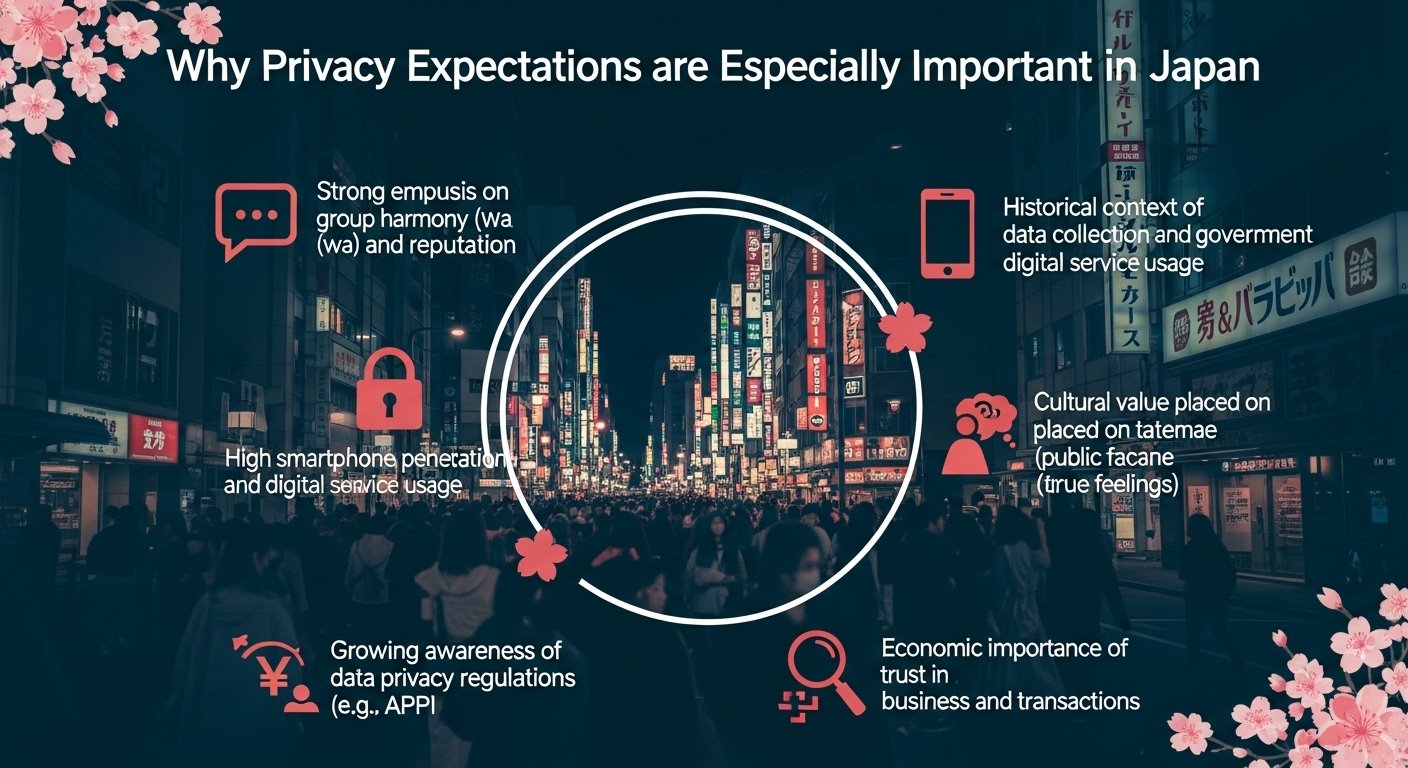
There is also a practical business dimension. Japan’s economy contains complex networks of suppliers, trading firms, manufacturers, and financial intermediaries. These networks thrive on collaboration, but also on careful boundary-setting around information. A blockchain system that ignores those boundaries is unlikely to scale. Selective disclosure enables shared infrastructure without forcing companies to surrender their competitive edge.
From a cultural standpoint, discretion and precision in communication matter. A system that reveals only what is required—rather than oversharing—aligns with the way many Japanese organizations manage relationships. That alignment is one reason selective disclosure has become a cornerstone for accelerating blockchain adoption in Japan.
How selective disclosure supports compliance without slowing innovation
Compliance is often presented as the enemy of innovation, but in Japan it is more accurate to say compliance is the pathway to legitimacy. Blockchain projects that treat compliance as optional tend to remain experimental. Projects that incorporate compliance features from the start are far more likely to gain long-term traction. Selective disclosure supports this by enabling systems where verification is robust, but data exposure is minimized.
For instance, an organization may need to demonstrate that transactions follow internal policies or external regulations. With selective disclosure, it can produce verifiable proofs of compliance without publishing the entire transaction history to every participant. This can also reduce operational friction. Instead of repeated document exchanges and manual checks, cryptographic proofs can provide stronger assurance more efficiently.
Another important dimension is auditability. In regulated environments, the ability to demonstrate accountability is crucial. Selective disclosure can make audits more efficient by letting auditors confirm validity without requiring broad access to all data. In practice, this can strengthen governance while reducing the risk of leaks.
When blockchain adoption in Japan is viewed through the lens of enterprise readiness, selective disclosure becomes a key enabler. It allows blockchain systems to satisfy compliance expectations while remaining agile enough for innovation.
Selective disclosure vs. “full transparency” blockchains
A major reason blockchain initiatives struggle is the mistaken belief that the ledger must be fully transparent to be trustworthy. That assumption made sense in early public blockchain communities where open participation was the norm. But for enterprise-grade blockchain adoption in Japan, full transparency is often a barrier.
Full transparency can expose business relationships, pricing structures, supplier dependencies, and other sensitive information. It can also create legal or contractual issues if data is visible to parties who should not have it. In many settings, transparency needs to be selective and role-based. Trust should come from verification, not exposure.
Selective disclosure reframes the trust model. Instead of “everyone sees everything,” it becomes “everyone can verify what they are entitled to verify.” That shift makes blockchain usable for real business processes. It also reduces resistance from stakeholders who worry about confidentiality and risk.
The result is a more realistic adoption path. Rather than forcing organizations to accept a transparency model that does not match their needs, selective disclosure adapts blockchain’s integrity benefits to enterprise constraints. That is a critical step toward scalable blockchain adoption in Japan.
Key use cases where selective disclosure accelerates blockchain adoption in Japan
Financial services: safer verification with less data sharing
Japan’s financial sector is sophisticated and compliance-driven. Banks, exchanges, and fintech firms need strong controls around identity, fraud prevention, and transaction monitoring. Selective disclosure can help verify identity attributes and risk signals without revealing unnecessary personal details to every participant.
In practice, selective disclosure supports a more privacy-respecting approach to digital identity and credential verification. A user may prove they meet certain criteria—such as residency status, risk classification, or authorization—without sharing their full identity dossier across multiple systems. That reduces exposure and can limit the impact of data breaches.
For blockchain adoption in Japan, this matters because financial institutions are often early adopters of secure infrastructure. If selective disclosure makes blockchain compatible with bank-grade privacy requirements, it increases the likelihood that blockchain becomes part of mainstream financial rails rather than an isolated experiment.
Supply chains: shared truth without revealing trade secrets
Supply chain traceability is frequently cited as an ideal blockchain use case. Japan’s manufacturing and export ecosystems could benefit from shared visibility into provenance, quality checks, and logistics events. But supply chains also contain highly sensitive information, including supplier terms, pricing, and sourcing strategies.
Selective disclosure enables a better model. A manufacturer can prove a component meets standards or came from an approved source without revealing the entire supplier network. A downstream buyer can verify authenticity without seeing contract details. Logistics partners can confirm delivery milestones without viewing commercially sensitive documents.
This “trust with boundaries” approach is crucial for blockchain adoption in Japan because supply chains often involve long-term relationships and negotiated confidentiality. Selective disclosure makes blockchain collaboration possible without forcing transparency that participants will reject.
Healthcare and research: privacy-preserving data integrity
Healthcare data is among the most sensitive data categories anywhere, and Japan is no exception. Blockchain can support integrity and consent tracking, but only if privacy is handled carefully. Selective disclosure helps by enabling proofs about records, permissions, or data validity without exposing the underlying personal information to a broad network.
For example, a research organization may need to prove it obtained appropriate consent or followed protocols. With selective disclosure, it can provide verifiable evidence without revealing the patient’s identity or unnecessary clinical details. This supports trust while protecting individuals.
In contexts like healthcare, selective disclosure is not optional—it is foundational. That is why it can be a major catalyst for responsible blockchain adoption in Japan in sensitive sectors.
Government-linked services: accountability without oversharing
Public sector applications require transparency and accountability, but they also require privacy and controlled access. Selective disclosure helps reconcile those needs. It enables systems where certain facts can be verified publicly while details remain restricted.
For instance, a system could prove that a process followed required steps without exposing personal identifiers. Or it could provide tamper-evident logs for oversight while preventing broad disclosure of sensitive information. This approach aligns with the need for public trust and institutional responsibility.
When governments or quasi-public institutions explore blockchain, selective disclosure reduces political and operational risk. That can make a meaningful difference in the pace of blockchain adoption in Japan.
The role of zero-knowledge and verifiable credentials in selective disclosure
Selective disclosure is often implemented through cryptographic mechanisms that allow proof of validity without full disclosure. Two concepts appear frequently: zero-knowledge proofs and verifiable credentials. While the technical details can get complex, the practical value is straightforward.
Zero-knowledge proofs allow one party to prove a claim is true without revealing the underlying data. This is especially useful for compliance and identity checks. For example, proving a user is eligible, solvent, or authorized without exposing full financial statements or identity records. These proofs can reduce risk while preserving trust.
Verifiable credentials focus on portable proofs issued by trusted entities. A user can present a credential that confirms specific attributes, and selective disclosure allows them to reveal only the attributes needed for a transaction. This is central to privacy-friendly identity and authorization systems and can support regulatory compliance without creating unnecessary surveillance.
Together, these tools enable blockchain systems to operate in a way that Japanese enterprises can accept: controlled sharing, reliable verification, and stronger privacy. As these technologies mature, they are likely to become key infrastructure for blockchain adoption in Japan.
Trust, business culture, and why “minimum necessary disclosure” wins
Blockchain adoption is as much about human and organizational trust as it is about cryptography. In Japan, trust is earned through reliability, predictability, and careful governance. A system that exposes too much information creates anxiety and resistance, even if it is technically secure. Selective disclosure supports a principle that resonates strongly: share only what is needed.
This “minimum necessary disclosure” approach reduces the perceived risk of collaboration. Participants can join networks without feeling like they are giving away sensitive information. It also supports smoother stakeholder alignment, because legal teams, compliance teams, and executives can approve systems more easily when privacy controls are built in.
For blockchain adoption in Japan, this is decisive. Adoption happens when systems match real-world risk tolerance and business norms. Selective disclosure makes blockchain feel less like a radical departure and more like an upgrade to existing trusted practices.
Common misconceptions that slow blockchain adoption in Japan
One misconception is that privacy and transparency are opposites. In reality, they can complement each other when selective disclosure is used. Transparency can exist at the level of verification and integrity while keeping raw data private.
Another misconception is that selective disclosure makes systems less trustworthy. The opposite is often true. When selective disclosure relies on strong cryptography, it can provide more reliable assurance than traditional manual checks, because proofs are harder to forge than paperwork.

A third misconception is that selective disclosure only matters for public blockchains. In practice, it matters for permissioned and consortium networks as well. Even in private environments, not every participant should see every detail. Role-based access and selective proofs are still essential. Clearing up these misconceptions helps stakeholders see why selective disclosure is not a niche add-on but a core requirement for scalable blockchain adoption in Japan.
Implementation challenges and how Japan can address them
Selective disclosure is powerful, but it also introduces design choices. Systems must decide what stays on-chain, what stays off-chain, who holds keys, and how disputes are resolved. Governance becomes important, because selective disclosure requires agreement on who is entitled to see what and under which circumstances.
There is also the challenge of usability. If selective disclosure tools are too complex for operational teams, adoption will remain limited. That is why user experience, standardized credential formats, and reliable tooling matter. Enterprises need solutions that integrate with existing workflows and compliance systems.
Interoperability is another factor. Japan’s blockchain ecosystem includes multiple networks and platforms. For selective disclosure to support broader adoption, it should work across organizational boundaries without forcing everyone into a single vendor stack. This is where standards and collaboration become valuable.
Despite these challenges, the direction is clear. Selective disclosure aligns blockchain with the demands of real business. Addressing implementation hurdles will be a practical step toward stronger blockchain adoption in Japan.
Conclusion
Blockchain promises shared truth, faster coordination, and stronger integrity across organizations. But in Japan, those benefits will only scale when privacy, compliance, and business confidentiality are treated as first-class requirements. That is why selective disclosure matters so much. It enables trust without oversharing, verification without exposure, and collaboration without sacrificing competitive boundaries.
As Japanese enterprises move from pilots to production, selective disclosure will increasingly separate viable blockchain systems from those that remain theoretical. Whether the use case is finance, supply chains, healthcare, or government-adjacent services, selective disclosure provides the privacy-preserving foundation required for mainstream blockchain adoption in Japan. When blockchain is built with selective disclosure at its core, it becomes something Japan can adopt not just as an experiment, but as infrastructure.
FAQs
Q: What is selective disclosure in blockchain?
Selective disclosure is a privacy-preserving approach that lets someone prove a claim on a blockchain without revealing all underlying data. It supports trust while limiting exposure.
Q: Why does selective disclosure matter for blockchain adoption in Japan?
Because many Japanese businesses require strict confidentiality and strong compliance. Selective disclosure helps blockchain fit these expectations, making real-world adoption more likely.
Q: Is selective disclosure the same as zero-knowledge proofs?
Not exactly. Zero-knowledge proofs are one method that enables selective disclosure. Selective disclosure is the broader goal; zero-knowledge is one of the tools used to achieve it.
Q: Can selective disclosure work in permissioned blockchains too?
Yes. Even in private networks, not every participant should access every detail. Selective disclosure helps enforce role-based visibility and controlled verification.
Q: Does selective disclosure reduce transparency or trust?
It can increase trust by enabling verifiable proofs without leaking sensitive data. Transparency shifts from exposing raw data to proving integrity and compliance.
See More: Survey Reveals Shift From DeFi to Core Blockchain Infra
